



The Chinese proverb "wealth does not pass three generations" is nearly universal, rooted in Confucian values.
For Americans, the saying "shirtsleeves to shirtsleeves in three generations" can be traced back to hard-working immigrants in the 19th century migrating to the New World to find their fortune, only for it to be squandered by their grandchildren.
Other cultures and languages offer similar proverbs, whether Italian ("From the stalls to the stars, and back to the stalls"), Japanese ("Rice paddies to rice paddies in three generations"), or Spanish ("He who doesn't have it, makes it; and he who has it, destroys it").
Sarintorn Phansopa is determined to be an exception as she pursues her goal of making Perfect Paper Co a world-class waste management company.
"My father started this business 52 years ago as a scrap collector. He was a mechanical student, but after seeing trucks with wastepaper passing by, he wondered why this rubbish was being collected and where it was going," she said.
"That's how he found out that wastepaper had value. In his younger days, he would collect this rubbish and sell it, using a pickup borrowed from a relative."
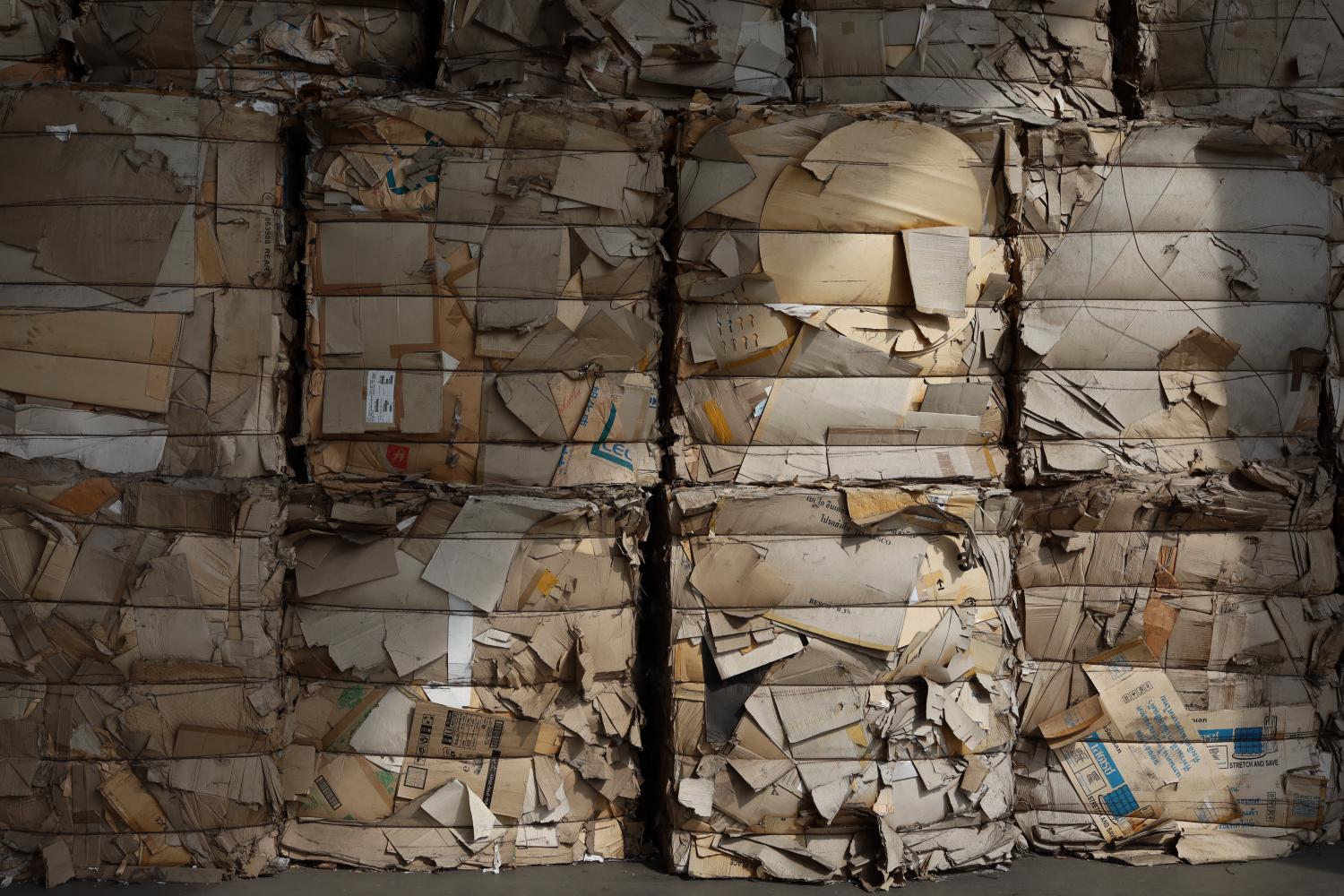
From those humble beginnings, Perfect Paper is now a billion-baht company that plays a foundational role in the recycling supply chain by collecting, sorting, processing and distributing recovered paper to paper mills for production into paper products.
Ms Sarintorn, 48, said her parents' passion and commitment to customer satisfaction is the foundation for the company's success.
Perfect Paper was incorporated in 1998 as the family realised that to pursue larger supply contracts with local paper mills, the company had to expand. As demand grew, the company looked to expand its facilities, understanding that as a commodity business, success hinged on consistent collection using scale and volume.

Sarintorn Phansopa, general manager for Perfect Paper Co
BANKING ASSISTANCE
Enter United Overseas Bank (UOB), which gave the company its first credit lines and has been Perfect Paper's partner for decades.
"I remember my parents telling me … we were people with nothing who needed to expand because we needed more warehouse space to store and sort more paper. UOB offered us a long-term loan and credit, so we got our first opportunities from the bank," she said.
Perfect Paper's site at On Nut was large enough to handle several hundred tonnes of paper at a time. In 2005, UOB financed a new warehouse in Rangsit, chosen because of the low land value and its proximity to paper mills in Saraburi, Pathum Thani, Sing Buri and Prachin Buri.
Ms Sarintorn, whose background is in computer science, said she joined the company full-time around that time.
"I never thought of joining the business, but I was always exposed to it. We lived in the factory, and on weekends I would help sort paper. But as the daughter in a Chinese family, and considering that traditionally very few women work in the recycling business, I never considered it," she said.
But her father insisted, saying with the Rangsit expansion he needed his daughter to help run the new plant. Ms Sarintorn left her job in the civil service at Thailand Science Park to join Perfect Paper, learning all aspects of the company's operations, from driving trucks to making client deliveries to running the sorting and baler machines.
"I learned the whole internal management process of the company -- everything. The best part was it helped me manage people because I was the new person working with the old staff," Ms Sarintorn said.
"They saw me working hard alongside them, struggling with them. So when I wanted to introduce new ideas or make improvements in the factory or the company, they would listen to me because they knew I'd worked as hard as they did."
In addition to the Rangsit facility, the company now operates warehouses in Mahachai and Bang Pu, and handles up to 30,000 tonnes of wastepaper per month.
Perfect Paper also moved to standardise its industrial processes, achieving both ISO and CQC (China Quality Certification Centre) certifications.
In 2024 the company posted profits of 7 million baht on revenue of 1.35 billion baht. Profitability rose 158% in 2023 as the company focused on streamlining and cost control.
MODERNISATION
She said digitalisation and the adoption of a data-driven operational approach have helped to modernise the firm. From traditional paper ledgers, the company shifted to Microsoft ERP systems, implemented in part with help from UOB's FinLab accelerator for small business clients.
The digitalisation initiative five years ago came as the company was suffering because of a weak economy and the start of the pandemic.
"UOB looked at our pain points. If sales were bad, what could we improve internally? Though we couldn't control the economy and sales were slow, we could find ways to reduce costs," said Ms Sarintorn.
Amporn Supjindavong, country head for commercial banking at UOB, said the bank's two-decade relationship with Perfect Paper serves as a model of how the bank aims to help its clients prosper.
UOB initiatives such as FinLab, launched in 2015, have helped more than 2,700 small businesses digitise their operations, improve their sustainability, access green financing, and expand their horizons to international markets.
In 2019, UOB launched its Business Circle initiative, targeting family-run businesses in Asia preparing the next generations for succession, modernisation and growth.
Mrs Amporn said relative to their peers in Singapore or Malaysia, Thai companies have been more reluctant to expand overseas.
"UOB can be a partner to help with this effort. We can provide advice and facilitate business-matching to find joint venture partners or distributors that align with the client's goals," she said.
"The second and third generation of business owners want to expand because they know the Thai market might be too small. Expanding regionally to a larger market with higher growth rates is appealing. This is where UOB can play a part."
BEYOND CREDIT LINES
For UOB, helping companies such as Perfect Paper access regional markets, improve internal processes and standards, and enact digital transformation help the bank differentiate itself from peers.
"We see banking products as commodities. We don't want to compete solely on price. We are looking at what benefits you get from having a bank as a business partner beyond just credit lines," Mrs Amporn said.
"All banks are ready to support clients, but the question is, who provides added value? Being a regional bank gives UOB an advantage in offering things that other banks may not cover as comprehensively."
She said UOB's relationship managers have adapted to more of a consultancy role to help provide insights on market and business trends, solutions to mitigate risks, or avenues for growth.
UOB's culture is focused on meeting each client's long-term interests and needs, said Mrs Amporn.
"We won't sell a product just because it's the most profitable, or because everyone else is selling it, if it doesn't match the client's needs," she said.
"What we sell must meet their needs and be in the client's best interest. This is in our DNA."
For Perfect Paper, Ms Sarintorn said her goal to steer the company in a new direction could only come with help from UOB and its commitment to helping its clients achieve sustainable growth.
"I think the reason I've succeeded is I adopted my father's passion. We also had help from the bank, which supported our ideas with finance and opened doors for me to learn," she said.
"No other bank has done this. Other banks hold seminars for you to attend, but they won't say, 'Do you want to go and see something new?' We've gone to China, Israel, Indonesia and Singapore, and going to see new businesses allowed us to get new ideas.
"We've been through a lot. The one thing I'm proud of is we survived, and we'll continue to do so. Entrepreneurship is the key to succeed. If you don't have that, it's difficult."


