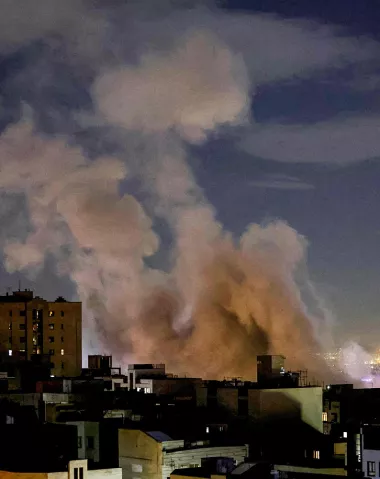
The International Monetary Fund (IMF) has been closely monitoring the Middle East war, saying it is seeing three core channels of impact: on energy prices, market sentiment, and disruption in travel, tourism and trade.
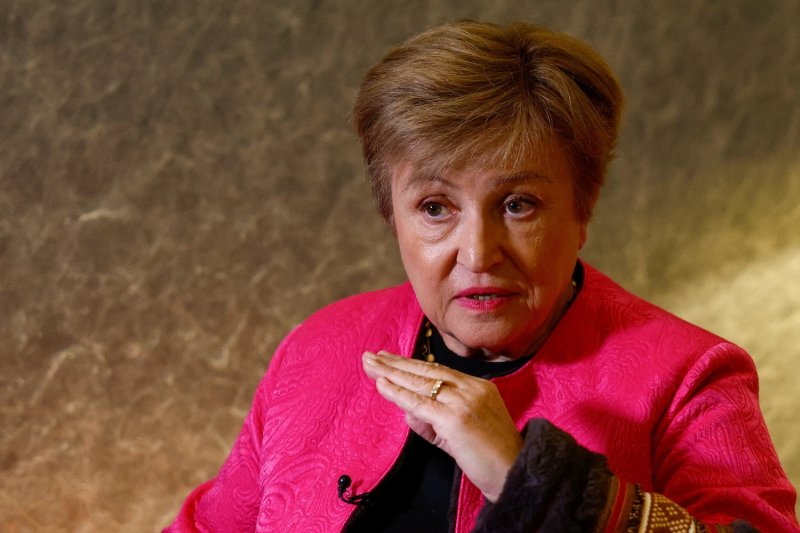
Beyond the Middle East region, these impacts spread across countries worldwide, with heightened uncertainties undermining confidence in the global community, IMF managing director Kristalina Georgieva said on Wednesday.
“We need to closely monitor developments, in particular, how long the fighting would last and the severity of the conflict. Hopefully, a resolution can be reached soon,” she said at a press conference on preparations for the 2026 annual meeting of the IMF and World Bank Group in October in Bangkok.
The Bulgarian economist said that beyond Thailand, the whole global economy has faced challenges of a slower pace of growth since the end of the Covid-19 pandemic. On average, global GDP growth was in a range of 3.7% to 3.8% for the pre-pandemic period and has declined to around 3.3% in the post-pandemic period.
The slower pace reflects the fact that productivity has not been growing fast enough, she said. Therefore, the IMF suggests countries deepen the availability of capital, especially through capital markets — in other words, equity investments rather than loans from banks.
Digital technology development and AI adoption is another factor driving productivity improvement. The IMF assesses that Asia could increase productivity by 1% if AI is used to its potential.
Labour development though reskilling and upskilling would also improve productivity amid a rapidly changing economy, as would greater ease of doing business.
Mrs Georgieva acknowledged that Asia has pivotal role in shaping the global economic landscape.
“In a world of high uncertainty, Asia is a driving force of global growth,” she said. “The IMF stands ready to collaborate with all parties building dynamic, resilient economies for the future.”
Ekniti Nitithanprapas caretaker minister of finance, said one of Thailand’s key opportunities as the host of the IMF-World Bank annual meeting will be the ability to share its experience and development vision, which is driven by the quality of its people, the resilience of its economic and financial systems, and the power of international cooperation.
Bank of Thailand governor Vitai Ratanakorn said the meeting takes place at a time when the global economy faces multiple challenges that require long-term vision, innovation and international cooperation.
The IMF-World Bank Annual Meeting 2026 will take place in Bangkok from Oct 12 to 18.