


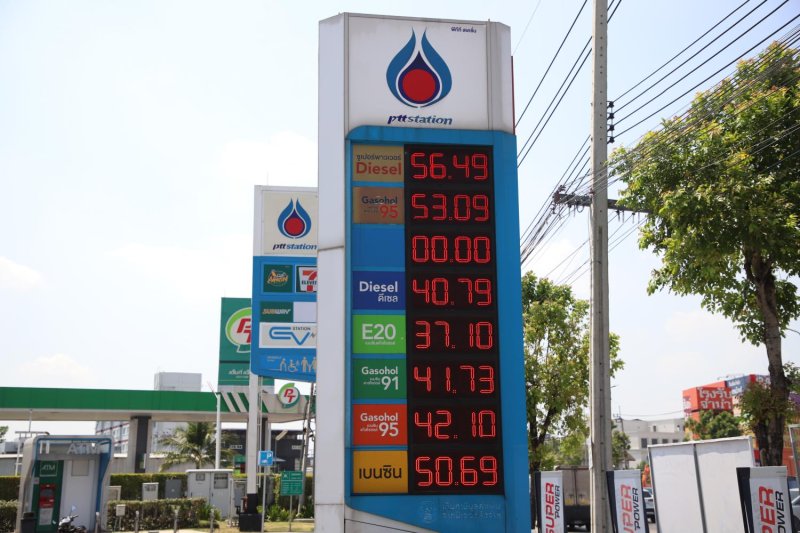
The Joint Standing Committee on Commerce, Industry and Banking (JSCCIB) has lowered its Thai GDP growth forecast to a range of 1.2-1.6%, citing the ongoing energy crisis triggered by war in the Middle East. The previous projection was 1.6-2.0%.
Kriengkrai Thiennukul, chairman of the Federation of Thai Industries (FTI) who chaired the JSCCIB meeting on Wednesday, warned that prolonged conflict could push global crude oil prices even higher, worsening Thailand's economic slowdown and raising living costs.
The outlook for exports is bleak, he noted, with a contraction of 0.5-1.5% expected. Inflation in 2026 was revised to 2-3%, compared with a previous estimate of 0.2-0.7%.
The committee urged the government to take immediate steps to manage energy prices and provide relief for small and medium-sized enterprises (SMEs) and vulnerable households.
The FTI is also calling on the government to implement urgent measures, including a possible excise tax reduction on fuel to help SMEs cope with escalating operating costs driven by surging global crude oil prices.
Mr Kriengkrai said earlier SMEs, which account for 80-90% of Thailand's economy, are struggling under the weight of higher transport, logistics and manufacturing costs.
The FTI wants the government to consider reducing the excise tax to lower retail fuel prices, curb inflation, and protect consumer purchasing power.
He noted that Japan and India recently reduced excise taxes on oil to mitigate the impact of the energy shock.
The JSCCIB also called for a faster transition to renewable energy, stressing that solar power could play a vital role in reducing dependence on imported oil and gas.
Mr Kriengkrai voiced support for the Energy Ministry's draft of the 2026 Power Development Plan, saying it should not only guide national electricity supply, but also enhance Thailand's competitiveness.
According to energy analysts and executives, the plan is expected to accelerate renewable projects and introduce nuclear power, aligning with Thailand's pledge to cut greenhouse gas emissions, reaffirmed at the UN climate summit in Brazil last year.
"Thailand must reduce its heavy reliance on imported fuels from the Middle East," Mr Kriengkrai said.
"The government should promote renewable energy and domestic biofuels to secure the country's energy future."
