


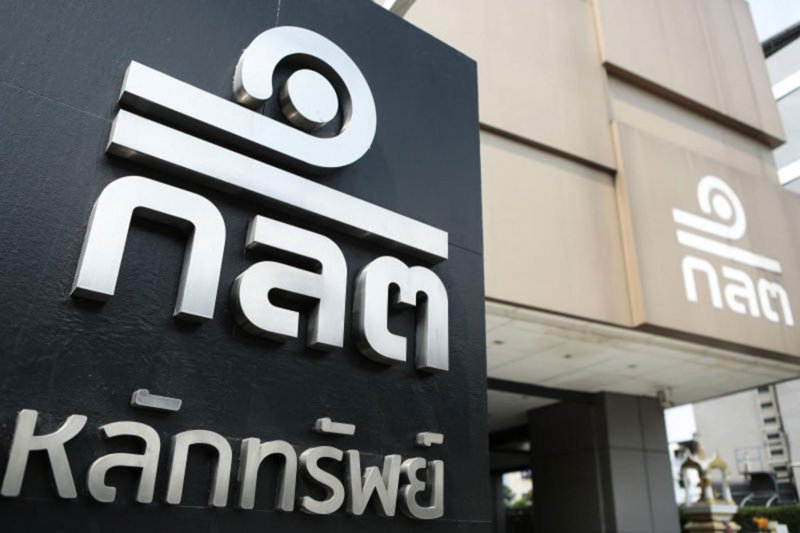
The Securities and Exchange Commission (SEC) has introduced a sweeping set of five measures aimed at curbing illicit "grey capital", dismantling mule account networks, and stopping increasingly sophisticated investment scams.
The move comes amid a surge in fraud cases on digital platforms, which are inflicting widespread financial losses on retail investors and posing a growing risk to the country's economic stability.
The SEC's strategy combines preventive safeguards, stricter enforcement, and inter-agency coordination to address the problem at its root.
At the core of the initiative is tighter know-your-customer (KYC) and customer due diligence requirements for securities firms. Intermediaries will be required to verify clients' income and occupations more rigorously while monitoring trading behaviour for inconsistencies, noted the regulator.
Enhanced due diligence will be mandated for suspicious accounts, alongside compulsory reporting of irregular transactions to the Anti-Money Laundering Office. Additional safeguards include strict name-matching for deposits and withdrawals, delays for high-risk transactions, and expanded use of enhanced KYC systems to detect mule accounts, said the SEC.
The regulator is also broadening its oversight of major shareholders and beneficial owners of licensed entities, targeting increasingly complex ownership structures. New rules will extend scrutiny to funding sources behind shareholders and impose stricter disqualifications linked to money laundering and terrorism-related offences, both domestically and internationally, noted the statement.
In terms of digital assets, regulators are ramping up transaction surveillance through advanced analytics and blockchain forensic tools. The SEC plans to enhance its ability to trace fund flows to their ultimate destinations, improving detection of suspicious activity.
Key measures include aligning digital asset transfer standards with cash-equivalent risk levels, implementing the Travel Rule for data-sharing on transfers, tightening oversight of stablecoin transactions in line with foreign exchange regulations, and working with the central bank to monitor cross-border flows.
The regulator is also deepening collaboration with government bodies such as the Digital Economy and Society Ministry to shut down illegal platforms and expand asset seizure efforts. Through a joint task force dubbed "Connect the Dots", authorities aim to integrate data across identity, behaviour, and financial flows to track illicit networks more effectively.
Pornanong Budsaratragoon, secretary-general of the SEC, said coordinated measures among relevant agencies would deliver tangible results by targeting illicit financial flows with greater precision.
"Ongoing integration with partner agencies will further enhance the ability to trace transactions to their endpoints, ultimately strengthening investor confidence and reinforcing the long-term integrity of Thailand's capital markets," she noted.
To strengthen market transparency, listed companies will face stricter disclosure requirements, including detailed reporting of shareholder structures, top shareholders, and ownership changes within three days (T+3). Rules governing tender offers and fiduciary duties of directors and executives will also be reinforced to prevent conflicts of interest.
The SEC will deploy advanced data analytics systems to integrate cross-market information, enabling the detection of anomalies such as mismatches between shareholder records and actual trading behaviour, noted the statement.
