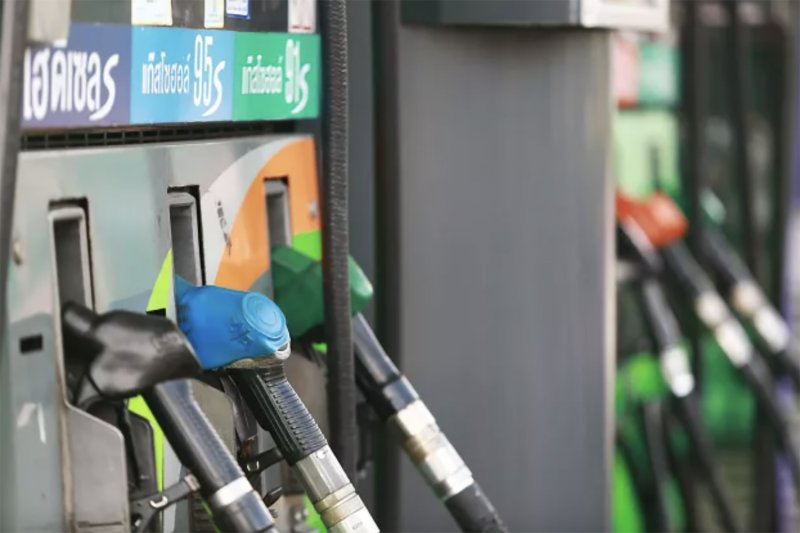
The Energy Policy Administration Committee (Epac) has resolved to reduce ex-refinery prices by 2 baht per litre, a move expected to lower domestic diesel prices by 2.14 baht per litre by this Friday.
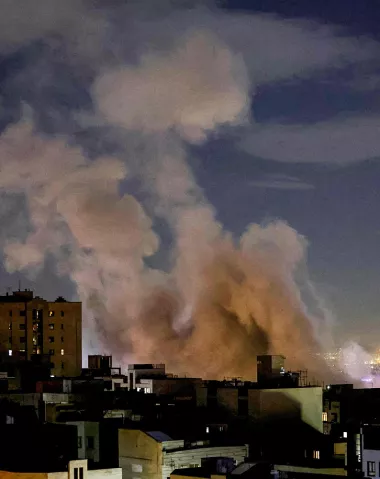
The decision followed discussions between energy officials and six oil refinery operators to cap retail diesel prices, which have surged in the wake of the Israel–US war with Iran.
Energy Minister Akanat Promphan who chaired Tuesday’s Epac meeting, said the committee resolved to cut the ex-refinery price of B7 and B20 biodiesel by 2 baht per litre, benchmarked against Singapore market prices.
Consumers of biodiesel B7 and B20 will benefit from lower prices by the end of this week, he added.
The measure will be formalised in the Royal Gazette as soon as possible, Mr Akanat said, adding that pump prices are expected to decline by about 2.14 baht per litre, including tax, with changes likely to take effect this Friday.
The move relies on emergency powers under a 1973 decree on preventing fuel shortages, allowing the committee to set ex-refinery prices — an unprecedented step in Thailand.
Asked when pump prices would fall, Mr Akanat said the decree requires a formal process to draft and publish the announcement in the Royal Gazette, though authorities will try to expedite it.
If the announcement takes effect on Wednesday, the Oil Fuel Fund Management Committee will meet to decide how the 2-baht cut will be passed on to consumers.
Mr Akanat said the adjustment would not immediately push refiners into losses, as stronger demand should support profits despite narrower margins.
“The price reduction will not cause liquidity problems for oil refineries,” the minister said.
The move is also expected to reduce heavy spending from the state Oil Fuel Fund, which currently subsidises B7 at 18 baht per litre and B20 at 19 baht per litre.
“We are considering issuing announcements on changes to ex-refinery prices every one or two weeks,” Mr Akanat said.
The minister elaborated that the 2-baht reduction reflected elevated refining margins seen in March, when they rose to around 7 baht per litre from a typical range of 2 to 4 baht.
Ex-refinery prices are determined by factoring in the gross refining margin (GRM), which is the difference between crude oil prices and refined oil prices.
Before the war in the Middle East, the GRM stood at just over 2 baht per litre. It rose to 7 baht per litre in March and surged further to 17.5 baht per litre during April 1 to 7.
Refined oil prices, based on the Singapore benchmark, are currently close to US$300 per litre, significantly higher than crude oil prices of $107 to 112.
The typical gap should be in the range of $10 to 20 per litre, Mr Akanat said.
Separately, Prime Minister Anutin Charnvirakul said the government is preparing additional fuel-saving measures, including possible restrictions on petrol station operating hours. Sales may be suspended between 10pm and 5am from April 20, though implementation will follow the Songkran holiday to avoid disrupting travel.
Authorities are also considering restricting sales during those hours to certain fuels — B20 biodiesel and E20 gasohol — while all fuels would remain available at other times.
The prime minister said Thailand imports about half of its energy from the Middle East, leaving it vulnerable to supply shocks.
Attacks on production facilities, refineries and transport infrastructure have pushed up global prices for oil, gas and related products such as fertilisers and plastics, with effects likely to persist even after hostilities ease.
In response, the government has outlined three strategies: reallocating budget resources to support the public, restructuring energy prices to cut costs and rolling out relief measures such as co-payment schemes and low-interest loans for farmers and businesses.