


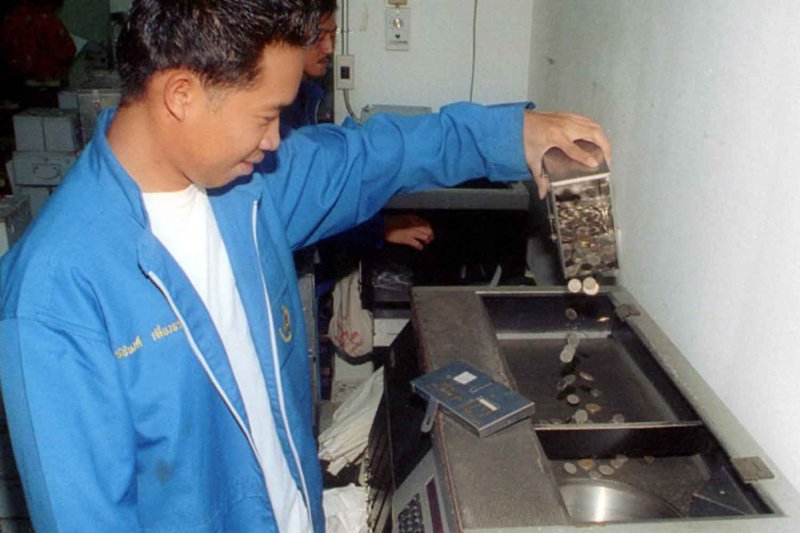
The ongoing conflict in the Middle East has pushed up the Treasury Department's coin production costs, raising the possibility that 1-baht coins may eventually need to be minted overseas, where production costs are lower.
Speaking after the launch of a commemorative coin marking the 100th birth of His Majesty King Ananda Mahidol, Akkatuth Sandhyananda, the department's director-general, said the commemorative coin, made of 99% gold and weighing 15 grammes, is priced at 99,999 baht per coin.
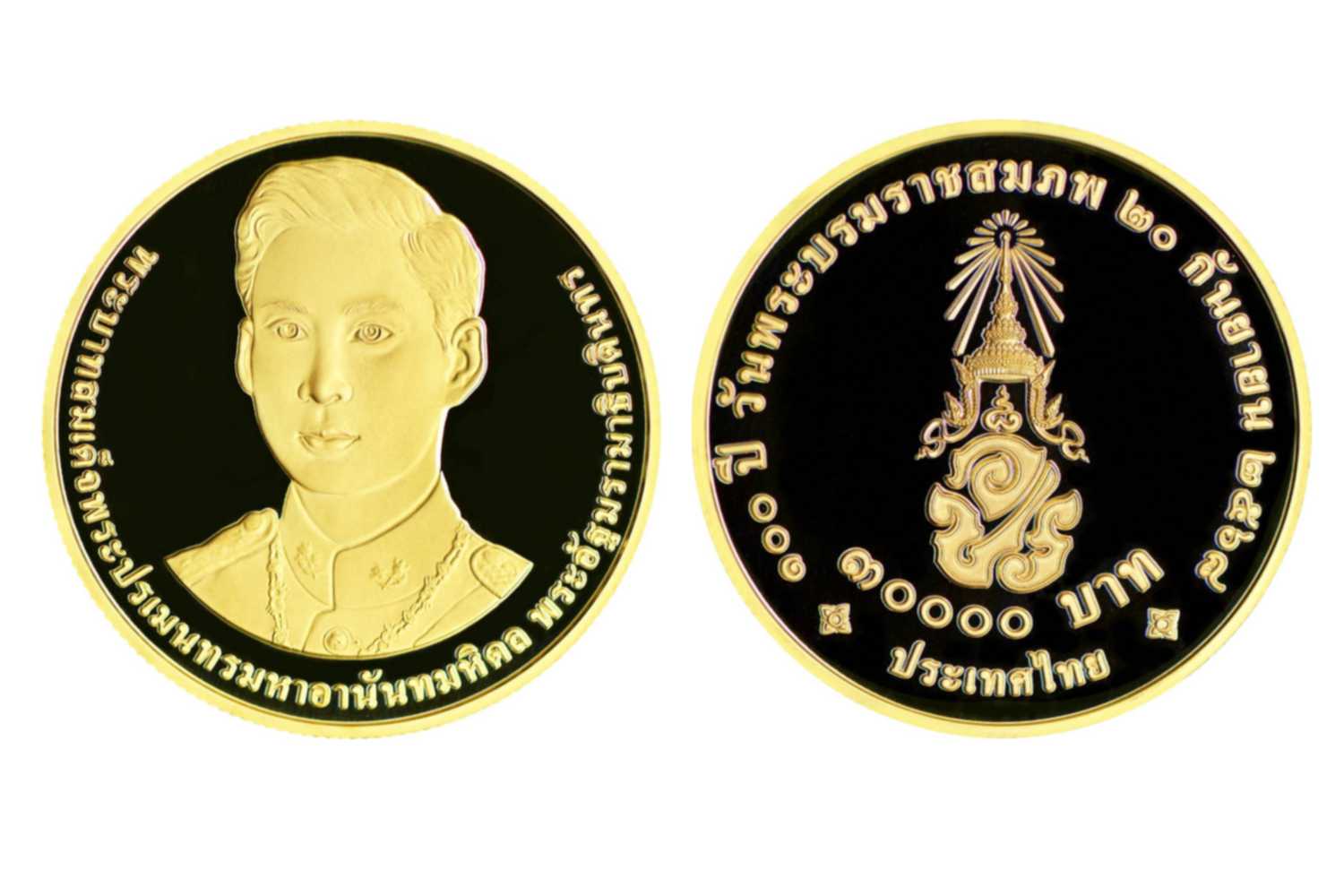
A commemorative coin marking the 100th birth anniversary of His Majesty King Ananda Mahidol.
Before gold prices surged to their current levels, a gold coin of the same weight would have cost only around 70,000 baht.
Mr Akkatuth added that the department's coin production costs have now risen significantly, particularly for the 1-baht coin, where the minting cost is close to its face value. In the future, the department may need to hire foreign producers to mint 1-baht coins, as overseas manufacturers can produce them at a lower cost.
However, he said the department still has a large stock of blank coin discs for 1-baht coins, which should be sufficient for production over the next 1-2 years.
Mr Akkatuth noted that although Thailand is moving towards a cashless society, coins remain essential to the economy, particularly for use in various vending and coin-operated machines.
Each year, the department produces around 620 million 1-baht coins, 100–200 million 5-baht coins, and 300 million 10-baht coins.
Demand for the 10-baht coin has risen from the previous level of around 240 million coins per year.
Mr Akkatuth explained that the high production cost of the 1-baht coin at the Treasury Department's mint is mainly due to the mint's high fixed costs, particularly personnel expenses.
As for 5-baht and 10-baht coins, production costs at the mint remain around 50% below their face value.
