


PARIS — Here are the latest economic events in the Middle East war:
First ships through Hormuz
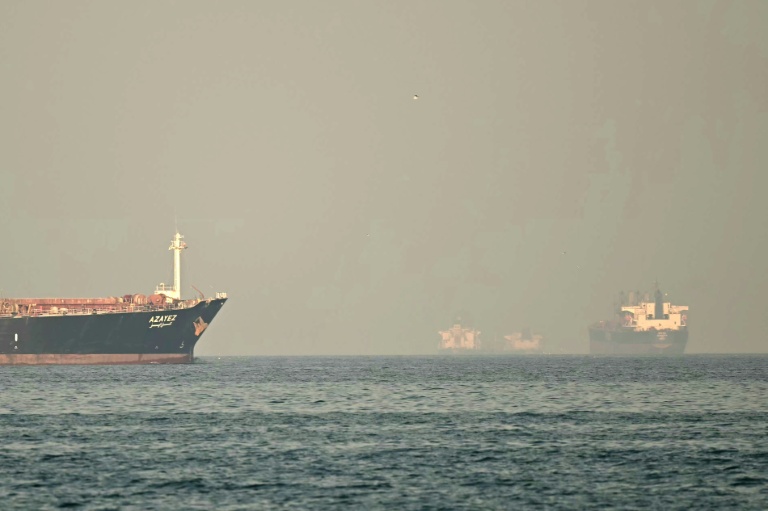
Two ships have passed through the Strait of Hormuz since Iran agreed to reopen the waterway as part of a ceasefire deal with the United States, the Marine Traffic monitoring group said Wednesday.
During the two-week ceasefire, passage through the strait "will be possible via coordination with Iran's Armed Forces", Iran's Foreign Minister Abbas Araghchi said on X, formerly Twitter.
Kuwait infrastructure damaged
Kuwait on Wednesday reported Iranian drone attacks that caused "significant material damage" to power and desalination plants as well as oil facilities, hours after a Iran-US truce came into effect.
Iranian state TV reported that the attacks were in response to strikes on its own oil facilities.
Oil plunges, stocks soar
Oil and natural gas prices dropped sharply as investors breathed a sigh of relief after the ceasefire between the United States and Iran, which should see tanker traffic resume through the Strait of Hormuz.
Fears of a prolonged war that would crimp global energy supplies sent oil prices soaring since the US and Israel began airstrikes on Iran on Feb 28, raising the spectre of widespread inflation that would threaten economies worldwide.
Stock markets in Europe opened broadly higher on the ceasefire, following strong gains seen in Asia, while the US dollar -- a haven for investors during market turbulence -- fell back against the euro and pound.
Iraq reopens airspace
Iraq's civil aviation authority said it was reopening the country's airspace following the announcement of a US-Iran ceasefire, after it was closed due to the Middle East war.
"The Iraqi Civil Aviation Authority announces the reopening of Iraqi airspace to air traffic effective today, following the stabilisation of the situation and the return of conditions to normal," it said.
Jet fuel disruptions to linger
It will take months for jet fuel supplies and prices to normalise even with the Strait of Hormuz open, the head of the International Air Transport Association (Iata) said Wednesday.
"It will still take a period of months to get back to where supply needs to be, given the disruption to the refining capacity in the Middle East," said Willie Walsh. "I don't think it's going to happen in weeks."
Trump says US will help with traffic in Hormuz strait
US President Donald Trump said Wednesday that the United States will help with the traffic buildup in the Strait of Hormuz, hours after Washington and Tehran agreed to a two-week ceasefire.
"The United States of America will be helping with the traffic buildup in the Strait of Hormuz. There will be lots of positive action! Big money will be made. Iran can start the reconstruction process," Trump wrote on his Truth Social platform.
Trump says Iran uranium will be 'taken care of'
Trump told Agence France-Presse (AFP) that Iran's uranium would be "perfectly taken care of" under a two-week ceasefire with Tehran.
"That will be perfectly taken care of or I wouldn't have settled," Trump said in a telephone interview when asked about what would happen to Iran's enriched uranium.
Iran agrees to safe Hormuz passage
Iran's foreign minister said that under the two-week ceasefire agreement, maritime traffic through the vital Strait of Hormuz would be guaranteed.
The transits "will be possible via coordination with Iran's Armed Forces and with due consideration of technical limitations," Iranian Foreign Minister Abbas Araghchi posted on X.
Madagascar declares energy emergency
Madagascar declared a two-week national energy emergency, saying disruptions in supply because of the war in the Middle East were causing a crisis.
The Indian Ocean island is a net importer of fuel, most of which comes from Oman, just south of the crucial Strait of Hormuz.


