
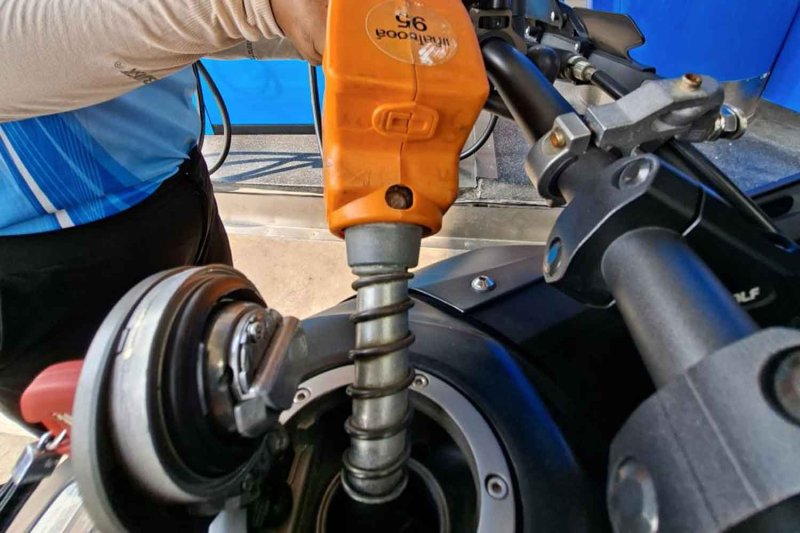
Thailand is among the region's most vulnerable countries to an oil shock, with the risk potentially reducing household income by 3-4%, according to the World Bank.
Speaking at the East Asia and Pacific Economic Update: Industrial Policy in the Digital Age media briefing on Wednesday, Aaditya Mattoo, director of the Development Research Group at the World Bank, said Thailand is among the East Asian economies most exposed to rising global energy prices, alongside Laos, Mongolia and Cambodia. This is due to these countries' heavy dependence on imported energy, particularly oil and gas.
The conflict in the Middle East has triggered a sharp increase in energy prices -- natural gas indices have risen by 90%, while oil prices are up by 30% in the immediate aftermath. This has directly affected net energy importers such as Thailand and Pacific island countries, where oil imports account for 5-13% of GDP.
"If global oil prices remain about 50% higher for a sustained period, real labour incomes across the region could decline by 3-4%. The impact is especially severe for economies with weaker fiscal buffers and limited foreign reserves," he noted.
A 30% or US$20 increase in crude oil prices would raise inflation in Thailand by 0.67 percentage points after six months.
The World Bank Group has cut Thailand's 2026 GDP growth forecast to 1.3% from the previous 1.8%. Meanwhile, the bank has maintained its East Asia and Pacific growth forecast at 4.3% for this year.
Mr Mattoo said governments across the region face difficult policy choices as they navigate the dual challenge of rising inflation and slowing growth. Policymakers must balance short-term support with long-term sustainability, he said.
In the near term, targeted fiscal support is seen as critical, particularly for vulnerable households and small businesses. Lessons from the Covid-19 pandemic show that countries with strong digital infrastructure and social registries, such as Thailand, were able to deliver aid more effectively.
In contrast, untargeted subsidies would increase fiscal deficits, public debt and interest rates, ultimately undermining growth.
Monetary policy also faces a dilemma. If inflation proves temporary and supply-driven, central banks may avoid tightening. However, if inflation expectations become entrenched, policymakers may be forced to raise interest rates despite the risks to growth, he said.
Countries with strong institutional frameworks -- such as credible inflation targeting and fiscal discipline -- have generally performed better in managing such trade-offs.
Despite the region's resilience during past crises, Mr Mattoo noted that reform momentum has slowed in several economies. For example, Thailand has experienced relatively low growth, partly due to limited structural reform in recent years.
Removing policy distortions -- particularly in services, trade and investment -- could deliver significant gains. Restrictions on foreign investment, barriers to services trade and non-tariff measures continue to weigh on competitiveness in parts of the region, including Indonesia and Malaysia.
Notably, reforms in the services sector are seen as a powerful but underutilised tool. Evidence from Vietnam suggests that even partial liberalisation can boost productivity across both services and manufacturing.
Although the conflict in the Middle East and the resulting oil shock pose significant challenges, growth in developing East Asia and the Pacific remains above the global average but is projected to slow from 5% in 2025 to 4.3% in 2026, before edging up to 4.4% in 2027, according to the World Bank Group.