


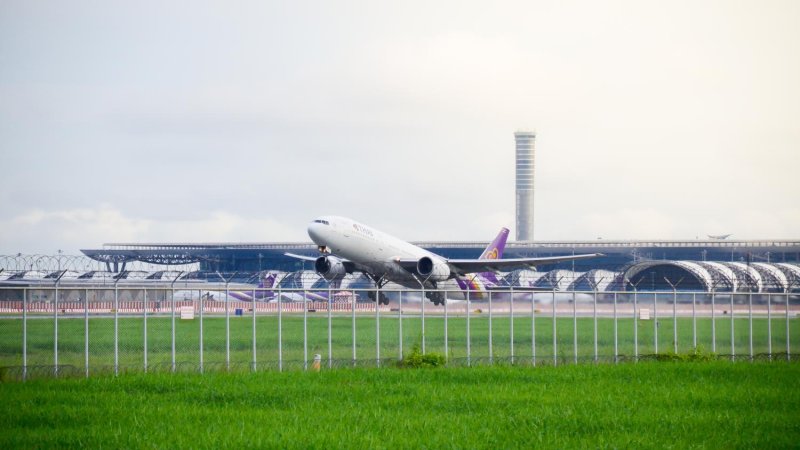
Flag carrier Thai Airways International (THAI) plans to add European flights, yet still maintain proactive fuel cost and route network management amid short-term concerns about spillover impacts from the war in the Middle East and geopolitical tensions.
The International Air Transport Association (IATA) expressed short-term unease about potential jet fuel shortages and predicted flight cancellations would begin this month in Europe and parts of Asia, THAI said in its filing to the Stock Exchange of Thailand (SET) yesterday.
However, IATA's travel demand forecast indicates global air travel demand is likely to more than double by 2050, primarily driven by the Asia-Pacific region.
Growth rates will vary by region depending on demographic structures, market saturation levels, economic development and connectivity potential, noted the association.
The Thai economy faces risks from the Middle East war and US import tariff measures, said the airline.
The Tourism Authority of Thailand downgraded its 2026 tourist arrival target by 18% to 30-34 million due to the slowdown in Middle Eastern, European and American markets, flight route constraints, fuel price volatility, trade wars and intense global competition.
THAI plans to resume its Bangkok-Amsterdam round-trip service with daily flights, totalling seven flights per week, from July 1.
For its summer flight schedule, the carrier operates services to 62 destinations across domestic and international networks.
"Considering the geopolitical uncertainties, after monitoring we implemented proactive management measures to mitigate potential impacts on performance," noted the statement.
These measures include fuel cost management such as fuel hedging, improving fuel efficiency, and regularly monitoring fuel price trends to align operational plans with the evolving situation.
For route network management, the airline plans to focus on adjusting flight routes and frequencies to match optimal passenger demand. Ticket prices will be adjusted in line with seasonal demand and a shifting emphasis to high-potential, low-risk markets, said THAI.
Non-urgent investment projects have been either delayed or suspended, as the airline vows to "maintain adequate cash and liquidity levels to withstand uncertainty".
This monitoring involves assessing impacts through stress tests and scenario analysis to ensure business plans can be adjusted promptly, noted the filing.
In the first three months of 2026, THAI reported total revenue excluding one-time items of 51.0 billion baht, down 1.2% year-on-year, as passenger and excess baggage revenue fell 2%.
However, the average passenger yield, including fuel and insurance surcharges, remained in line with the previous year despite the baht's appreciation, reflecting the effectiveness of pricing strategies and revenue structure management, the statement noted.
Quarterly net profit amounted to 10.1 billion baht, up 2.7% year-on-year, as finance costs decreased 14.2% to 2.99 million and there was a recognition of net one-time items worth 1.09 billion.
As of March 31, THAI had 80 aircraft in operations, including 11 company-owned aircraft and 69 aircraft under lease agreements.
