


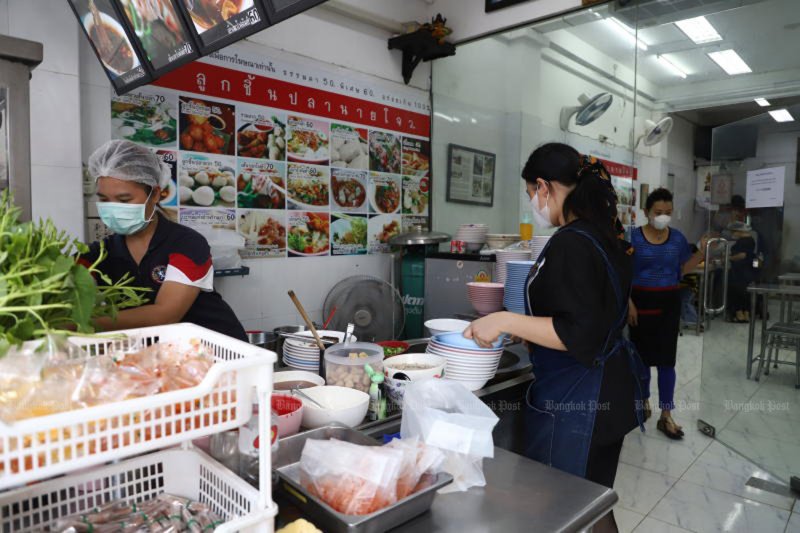
The government co-payment stimulus scheme "Thai Chuay Thai Plus" is unlikely to benefit mid-sized to large restaurant operators, says the Thai Restaurant Association, calling on the government to provide support to the neglected segment.
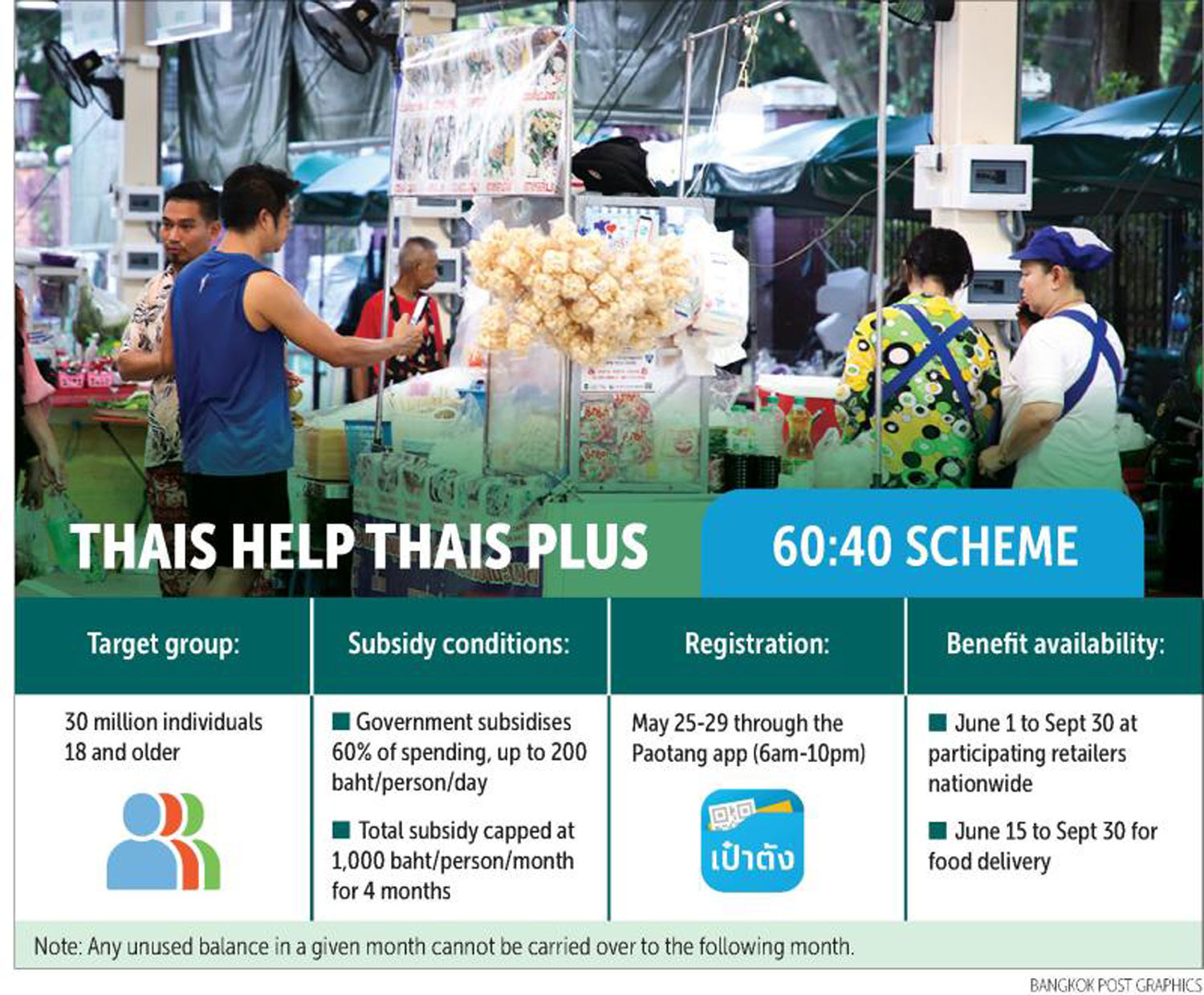
The government is subsidising 60% of payments, with participants paying the remaining 40%. The government subsidy is capped at 200 baht per day and 1,000 baht per month, running from June to September.
Non-legal entity restaurants and retail operators are eligible to participate. Small legal entities with annual revenue of less than 1.8 million baht are also eligible.
This means mid-sized to large restaurants that are legally registered taxpayers are typically not eligible, said Thaniwan Kulmongkol, president of the association.
The industry faces many challenges as customers are more cautious with spending, opting for smaller restaurants and dining out less.
Sales during this low season are alarming, she said, dropping below the normal level.
"Some restaurants decided to temporarily close," said Mrs Thaniwan.
Scaling down restaurant operations inevitably leads to staff layoffs, she noted.
High energy prices have also pushed up logistics costs for raw materials.
Food delivery platforms informed Mrs Thaniwan that a greater share of gross profit (GP) is being allocated to support delivery drivers, who are directly affected by increased energy prices.
She interpreted this to mean food delivery platforms are unlikely to reduce their GP rates to support restaurants during this period.
"Restaurants with less liquidity will face a tougher challenge than those with funds during this period," said Mrs Thaniwan.
However, the stimulus measures for the tourism sector could help lift the entire economy, she noted.
Restaurant operators are calling on the government to control the rising prices of raw materials and reduce their price fluctuations as these directly affect them.
Authorities could facilitate matching between restaurants and wholesale and retail operators to reduce ingredient prices, said Mrs Thaniwan.
Furthermore, the government should launch measures such as reducing employers' contributions to staff social security and cutting taxes for restaurants to ease the burden on operators during this period, she added.
The association also encouraged the authorities to organise food festivals and offer low rental rates to operators as another platform to earn income.
