 Listen


 Facebook
 Reddit
 Copy Link


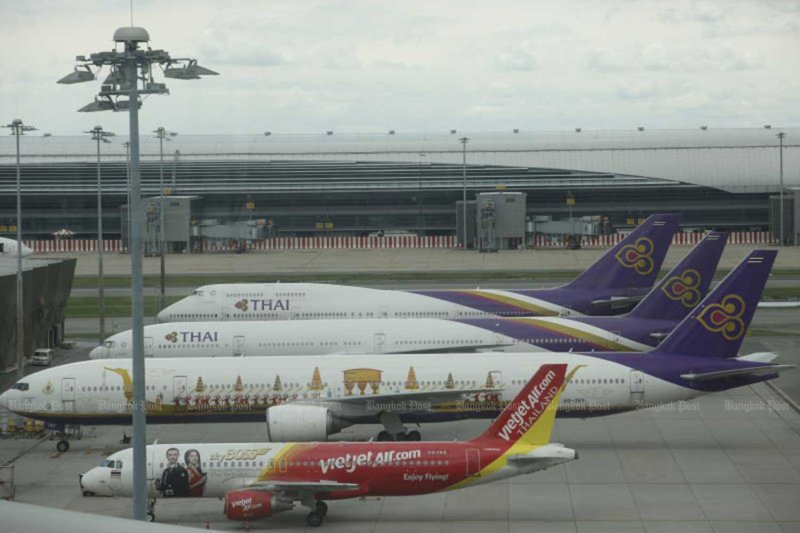
A former pilot at Thai Vietjet Air has won a legal battle against the airline, with the Court of Appeal ruling he was unlawfully deprived of flight-related remuneration after deciding to mitigate health risks to passengers when the aircraft's auxiliary power unit (APU) was defective.
Thailand's specialised Court of Appeal ruled earlier this month that Thai Vietjet Air Joint Stock Company must pay 76,405 baht plus annual interest of 15% to Jakarin Sararnrakskul, who served as a pilot for the airline from 2016.
The amount was withheld after the airline removed the pilot from scheduled flights while investigating a delay of 1 hour and 39 minutes on March 15, 2024, following the pilot's decision to refuse passenger boarding because the aircraft's APU was defective, resulting in inadequate cabin cooling and poor ventilation while he was acting as pilot-in-command of flight VZ130 from Bangkok to Chiang Rai.
Mr Jakarin, who is also a physician, defended his decision by explaining that cabin temperatures of 30-31°C were unsafe and that boarding passengers could pose health risks, including heat exhaustion and heat stroke.
He also cited the operational manual for aviation personnel, which sets a safety standard requiring passengers not to remain in an aircraft cabin without air conditioning for more than 20 minutes, a period that would have been exceeded during boarding from the buses to the plane.
The flight departed 1 hour and 39 minutes late after the plane was moved to a gate where air conditioning could be supplied through the jet bridge.
The company argued that the delay also disrupted five subsequent flights, causing losses as it had to compensate affected passengers.
Following the incident, Thai Vietjet removed the pilot from scheduled flights while investigating the delay. As a result, he lost certain payments including flight-hour pay and landing allowances.
The pilot filed a complaint with the Labour Inspector, claiming unpaid wages, and the inspector ordered the company to pay him 76,405 baht plus interest.
However, the Central Regional Labour Court No.1 revoked the Labour Inspector's order, arguing that flight-hour pay and landing allowances did not constitute wages and the airline's actions were justified.
An appeal to the Court of Appeal reversed the Labour Court's decision, confirming the inspector's determination that the pilot had not violated company rules, and that the finding was finalised.
Teerawat Angkasakulkiat, president of the Thai Pilots Association, said the court's judgement reaffirms the fundamental principle that the pilot-in-command holds the authority and responsibility for the safety of a flight and its passengers.
He said the case highlights the need for the Thai aviation industry to collectively foster a positive safety culture, in which all personnel feel empowered to report safety concerns without fear of negative repercussions.
Management must value decisions made in the interest of safety, and any review of an incident should focus on identifying systemic causes, fostering collective learning and improvement rather than assigning blame, said Mr Teerawat.
"This ensures that pilots can make decisions for the benefit of their passengers with confidence, and that every incident serves as a valuable lesson in making aviation in Thailand even safer," he said.
The case is grounded in aviation law and the international standards established by the International Civil Aviation Organization, which grant the pilot-in-command power to make decisions regarding the plane under their charge, noted Mr Teerawat.
Such authority is exercised within the framework of operational manuals established by the operator and is subject to oversight by government authorities.
As the individual on the front line, the captain bears responsibility for every life on board. Decisions made in good faith, in accordance with operational manuals and aimed at safeguarding the well-being and safety of passengers, fulfil pilots' professional and legal obligations, Mr Teerawat said.


