 Listen


 Facebook
 Reddit
 Copy Link


Thai Union Group (TU) is targeting annual revenue growth of 4-6% under its Strategy 2030 plan as the SET-listed manufacturer and exporter of frozen and canned seafood has shifted its global business towards value creation rather than volume growth.
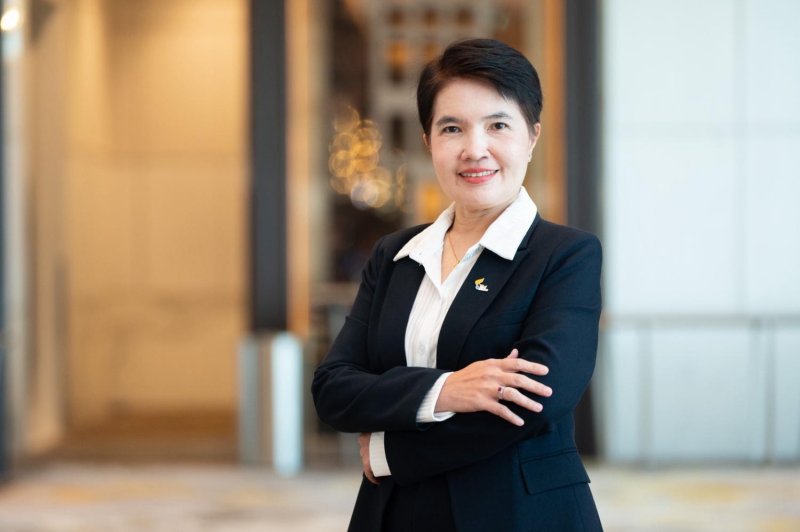
Chief financial officer Ratiporn Ratcharoen said slower population and consumer growth as well as intensifying price competition were making volume-led expansion more difficult. TU is focusing on adding value and functionality to products to meet changing consumer demand.
The company wants to increase the share of its own-brand products, which currently account for 48% of its business, she said.
TU is also moving its original equipment manufacturing business beyond taking orders, becoming a co-creation partner, said Ms Ratiporn. The company's R&D and marketing teams will work with customers to develop new products and private-label brands, applying an approach already used by subsidiary i-Tail Corporation, she noted.
Another growth area is higher-value tuna ingredients, including collagen extracted from tuna-processing byproducts for health and beauty markets in Europe. The company is also monitoring trade conditions, including the suspension of UK tuna import tariffs until 2028 and expected tariff reductions in Europe in mid-2027.
TU aims to raise its return on assets from around 5% to 7-8% within 2-3 years, maintaining gross profit margin at about 20% and gradually reduce core selling, general and administrative expenses, said Ms Ratiporn. These costs are projected to reach a maximum of 14.5% this year, with the company targeting an annual reduction of 0.5 percentage points towards an optimal level of around 13%.
Central to the plan is reducing the debt-to-equity ratio from around 5 to less than 4.5 to 1 by 2027-28, a move expected to cut interest expenses by 10-20%. TU wants to increase operating profit, keep annual capital expenditure below its historical level of about 4 billion baht, reduce inventories across its global factories and extend payment terms for suppliers outside the fish supply chain, she noted.
Under its exit strategies for all mergers and acquisitions, investments that fail to meet targets within 2-3 years, or 5-7 years for strategic investments, will be reviewed. TU is seeking to lower financing costs through sustainable bond issuance and greater flexibility by removing the existing 60% cap on dividend payments, while maintaining a dividend payment of at least 50%.
TU reported third-quarter sales of 35.7 billion baht, up 3.4% year-on-year. Operating profit increased by 16.2% to 2.1 billion baht, while gross profit margin reached 20.4%, remaining above 20% for a second consecutive quarter. Net profit rose 3.2% to 1.35 billion baht.
For the first nine months, sales grew by 4% year-on-year, while gross profit margin reached a record 20% for the period. Earnings per share rose by 7.8% to 0.97 baht.
Thiraphong Chansiri, president and chief executive of TU, said the company remains confident in achieving its full-year guidance. He attributed progress to strengthening its core businesses and improving profitability despite higher energy, freight and raw material costs, as well as inflationary pressure on consumers.
For the fourth quarter, TU expects sales growth of more than 4%, supported by ambient branded products and the seasonal peak for frozen seafood. Full-year gross profit margin is expected to near 20%, higher than last year, although selling and administrative expenses may rise slightly due to one-off items, freight and legal costs.
