 Listen


 Facebook
 Reddit
 Copy Link


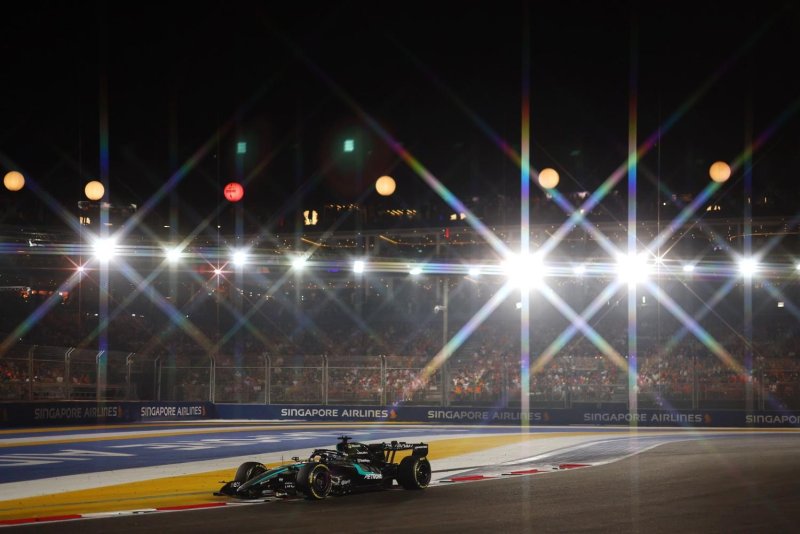
On Sunday, Kimi Antonelli made history by clinching the Formula One World Championship as the youngest driver to win the title for the Mercedes-AMG Petronas team.
On the podium, the name of lighting company Signify appeared on the car as one of the team's principal sponsors, having maintained a partnership with them since 2024.
Signify has served both professional and consumer markets for more than 130 years through its flagship Philips lighting brand, yet it made a bold move by venturing into motorsport, an industry that appears entirely unrelated to its core business.
However, their shared vision for growth offers a clearer insight into the rationale behind this strategic move.
BRAND-BUILDING STRATEGY
Since rebranding from Philips Lighting in 2018, Signify's main strategy has been to build familiarity with its new corporate identity.
While the company retains full ownership of Philips lighting products, it has also expanded its portfolio with product lines under the Signify brand.
Signify's approach to building brand awareness centres on F1 as a launch platform, leveraging the sport's extensive global coverage and audience reach.
According to Formula 1, its global fanbase reached 827 million in 2025, representing a 12% year-on-year increase.
As Tempelman, chief executive of Signify, said that partnering with Mercedes aligns with his company's innovative mindset and operational excellence. "In Formula 1, you need a strong team and constant innovation. Competition is fierce. It's no different for us. It closely reflects how we see the world," he said.
Signify is now in the third year of this partnership, and the collaboration has already delivered positive results across the company's brand performance indicators.
"When I saw the targets that had been set for the brand indicators, I thought they were ambitious. Yet we exceeded them, in the sense that the sponsorship has delivered more than we had anticipated," said Mr Tempelman.
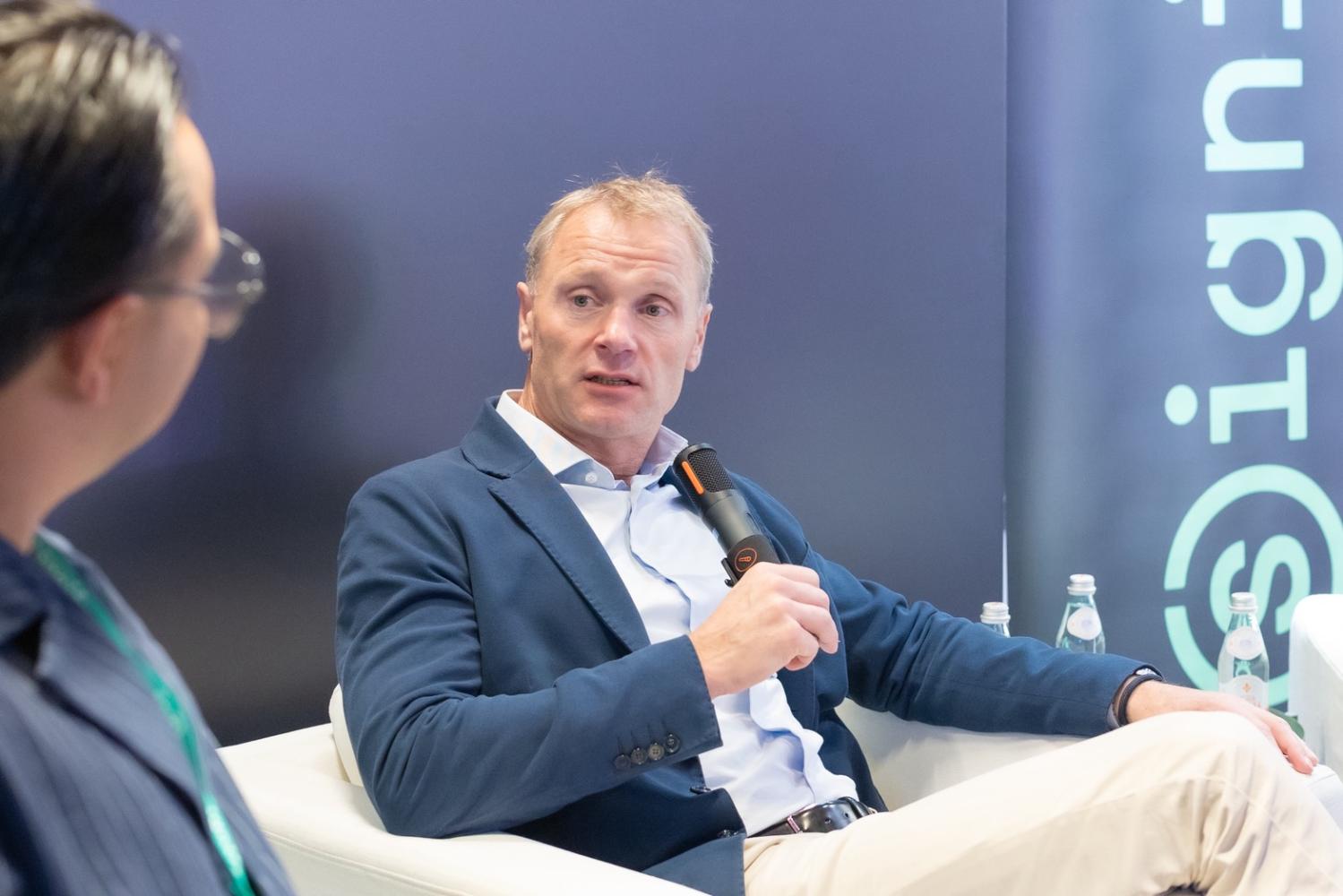
Mr Tempelman said partnering with Mercedes aligns with Signify's innovative mindset and operational excellence.
ENHANCING PERFORMANCE
Signify's partnership with the Formula 1 team demonstrates how lighting has evolved from a basic utility into a critical technology that enhances team performance while creating a safe and immersive environment.
Toto Wolff, co-owner, team principal and chief executive of the Mercedes-AMG Petronas F1 Team, said the partnership brings Signify's lighting expertise to both the team's headquarters in Brackley, UK, and its trackside operations.
"Performance in Formula 1 is about finding gains in every area, including how we create the right working environment for our people," said Mr Wolff.
For instance, Signify's NatureConnect indoor skylight product was integrated into the team's simulator control and driver's room, mimicking natural lighting by synchronising with the circadian rhythm.
The skylight helps energise the team during the daytime, while offering softer lighting in the evening to support relaxation and a good night's sleep.
The company's innovations help create optimal conditions for drivers, engineers and team members, supporting their focus, comfort and performance across demanding schedules. These include personalised light plans and jet lag mitigation for drivers, travel lighting kits in the motorhome and driver rooms, as well as Philips F9 portable floor lamps in engineers' rooms.
At the team's headquarters, there were more than 1,600 luminaires across its buildings, 100 NatureConnect products, 700 myCreation 3D-printed lights, 500 Philips products and 300 Modular products. More than 950 employees work on site 24 hours a day, seven days a week.
In 2020, the headquarters was awarded three-star certification, the highest level in the Fédération Internationale de l'Automobile's environmental accreditation programme.
"As a Formula 1 team, you are always looking for the next innovation. We share the same relentless obsession and attention to detail," said deputy team principal Bradley Lord. "That is exactly what you need in a partnership: someone who shares that mindset and commitment to continuous improvement."
At Mercedes' hospitality spaces and paddock clubs at races, Signify also provides solutions such as immersive Philips Hue TV surround lighting around driver simulators, Philips Hue OmniGlow Striplight, Philips Hue Go table lamps and Signify myCreation 3D-printed luminaires.
"Formula 1 is all about emotion and how we create emotions for fans in front of the TV, here on site and also deliver incredible experiences for our guests," added Mr Lord.
RACE LIGHTING
Signify also supported the Singapore Grand Prix night race as a supplier of professional lighting products.
"If Thailand were to have a night race, we are ready to help and provide lighting solutions," added Mr Tempelman.
The race requires a complex lighting design that serves drivers, team personnel and spectators alike, whether they attend the event in person or watch the live broadcast from home. It must also capture the speed and emotion of the competition.
DZ Engineering, a company specialising in lighting and telecom engineering, was responsible for delivering the lighting infrastructure for the Singapore night race.
"Lighting is not something to see, but something that enables the events themselves to happen," said DZ Engineering general manager Roberto Grilli. "We are adapting to the city, not asking the city to adapt to us."
Mr Grilli said the lighting design was directly influenced by the circuit itself. When developing a new venue, the lighting system is considered from the outset and tailored to surrounding features such as infrastructure, buildings and trees. It must deliver the reliability and safety required for a night race.
Moreover, the Singapore circuit uses a modular, temporary and reusable system. All components can be dismantled, stored and reused for the following year's race.
Advances in technology have also enhanced the racing experience. For example, LED lighting has helped reduce the racetrack's energy consumption by an estimated 30%.
DZ Engineering has also designed lighting systems for other Formula 1 events, including races in Las Vegas and Riyadh, as well as Formula 1-related projects in London.
Inna King, head of commercial and marketing excellence for emerging markets at Signify, said the future of sports lighting will be defined more by intelligence, offering greater control, deeper insights and the ability to adapt lighting to the specific needs of venues, events and the people experiencing them.
Connected systems such as Signify's Interact platform already give venues greater control over their lighting while providing data-driven insights that can help improve operations and enhance energy efficiency.
Augmented reality also enables operators to visualise luminaires, their positions and light distribution throughout a venue even before installation.
As a result, these technologies can create a much stronger connection between how lighting is designed, how its real-world performance is measured and how it is continuously optimised, said Ms King.
LIGHTING UP THE HOME
Chandra Vaidyanathan, executive vice-president of consumer business in emerging markets and managing director for Singapore at Signify, said the company's ambition is to bring the excitement of the racetrack into consumers' homes.
For fans watching from home, Signify's flagship product is Philips Hue, which is designed to deliver an immersive lighting experience.
By synchronising colours and lighting effects with movies, sports broadcasts or on-screen action, the system extends the viewing experience beyond the television into the surrounding space, enhancing home entertainment.
Mr Vaidyanathan said four key elements contribute to this experience: colour, intensity, brightness and movement.
Philips also offers an application that allows users to personalise their lighting settings, reflecting the growing role of connected lighting technology.
"At the end of the day, it's not just about the experience, but about how we can enhance it to the greatest extent possible," he said.
