 Listen


 Facebook
 Reddit
 Copy Link


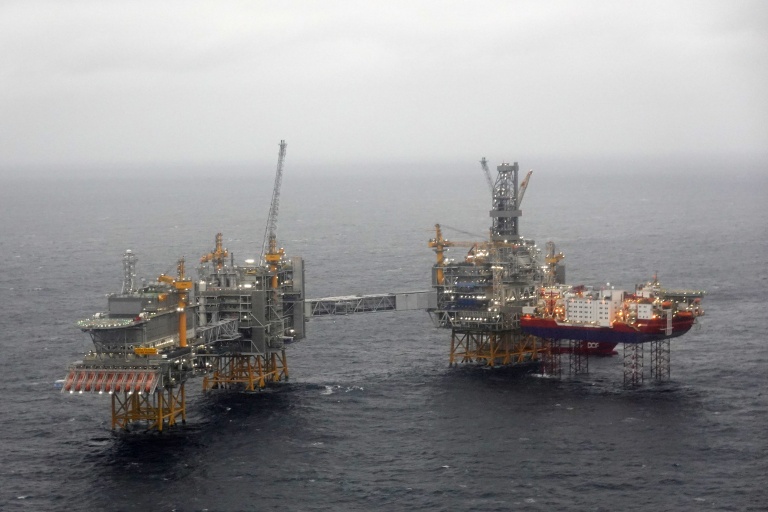
OSLO - Norway’s Supreme Court on Friday ruled that three oil licences granted by the government in the North Sea were invalid since their emissions impact had not adequately been accounted for.
The court agreed with climate campaigners, who challenged the validity of the licences, arguing that the environmental impact assessments had not considered the emissions from burning the oil after it had been extracted.
“This is a historic victory for the climate and for Norwegian democracy,” Haldis Tjeldflaat Helle, head of the Norwegian wing of Greenpeace, told AFP shortly after the ruling was announced.
AFP has reached out to Norway’s energy ministry for a comment to the verdict.
For the highly anticipated decision, the court sat in plenary formation, meaning that 11 judges took part instead of the usual five — a format reserved for important cases.
The campaigners had already won victories in two lower-court rulings.
The high court ruled that the plans for extraction and expansion were “invalid due to procedural errors”.
It noted in a statement that while emissions assessments were carried out, they only covered so-called production emissions and not the subsequent “combustion emissions”.
According to the court, “the combustion emissions resulting from petroleum production must be subject to an impact assessment” before a plan is approved.
“Big polluters are now forced to admit exactly how much they will contribute to the climate crisis that we are in the middle of,” Tjeldflaat Helle said.
Closely watched
The ruling will be closely watched beyond the borders of the Scandinavian country by the many legal experts and NGOs who have challenged production licences granted to oil companies on climate grounds.
Young Friends of the Earth Norway and the Norwegian branch of Greenpeace filed the case in 2023 against the permits for the Tyrving, Breidablikk and Yggdrasil fields.
In January 2024, a district court ruled in their favour, prompting Norway’s Ministry of Energy to lodge an appeal. The ruling was then upheld by a court of appeal in November 2025.
The Energy Ministry argued there were no grounds to halt the projects.
Operations were allowed to continue at the three contested North Sea fields while the energy ministry appealed the rulings.
Breidablikk and Tyrving are currently operational, while Yggdrasil — whose potential reserves were recently revised upward — is due to start producing in 2027.
The Supreme Court noted that the oil companies were not parties in the case and said the fact the approvals had been declared invalid did not automatically mean the licences ceased to apply.
“The ministry must, however, reassess the case on the basis of proper procedure,” the court said.
Norway’s energy ministry had maintained that it has carried out adequate environmental assessments for the North Sea licences.
Norwegian Energy Minister Terje Aasland stressed ahead of the ruling that his country is contributing to the fight against climate change in line with its international commitments.
More challenges emerging
Climate campaigners around the world have started seeing successes by employing legal routes to challenge projects.
Australia’s highest court in October blocked the expansion of a coal mine in New South Wales, saying that planning bodies had not properly looked at the local impacts of planet-heating emissions from the coal.
In France, a court in June ordered TotalEnergies to take into account emissions linked to all its products in its corporate vigilance plan.
The United Kingdom’s top court in 2024 ruled in favour of opponents to an oil drilling project, finding that its environmental impact had not been sufficiently taken into account.
Jasper Teulings, a legal specialist at the Climate Litigation Network, told AFP ahead of the ruling that the case would likely have international repercussions.
“We could be looking at an emerging norm that makes it really difficult for governments to issue such licences,” Teulings said.
“Obviously, all of this has severe implications for the fossil fuel sector’s expansion plans,” he added.
The conflict in Ukraine has led to a sharp decline in Russian gas and oil deliveries to Europe, with Norway overtaking Russia as the continent’s main supplier.
