


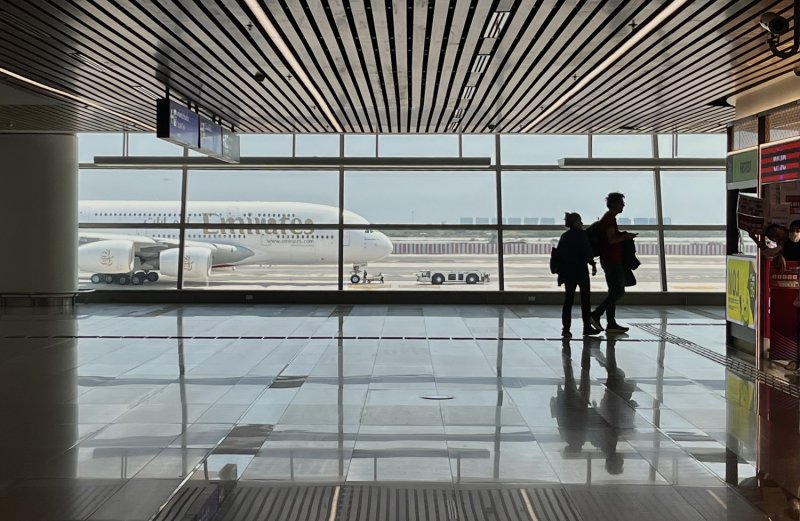
The Eastern Economic Corridor (EEC) is expected to attract a fresh wave of investment this year, following renewed progress in the long-delayed U-Tapao Airport and Eastern Aerotropolis development project, according to the EEC Office.
Chula Sukmanop, secretary-general of the EEC Office, said construction of the 290‑billion‑baht U-Tapao Airport project is scheduled to begin on April 3.
"The EEC is confident that both U-Tapao Airport and the Eastern Aerotropolis will proceed without further delays and be completed on schedule, which will enhance Thailand's appeal to foreign investors," he said.
The project had been stalled for years due to setbacks in building the high-speed rail system linking three airports, with the Covid-19 pandemic compounding delays.
The U-Tapao Airport and Eastern Aerotropolis are among the government's flagship megaprojects, designed to strengthen investor confidence and drive long-term growth in the EEC.
The EEC strategy emphasises transforming the region into a hub for next-generation industries, focusing on advanced technology, innovation and sustainable infrastructure.
Progress accelerated after the EEC Office signed a management contract with U-Tapao International Aviation Ltd (UTA), the concessionaire, on Jan 29.
UTA agreed to waive certain contractual conditions tied to the rail project, breaking a five-and-a-half-year deadlock.
Mr Chula made the announcement during the Thailand-Japan Sustainable Business Forum, co-organised with the Japan External Trade Organization (JETRO).
Ichiro Abe, president of JETRO Bangkok, highlighted Japan's longstanding investment in Thailand and said Japanese firms are now eyeing opportunities in artificial intelligence, data and cloud services.
"Many Japanese companies are interested in these global trends, and Thailand has been a production base for Japanese industry for decades," Mr Abe said.
JETRO recently signed memorandums of cooperation with Thailand's Board of Investment and the EEC Office to promote collaboration in sustainability and green transformation.
The partnership will focus on decarbonisation, resource circulation, energy efficiency and the adoption of advanced digital technologies to support carbon neutrality.
