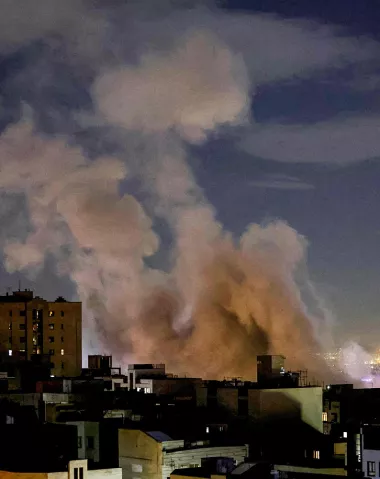
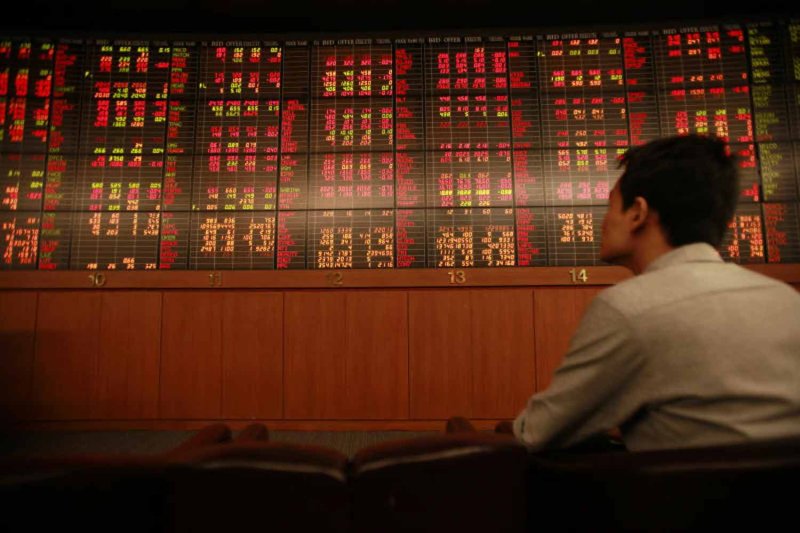
Investors are being advised to raise cash positions amid heightened volatility in the Middle East, says InnovestX Securities, warning that a prolonged conflict could materially weaken Thailand's economic outlook while amplifying fiscal and financial risks.
Piyasak Manason, head of economic research, said that in a moderate case where the Middle East war lasts 2-3 months, Thai GDP growth could slow to 1.4% from 1.7%, while inflation rises to 0.8%. Under this scenario, interest rate cuts by both the Bank of Thailand and the US Federal Reserve would likely be delayed.
In a prolonged scenario, with tensions extending beyond three months, oil prices could stay near US$100 per barrel, dragging GDP growth down to around 1% and pushing inflation above 1%. This may force the central bank to maintain or even raise interest rates to safeguard stability.
Head of research Sutthichai Kumworachai said persistently high oil prices are eroding purchasing power, raising production and transportation costs, and weakening consumption.
If global oil rises further towards $120 per barrel, the impact could intensify across the economy, he pointed out.
Keeping domestic diesel prices near 40 baht a litre under such conditions would require subsidies of up to 270 billion baht, significantly increasing public debt. This has reignited the debate over raising Thailand's debt ceiling from 70% to 80% of GDP to create fiscal space, Mr Sutthichai noted.
"While higher borrowing could support infrastructure investment and short-term stimulus, such as the 'Khon La Khrueng Plus' Phase 2, it also raises the risk of credit rating downgrades," he said. "Thailand has already seen negative outlook adjustments from rating agencies amid rising debt and interest rate pressures."
With inflation rising, policymakers have limited room to cut rates and may instead rely on targeted liquidity measures to support vulnerable groups. This approach aims to cushion the economic impact without worsening inflation, he added.
VOLATILITY AHEAD
InnovestX expects global markets to remain highly volatile in the second quarter, with rising oil prices increasing the risk of a global slowdown and accelerating inflation. A stronger US dollar may further pressure non-US markets, particularly in Europe and Asia.
For Thailand, the trajectory of growth will depend on how long the conflict persists and how high oil prices climb. In the near term, elevated energy costs, which have pushed domestic fuel prices toward 39-40 baht per litre, are already eroding purchasing power and weighing on sentiment.
The firm sees the Stock Exchange of Thailand (SET) trading in a range of 1,500 and 1,530 points, with support level projecting at 1,100 in the worst-case scenario.
"Markets will likely remain volatile in the short term. Until clearer signals emerge, a cautious strategy, anchored by higher cash levels, selective domestic exposure, and disciplined risk management, remains the most prudent course for investors," the company said.
CASH IS KING
Sittichai Duangrattanachaya, head of investment strategy, advised investors to increase their cash position, reduce exposure to globally sensitive assets, and focus on domestic-oriented sectors with strong pricing power. Preferred sectors include telecommunications, power generation, and infrastructure, which are seen as more resilient to external shocks.
The brokerage maintains a "stay invested, stay selective" approach, encouraging diversification and long-term investment in structural growth themes such as artificial intelligence and energy infrastructure. In fixed income, short-duration, high-quality instruments are recommended, while gold "remains a medium- to long-term hedge" despite potential short-term pressure from interest rate movements.
Markets remain highly sensitive to developments in the Middle East, particularly risks to the Strait of Hormuz, which handles nearly 20% of global oil flows. Escalation involving Israel and Gulf states, or disruptions in oil supply, could sustain price pressures, while diplomatic progress, such as US-Iran talks, may provide relief, said Mr Sitthichai.