


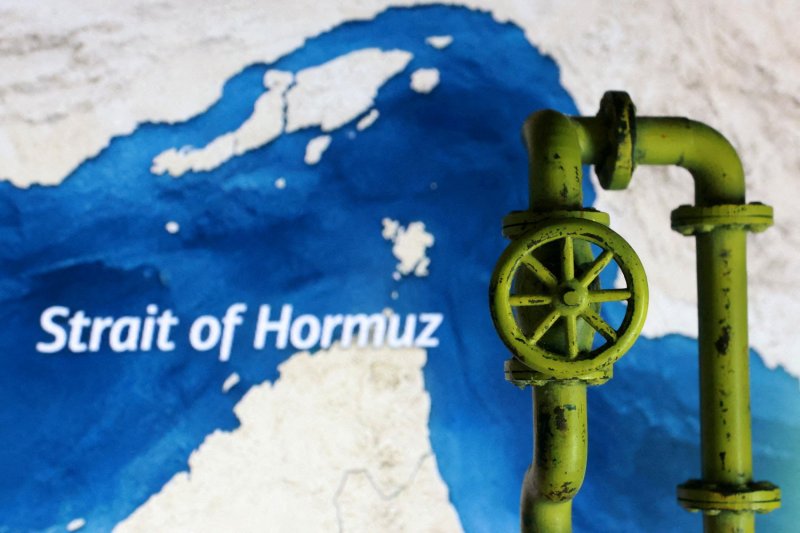
The war in Iran continues with ongoing attacks by both sides, while Iran's closure of the Strait of Hormuz weighs on investor sentiment.
US President Donald Trump has expressed willingness to negotiate as he is politically motivated to end the war as soon as possible.
Reports that some oil tankers have begun to pass through the Strait of Hormuz again, as well as Trump administration estimates the war could last weeks, not months, have helped ease market tensions. This aligns with our initial assessment that a prolonged war is unlikely, and could end or de-escalate in the near future.
Meanwhile, the Federal Reserve, the European Central Bank and the Bank of Japan all maintained their interest rates, as expected by the market.
The Fed's interest rate forecast remains unchanged at one reduction this year, though the market sees only a small chance for a rate cut before mid-2027.
We continue to expect global stock markets to fluctuate in response to the Mideast war, based on three possible scenarios:
1. If both sides opt for negotiations and a ceasefire, stock markets will rebound strongly.
2. If the conflict is prolonged but limited and the impact on oil transport is minimal, stock markets have a chance to recover.
3. If the war escalates and significantly impacts oil production and transport, stock markets could continue to decline.
We view the conflict as limited and awaiting negotiations, and recommend gradual accumulation of stocks in the US, China and Vietnam.
For alternative assets, if negotiations begin or the war ends, we recommend taking profits on oil and buying gold.
ASEAN MARKETS
Asean equity markets were tested by renewed Middle East tensions and a spike in oil prices that reignited inflation worries and risk-off sentiment.
Rather than a broad rally, March was marked by consolidation in earlier leaders and deeper pullbacks in weaker markets, even as the region's macroeconomic and structural story remained intact.
Singapore's Straits Times Index and Malaysia's FBM KLCI eased from recent highs but remain up compared with the end of 2025, supported by banks, telecom and large-cap defensive stocks.
The Philippines and Vietnam saw more volatile trading, with profit-taking in growth and property names offset by relatively steadier consumer staples and financials. Indonesia remained the notable laggard, with persistent foreign selling and policy uncertainty weighing on broad cyclicals.
If geopolitical risks stabilise and domestic reform momentum holds, we expect foreign investors to selectively rotate back into Asean throughout 2026.
THAI BOURSE
In Thailand, we expect the SET index in April to move sideways up within a range of 1,400 to 1,470 points. While Middle East tensions remain a key market driver, our base case assumes the conflict will not be prolonged.
Furthermore, Thailand has demonstrated resilience in managing the energy crisis through strategic reserves and government policy, such as the Oil Fuel Fund and state enterprises, which could help limit price pressure in the next four months.
On the economic front, Maybank Investment Banking Group downgraded its Thai GDP growth forecast to 1.5% from 1.8%.
However, the formation of a stable new government could accelerate policy implementation and unlock 1.1 trillion baht in infrastructure spending. Combined with the FDI FastPass policy, these factors serve as primary drivers to push long-term GDP growth towards 3%.
Given Thailand's low-inflation environment, we maintain a positive outlook with a year-end 2026 SET index target of 1,500 points, based on a target price/earnings ratio of 16 times.
Our top picks for April are the industrial estate operator AMATA as a private investment play, Airports of Thailand (AOT) as it gains transit passengers due to the war, and the power producer GPSC as a post-war beneficiary.
