
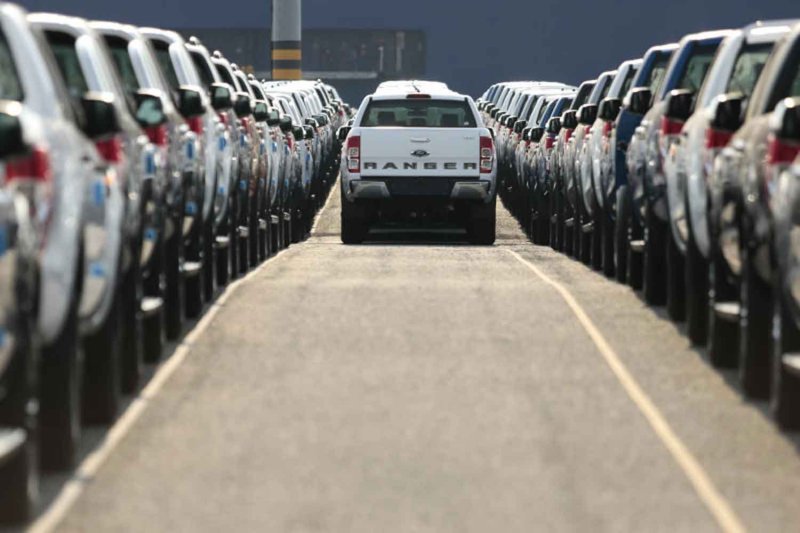
Thailand's automotive industry is facing mounting pressure as the Israel-US war on Iran disrupts shipping routes through the Strait of Hormuz, delaying vehicle exports to the Middle East, says the Federation of Thai Industries (FTI).
The situation is forcing a review of the FTI's car manufacturing projections for this year.
The Middle East is Thailand's third-largest export market for vehicles, after Asia and Australia, with strong demand for pickup trucks.
But the ongoing conflict has slowed deliveries to key destinations such as Saudi Arabia, Oman and the United Arab Emirates, said Surapong Paisitpatanapong, vice-chairman and spokesman for the FTI's Automotive Industry Club.
"The FTI is monitoring the war, which is changing quickly. This region is an important export market for Thailand, especially in the pickup segment," Mr Surapong said.
Roll-on/roll-off ships, which transport cars, motorcycles and trucks, are now holding back more than 200,000 vehicles bound for the Middle East due to concerns over attacks on cargo vessels.
Earlier this year, the club set a target of 1.5 million vehicles for 2026, including 950,000 units for export and 550,000 for domestic sale.
But exports have already shown signs of strain. In February, car shipments fell 0.05% year-on-year to 81,195 units, with declines across Asia, Oceania, Australia and the Middle East. Total exports for January and February dropped 2.76% to 139,600 units.
The industry also faces supply chain risks beyond shipping. Helium, a critical material for semiconductor production, has been disrupted after attacks on Qatar's Ras Laffan facility -- one of the world's largest helium hubs -- knocked out about one-third of global supply.
Domestic sales are also under pressure.
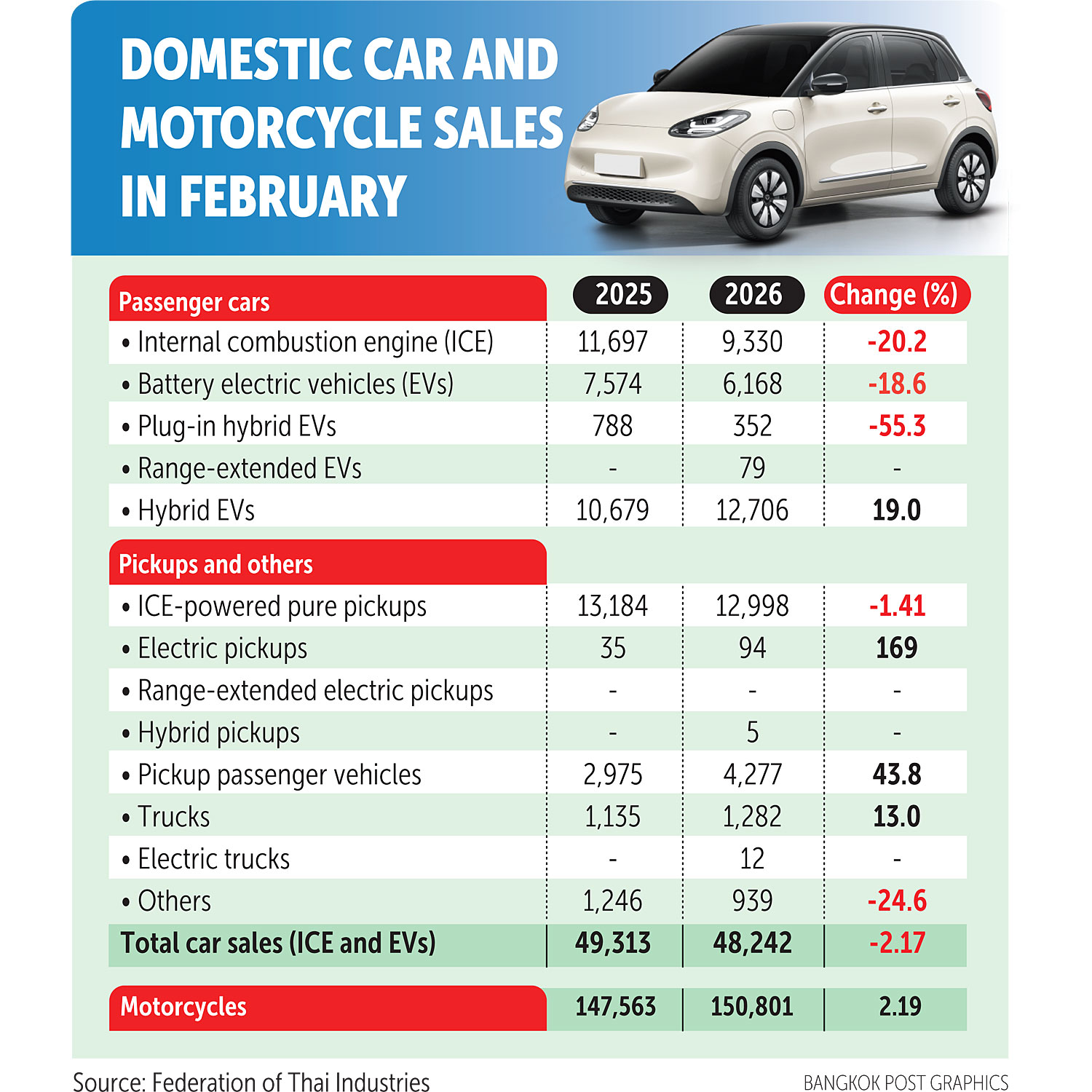
February car sales fell 2.17% year-on-year to 48,242 units, largely due to a sharp drop in battery electric vehicle (BEV) sales following the expiry of the government's EV3.0 incentive scheme.
Stricter lending criteria from banks and financing firms have further slowed purchases.
Despite these challenges, overall domestic sales between January and February rose 25.5% year-on-year to 122,218 units, driven by earlier BEV demand.
Car production in the same period increased 6.87% to 236,338 units.