


RIO DE JANEIRO — Brazil's labour ministry on Tuesday added Chinese electric vehicle (EV) giant BYD (Build Your Dreams) to a registry of employers found to have subjected workers to conditions analogous to slavery, limiting access to state financing and increasing reputational risks in its most important market outside China.
The Ministry of Labour and Employment published the updated Cadastro de Empregadores, commonly known as the "dirty list", adding 169 employers in the latest semi-annual revision.
BYD Auto do Brasil Ltda was included following the conclusion of an administrative process stemming from a December 2024 rescue operation at the company's factory construction site in Camacari, in the northeastern state of Bahia.
A civil public action filed by the federal labour prosecutor's office and seen by the South China Morning Post (SCMP) details the conditions inspectors found at the site.
When they arrived, there were almost no workers on site and the machinery stood at a standstill.
Brazilian workers told auditors that their Chinese counterparts normally worked seven days a week, including public holidays, and that supervisors had given them the days off only because the inspection team was coming.
At one of four dormitories examined, inspectors found 107 passports locked in an administrative cabinet labelled in Mandarin as "security"; some had been held since August 2024, leaving workers without access to their own travel documents on weekends and outside business hours.
Armed private security guards enforced a lockdown, sealing the gates after dinner and forbidding workers from leaving without supervisor authorisation.
Beds lacked mattresses or rested on foam padding roughly three centimetres thick; food was stored on the floor alongside personal belongings, with cockroaches and rats moving through sleeping areas.
In one facility, 31 workers shared a single bathroom, forcing them to wake at 4am to queue before their 5.30am departure for the site, and the kitchen was deemed unfit for use by inspectors.
On the construction site, there were only eight chemical toilets for the entire workforce, and workers had no sunscreen despite visible skin damage from prolonged sun exposure.
Workers received only a nominal living allowance in Brazil, in some cases less than US$200 a month, disbursed only with supervisor approval, and investigators found that around 60% of their wages were withheld and remitted directly to accounts in China.
The federal labour prosecutor's office said there were also indications of fraud in the immigration documents presented by the carmaker's contractors, as the Chinese workers had been brought to Brazil on visas issued for specialised technical services when the men were in fact construction labourers.
This category, the immigration authority explained at the time, is meant for engineers and consultants only.
Brazilian officials identified a contractor network centred on China JinJiang Construction Brazil Ltda and a second firm, later renamed Tecmonta Equipamentos Inteligentes Brasil, both of which worked exclusively on BYD's Camacari site.
Brazilian labour law holds the contracting company responsible for conditions imposed by its suppliers, a principle that auditors applied directly to BYD.
The company did not immediately respond to a SCMP request for comment on Tuesday's blacklisting.
But in previous opportunities, BYD said it maintains "unwavering commitment to human and labour rights" and that it would sever its contract with China JinJiang Construction.
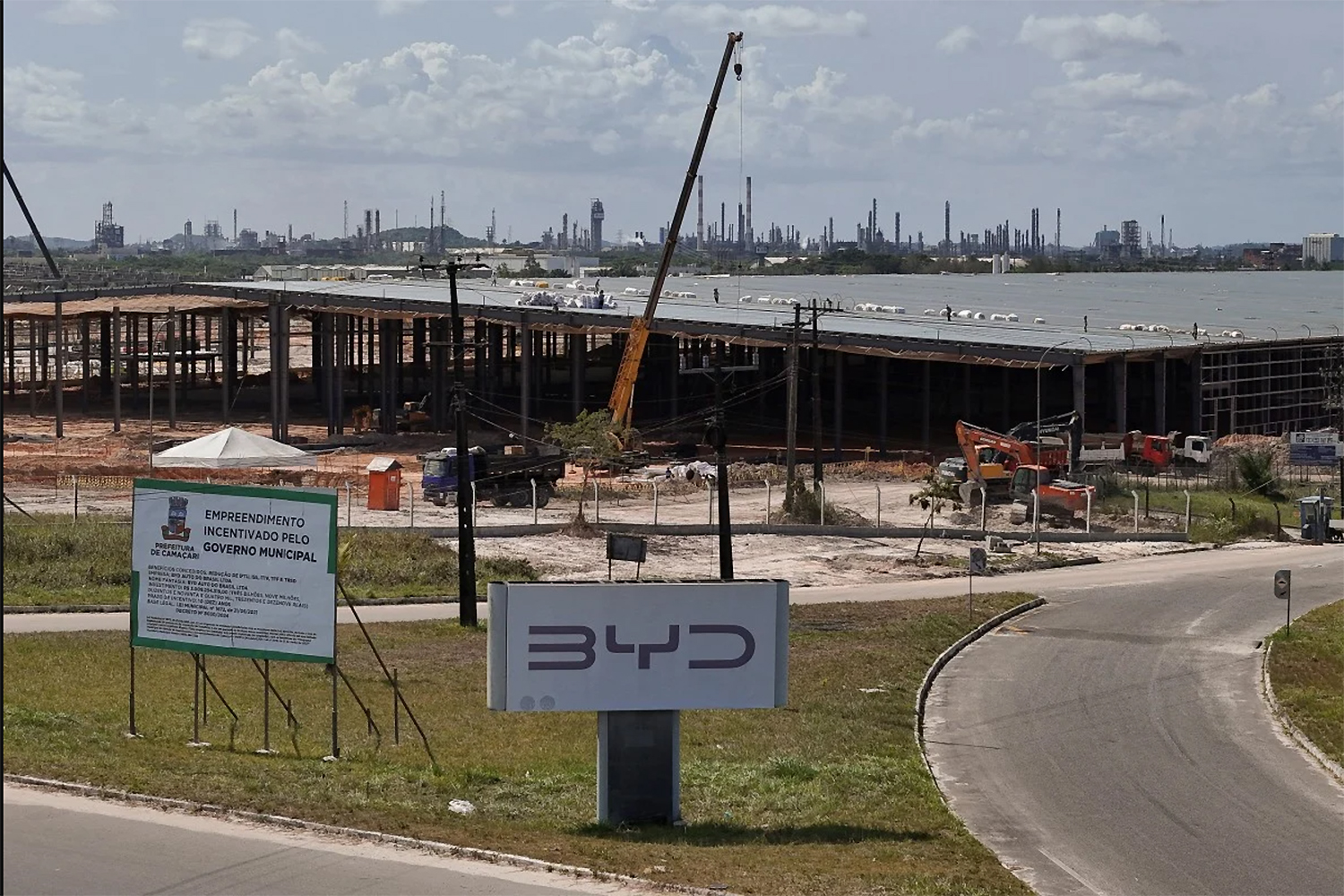
BYD’s electric vehicle (EV) factory’s construction site in Camaçari, Brazil, in December 2024. (Photo: Reuters)
In January, the carmaker giant and its contractor firms also reached a R$40 million (US$7.1 million) settlement with the labour prosecutor's office, directing half of this amount to individual compensation for the 224 rescued workers and the remainder to collective moral damages to be distributed to anti-slavery foundations in the state of Bahia.
But the settlement did not prevent Tuesday's blacklisting, which follows from the administrative process independently of any judicial outcome.
Under the registry's rules, BYD's name will remain on the list for at least two years. The listing does not shut down BYD's Camacari plant, but it restricts access to financing from state banks and from private institutions that are signatories to Brazil's national pact to eradicate forced labour. Government procurement can also be affected.
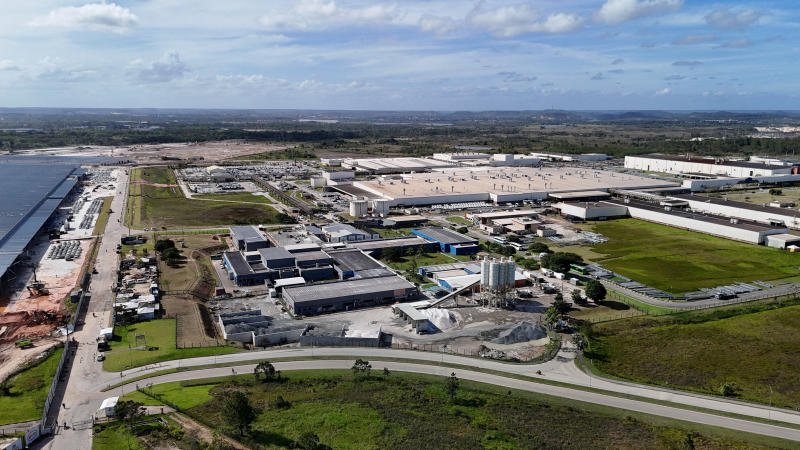
BYD inaugurated what it described as its largest electric vehicle plant outside Asia in October, at a ceremony attended by President Luiz Inacio Lula da Silva.
The R$5.5 billion (US$978 million) facility, built on the grounds of a former Ford plant, has an initial annual capacity of 150,000 vehicles, expandable to 300,000 in a second stage.
Since entering Brazil in 2022, BYD has sold more than 170,000 electrified vehicles, capturing 74.4% of the country's electric vehicle segment and rising to seventh place overall in national car sales.
Due to this success, China surpassed Argentina in January to become Brazil's largest vehicle exporter, with 16,800 units sent to Brazil that month, compared with 13,400 from Argentina, according to industry figures. Chinese car imports to Brazil reached US$375 million in January, more than 10 times the value recorded a year earlier.
