 Listen


 Facebook
 Reddit
 Copy Link


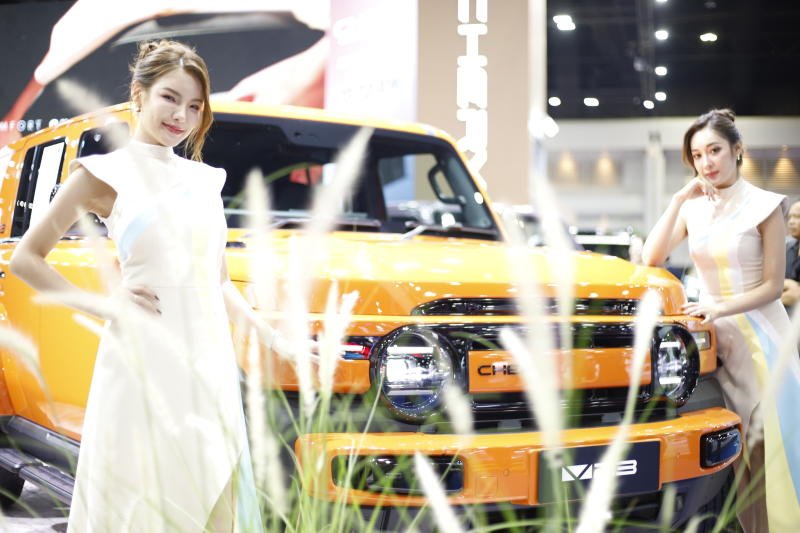
SHANGHAI — Chery Automobile, China's largest car exporter by deliveries, will begin testing its solid-state batteries next year, aiming to spearhead commercialisation of a technology likely to further spur the electrification of the global automotive industry.
Yin Tongyue, the chairman of the state-owned carmaker, which is based in central China's Anhui province, said on Thursday that it would invest 10 billion yuan (US$1.49 billion) in the new battery technology over the next two years, with 1,200 engineers to be deployed in the hunt for innovative breakthroughs.
"Multiple [battery] technology plans are being laid out," he told the World Power Battery Conference in Yibin, Sichuan province, the National Business Daily reported. "We will not install them in our vehicles unless they prove to be absolutely safe."
He said the solid-state batteries to be tested next year would have an energy density of 400 watt-hours per kilogramme, double that of the batteries used in existing electric vehicles (EVs).
Solid-state batteries, which use a solid electrolyte to conduct ions between electrodes, are widely seen as a superior alternative to conventional lithium-ion batteries, which rely on liquid or gel-based materials. Analysts said the technology promised higher energy density, improved safety and longer driving range.
But no solid-state batteries have been installed in mass-produced EVs.
And just a handful of cars - such as some premium models from Shanghai-based Nio - use semi-solid-state batteries, where liquid is added to solid electrolytes to improve performance.
Compared with liquid-based batteries, solid-state variants are less prone to overheating or catching fire in the event of overcharging or collisions.
Yin did not reveal when Chery cars equipped with solid-state batteries could hit the market.
In June, Robin Zeng Yuqun, chairman of Contemporary Amperex Technology Ltd (CATL), the world's largest EV battery producer, told a forum that mass production of solid-state batteries would not happen until 2030.
On a scale of one to nine, the technology had only reached level four to date, he said.
Eric Han, a senior manager at Shanghai consultancy Suolei, said Yin and Zeng's contrasting views might "attract more attention from the public as more drivers in China are now opting for electric cars".
"Even if the new tech gets mature, battery makers have to bring down the costs to make it affordable to consumers," he said.
