

Molam, a centuries-old musical tradition from northeastern Thailand (Isan) and the surrounding region, is finding firmer footing in Bangkok, where people who call Isan home make up the city’s largest migrant community.
Once seen as rural folk music, Molam has transformed into a trendy urban sound — played by DJs in gentrified bars and embraced by a wider Bangkok audience.
As its rhythms weave their way into the city’s cultural fabric, in this episode of Why Bangkok by the Bangkok Post, we speak with people across the industry — each with different roles but all taking part in shaping its growth — to explore how Molam is thriving in the capital. We look at how the music reflects the people who carried it here and where it may be headed next.
Migration brought culture
The mass migration of Northeasterners to Bangkok began in the 1960s, when the Thai government under Field Marshal Sarit Thanarat launched the country’s first National Economic Development Plan, said Arthit Mulsarn, an academic specialising in Isan culture.
“During that time, the city required a large workforce,” he said. “And while Isan was portrayed as drought-prone and underdeveloped, its people were compelled to seek work in Bangkok.”
Many migrants found jobs on construction sites and in factories, or became taxi and tuk-tuk drivers, gradually settling into communities across the capital. This migration brought not only a surge in population but also the cultural and spiritual identity of the Isan people, reshaping Bangkok’s social fabric.
The first Molam band to gain an official presence in Bangkok was Morlam Sunthrapirom, founded in 1956 by Sunthorn Aphisuntharankun, state public relations officials and Mae Khru Khampun Foongsuk.
“It was a band attached to the government, and it was jokingly dubbed ‘Molam Hi-So’ because it frequently appeared on television and was broadcast on the radio,” said Mr Arthit, a native of Yasothon.
However, presence did not necessarily mean acceptance. Acknowledging the stereotypes Bangkok residents held about Isan culture, Mr Arthit remarked that such reactions were normal when a new and different culture enters a new place. But for Isan migrants, the sound of Molam surviving in the city is a vital link that binds them to home.

“Whatever sounds fun, we make it our own,” Arthit Mulsarn, an academic specialising in Isan culture, says of the Isan approach to music.
Molam in Bangkok’s landscape
Molam concerts have become a trendy choice among many audiences, including younger generations. Yet performances in public spaces have been adapted to fit urban constraints and appeal to city crowds.
“In Isan, Molam is usually performed at temple fairs, where the performance starts at 9pm and runs until the next morning,” said Veeraphong Wongsin, a 62-year-old Molam artist and founder of Khana Molam Phu Thai.
In Bangkok, however, the timing must change to suit people’s work schedules. “It usually starts around 6pm or 7pm and runs only until midnight or 1am, so the band has to adjust the entire script, speeding everything up to engage the audience as quickly as possible,” Mr Veeraphong explained.
Another challenge for Molam troupes in Bangkok is space, he said. A troupe can have up to 300 members — including singers, dancers, musicians and backstage crew — who travel across provinces.
“Some have had to sleep under trucks or in temporary tents near the stage, often drawing disapproving looks from passers-by,” Mr Veeraphong said.
Khana Molam Phu Thai originated in Kham Muang, the northernmost district of Kalasin province, and first performed in Bangkok around 2003.
The founder recalled that in the early years, Isan migrants made up about 80% of the audience, whereas today the performances are embraced by a broader Bangkok crowd. “I think people were impressed by our grand stage and a style of show they had never experienced before,” he said.

Molam artists accustomed to all-night marathons in Isan have learned to adjust their performances to a more limited window in Bangkok, says Veeraphong Wongsin, a veteran Molam artist and founder of Khana Molam Phu Thai from Kalasin province.
Beyond the stage, Molam can now be found more widely — from authentic Isan venues to gentrified bars — reflecting its growing presence in the city’s cultural landscape.
“I think that with the number of people in Bangkok and different Isan communities, there are more opportunities to play,” said John Clewley, a music columnist for the Life section of the Bangkok Post.
These trends have brought Molam into more upscale venues frequented by the Thai middle and upper classes, said Mr Clewley, also a photographer. “Places like Studio Lam, which was recently closed but was open for 12 years, offered opportunities for young Molam artists to perform.”
Similarly, he said such venues gave young Thai audiences the chance to experience the music through vinyl played by DJs — such as himself, who performs under the alias DJ Por Yai, meaning “grandpa” in Isan.
Where it may be headed next
Mr Veeraphong of Khana Molam Phu Thai said Molam used to be niche, listened to mainly by Isan people, with each area having different dialects. “For example, a sound may be similar for Khon Kaen, Loei and Udon Ratchathani, while there will be another for Kalasin, Roi Et, Nakhon Phanom, Yasothon, Mukdahan and Maha Sarakham.”
Particularly because of the media, he said, the music and performance has expanded to wider groups until reaching Bangkok. “And now it is being embraced internationally,” Mr Veeraphong noted.
Isan academic Arthit praised what he described as the “inventive, cultural dynamic” nature of Isan people, which allows Molam artists to blend their sound with a wide range of contemporary genres.
“There is a saying among Isan people, when it comes to food: if it tastes good, we take it all. Is squid delicious? We turn it into squid larb. Is a central Thai-style salad good? We make our version with pla ra,” he explained. “Music is the same. Whatever sounds fun, we make it our own.”
What to expect next? He replied, “I want to see Molam become another world-class music genre. It’s almost there, like jazz and blues.”
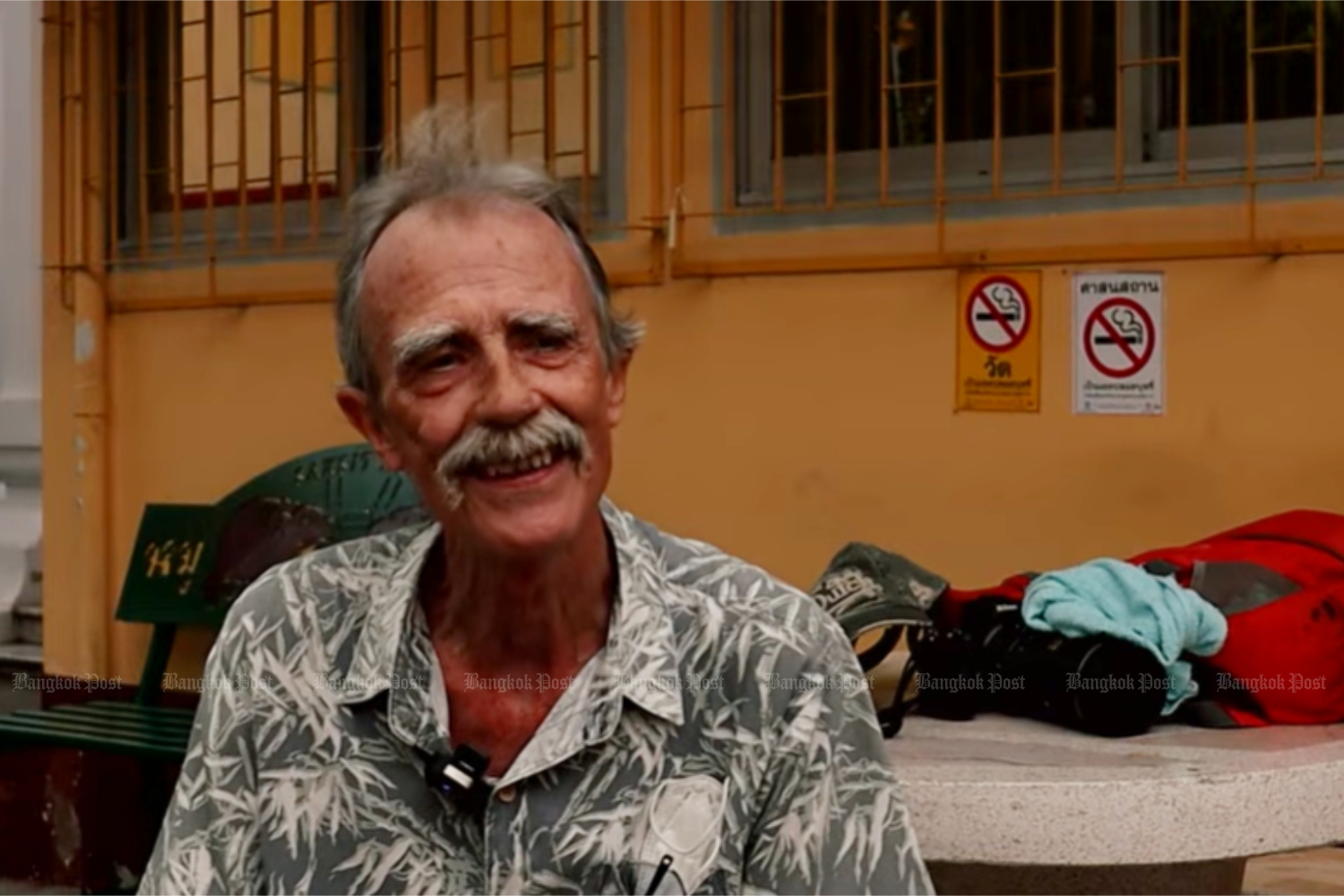
More venues have emerged in Bangkok where Molam can be performed, says John Clewley, a music columnist for the Bangkok Post’s Life section.
While Mr Clewley argued it cannot happen — pointing out that it would be too naive to say Molam is going to reach that level — he added that the music can surely join the rest of the world as an exciting sound representing people in this country.
“We’ve already got one very good example, the music band Paradise Bangkok. They did it by going and playing in Europe, creating a noise about that,” he said, adding that this is how the music will go international.
While Molam has become more complex, going far beyond what it once was, Mr Clewley said learning its essence is as simple as feeling the spirit of Isan people: “because it’s there in their hearts.
“And I have three criteria for great music. Music for the head, the heart and the feet,” he said. “And Molam has all of those.”