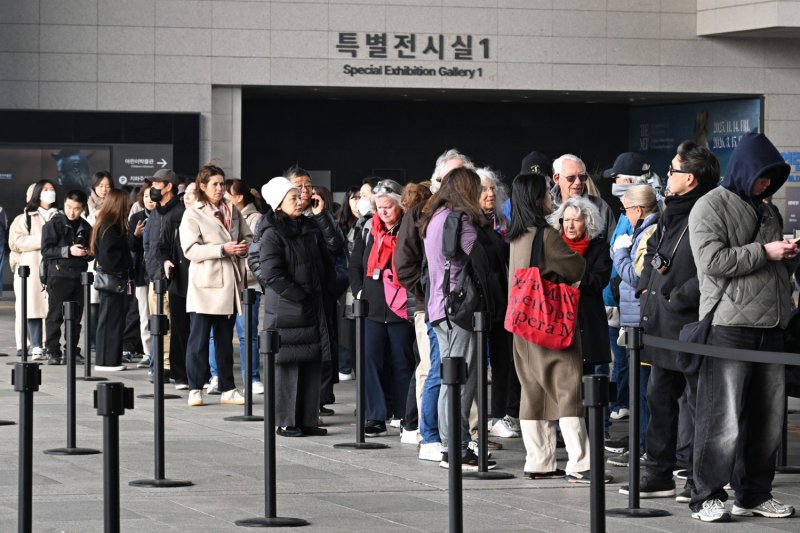
On a crisp morning in Seoul, even before the exhibition halls officially open, a group of visitors stands in line outside the National Museum of Korea, a cultural institution that has recently changed from a traditional repository of ancient relics into a lively space for daily activities.
Attracting a record 6.5 million visitors last year, marking more than a four-fold increase from its relocation year in 2005, the museum now ranks among the world's most-visited art and history institutions, alongside the Louvre, the Vatican Museums and the British Museum.
Unlike European museums that rely heavily on international tourists, the museum has a strong domestic fanbase reflected in its visitor demographics. Out of the total guests, about 97% are South Korean citizens who have embraced it as part of their daily routines, according to the museum.
This unusual record is the result of a deliberate shift led by the museum's Future Strategy Division, which shifted its focus from passive "visitors" who simply view exhibits to active "users" who engage with its architecture, digital data and recreational spaces.
"We realised the museum's function had to change into a space optimised for various life stages, catering to the Millennials and Generation Z who now visit night exhibitions alone or simply socialise, rather than feeling the need to see every single exhibition room," Jeong Myoung Hee, head of the Future Strategy Division at the museum, said in an interview with Kyodo News.
She said the museum's relocation to the scenic Yongsan district two decades ago created a park-like environment, allowing citizens to form a closer connection with the space, transforming it into a place where people can enjoy nature and cultural performances anytime.
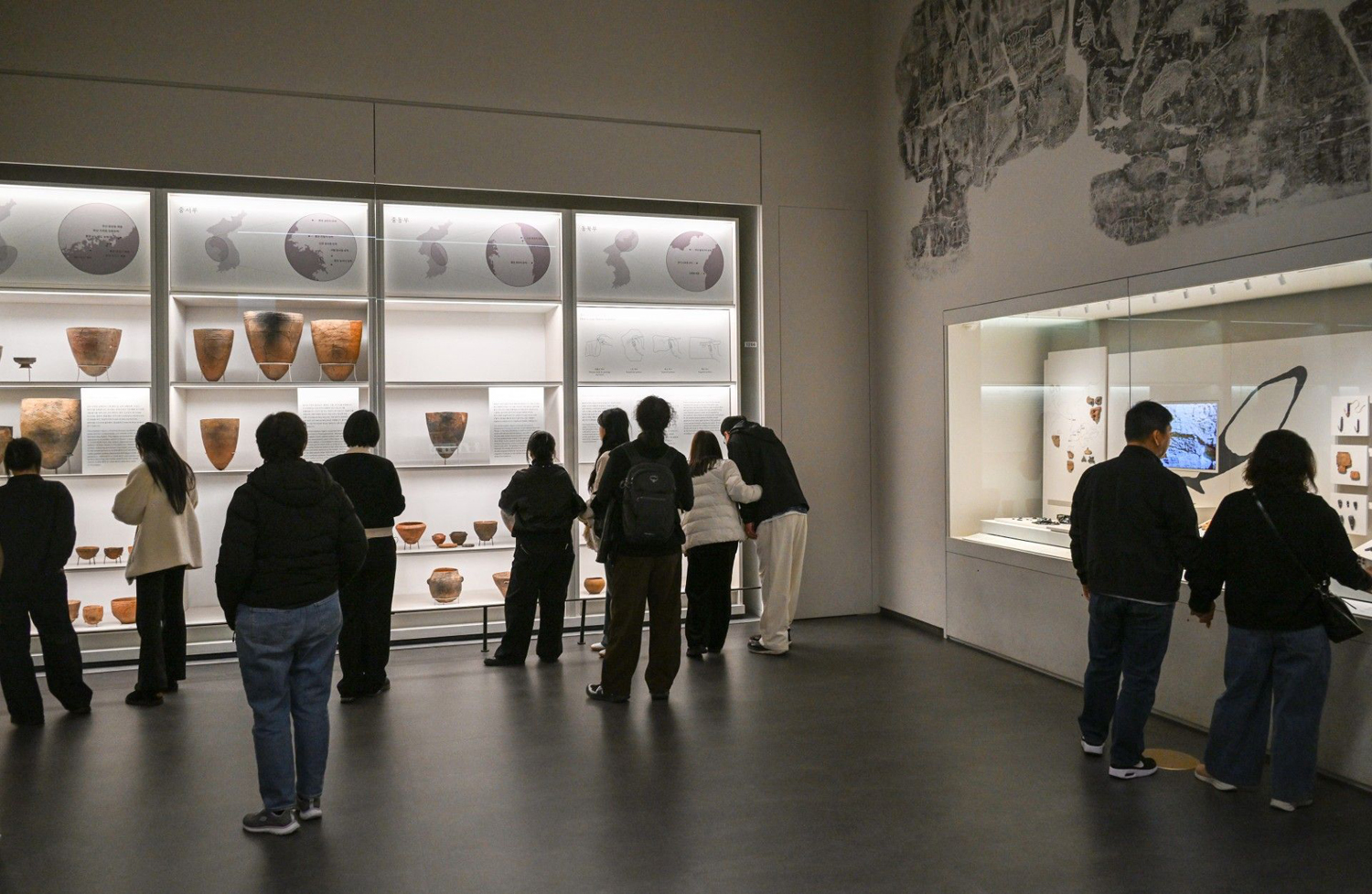
Visitors see an exhibition at the National Museum of Korea in Seoul on March 9. (Photo: Kyodo)
Song Ji Eun, a 42-year-old Seoul resident visiting with her child, noted that the museum's free admission policy since 2008 significantly lowers the psychological barrier for entry, making visits feel more like an accessible stroll.
"Because it is free, unlike many overseas museums where the entrance fee can be quite a burden, I can come with a relaxed mind and just enjoy a small section at a time without the pressure of having to see everything in a single day," Song explained.
However, this success in making the museum more accessible has created logistical challenges, prompting the museum to prepare a controversial but necessary move to introduce admission fees by 2027.
Jeong clarified that this proposed fee is not meant to artificially reduce crowds or generate profit, but rather a necessary step to gather customer data, introduce customised services, and address the physical aging of the crowded facility.
Beyond policy adjustments, the museum's soaring popularity is deeply rooted in its unique approach to space, best seen in the "Room of Quiet Contemplation." Established in 2021, the large, cozy room is dedicated to displaying two Pensive Bodhisattva statues, designated as national treasures, entirely free of glass showcases.
Reflecting on the philosophy behind this space, she emphasised that the goal was to shift away from merely conveying historical facts. Instead, users can now spend time closely examining artifacts dating back to the sixth and seventh centuries and discover their own unique experiences in a quiet environment.
This modern approach to tradition is also evident in the museum's popular MU:DS merchandise line, which last year achieved record-breaking sales of 41.3 billion won (900 million baht) by transforming ancient motifs into everyday lifestyle products.
Lee Young Joo, a manager at the National Museum Foundation of Korea's product planning team, said in writing that the brand's success stems from a strategic approach, which was to move away from just replicating artifacts as souvenirs and reinterpret cultural heritage into modern designs that appeal to the tastes of consumers.
"Consumers in their 30s and 40s especially prioritise finding special meaning in their purchases as well as enjoying the completeness of design and quality," Lee added.
A local shopper in her 40s who bought a traditionally styled tray agreed, praising the museum for designing practical items based on clever ideas that can be used in everyday life.
While domestic visitors remain the core demographic, Jeong acknowledged a need to improve the museum's infrastructure, which is currently tailored primarily for Koreans, to better welcome the international tourists brought by the global popularity of K-culture.
Michelle Anderson, 30, a tourist from Sweden, said her decision to visit the museum was partly inspired by the Netflix anime series KPop Demon Hunters, which introduced her to contemporary Korean culture and prompted her to learn more about the country's history.
Meanwhile, 26-year-old French tourist Ludovic Schwenker noted that his long-standing interest in Japanese culture inspired him to explore neighbouring South Korea, adding the museum to his itinerary to gain a deeper understanding of East Asian culture.
Yoo Hong Jun, the Director General of the National Museum of Korea, describes the modern K-culture wave as a blend of global and local elements. He highlights the museum's ultimate role in providing the rich historical "raw material" from which contemporary artists like BTS and Blackpink draw inspiration for their global hits.
Looking ahead, the museum is accelerating its global outreach to respond to rising international curiosity by preparing a series of collaborative initiatives. The showcasing of MU:DS products at the Milan Cortina Winter Olympics in February was a part of the movement.
A special exhibition is currently being held at the Tokyo National Museum in Japan to commemorate the 60th anniversary of normalised diplomatic relations between South Korea and Japan. The exhibition features a joint showcase of MU:DS products. Another special exhibition featuring East Asian calligraphy will be held at the same venue in July.
Yoo emphasised that South Korea, Japan, and China share an inseparable cultural bond and expressed his hope that museums could serve as bridges of solidarity. He believes that, even amid diplomatic or economic tensions, the region remains a deeply interconnected cultural community.