Facebook
 Reddit
 Copy Link


Thais once went to fine restaurants to take joy in American steak, French foie gras, Japanese sashimi and Italian pasta.
Who would have thought that now, home-cooked steak would be a household favourite, foie gras a delicacy many amateur cooks try to perfect, sashimi a popular party dainty, and carbonara one of the most common dishes Thai mums make for their kids?
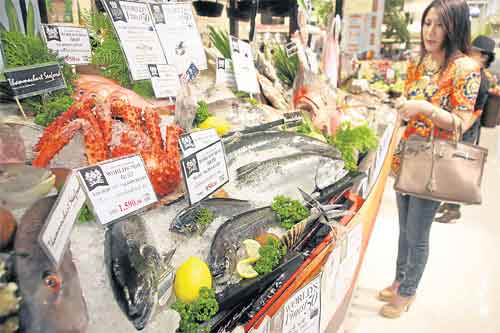
Gone are the days when salmon was a treat only at restaurants. Now Thai housewives walk straight to the seafood department at a ritzy supermarket and pick up packs of fresh Norwegian salmon as if they were buying fish from nearby provinces.
They buy cuts of Australian beef by considering whether it is grain- or grass-fed, waive local pork for kurobuta black pork and select Italian cheeses according to their Protected Designation of Origin (DOP). Some of them, having a state-of-the-art kitchen, tend to substitute ordinary salt with crystallised fleur de sel and use truffle oil for flavour enhancement.
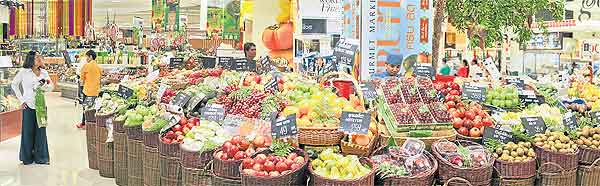
It doesn't matter whether their careers are in finance, education, fashion or even politics _ an increasing number of Thais regard themselves as passionate cooks, and the market has responded according to the more sophisticated lifestyles of buyers. Evidence of this can be seen in our supermarkets. Once, gourmet ingredients were purchased via suppliers and available only to professionals. Today, hundreds of premium food products, mostly imported, are taking supermarkets by storm.
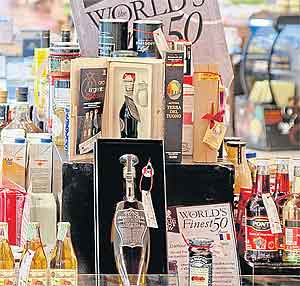
From the fresh produce department you'll find anything from Alaskan king crab, golden trout from Scotland, Iberian ham from Spain, ohmi wagyu beef from Japan and lamb racks from Australia to smoked salmon from Ireland, air-dried porcini mushrooms from Italy and wine-infused cheese from France.
In the grocery zone, it may be possible to spot an aged 40-year-old Italian balsamic vinegar, gourmet Blue Mountain coffee and artisanal New Zealand wild manuka honey among many varieties of Western spices, beverages and pastas.
Nick Reitmeier, Central Food Retail's vice-president of international food and wine, said the market for fine food has grown tremendously over the past seven years.
''In 2005, when I first arrived in Thailand, fine food retail did not exist. Today, thanks to improved logistics, you can fly anything from anywhere in the world,'' he said.
Chairat Petchdakul, Gourmet Market's general manager of fresh merchandise, said there are good reasons for this.
''Consumers' behaviour has changed dramatically due to a good economy. When the economy gets better, people eat better and travel more,'' he said
''A great number of food shops from overseas in Bangkok, and viral sensations caused by media and social networking, also help motivate consumers to pay more attention to food. From eating, they then learn how to cook, study the components and search for ingredients.''
Rietmeier agreed. ''Cooking is not an unattractive activity anymore. Cooking is sexy and has become a fashionable way for people to treat themselves, their family or their guests. In order to do so, they have to have the right ingredients. And because Thailand is much more internationally open, Thai consumers know what's out there, so they are demanding and willing to spend.''
According to Rietmeier, fine-food products from world-class culinary goods to imported artisanal gourmet foods share approximately 20% of the market value at Central Food Retail's outlets, which include Tops Market Place, Tops Supermarket and Central Food Hall.
''Gourmet Market's five outlets target a mixture of locals, expatriates and tourists and its fine food retail growth rate reaches double digits each year,'' said Chairat.
However, regardless of the increasing varieties of imported foodstuffs, the public approval of retail fine food is still not as good as it should be, according to Patcharin Hame-Ung-Gull, managing director of Gourmet One, one of the country's leading fine-food suppliers.
''Considering the fact that Thai consumers are much more gastronomically sophisticated, I think the retail market can, and should, grow a lot bigger. There are many newcomers in fine food supplying businesses, yet the number of fine-food retailers is very limited,'' Patcharin said, adding that less than 20% of the company's annual 700 million baht revenue is from trading with retail merchants.
Patcharin added she doesn't consider every imported produce a fine food.
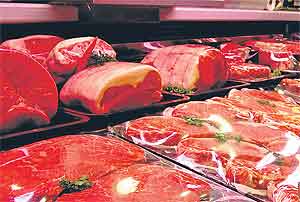
''For me, frozen salmon and frozen snowfish, as opposed to the chilled or fresh versions, are never a premium product. Likewise, all frozen beef, although imported, should never be considered a fine food. But if you define fine food as rather expensive food from overseas, then I have to say its market is getting bigger and bigger every day,'' she said.
Interestingly, when it comes to imported fresh produce, the largest growing section is fruit.
''In the past, the only imported fruit we had were apples and grapes. Now the varieties of imported fruit we sell are almost inestimable,'' said Chairat of Gourmet Market. ''From oranges, cherries, kiwis, pears, persimmons and peaches to berries, you name it.
''We have 40-50 selections of apples alone throughout the year. At peak season we carry more than 20 different price tags for strawberries from USA, Japan, Korea and Australia to cater to different budgets and tastes. And to prove that our customers take joy in imported fruit, we sold 5,000 baht musk melons from Japan without difficulty.''
In addition, Chairat orders a Parma ham leg every three weeks and sells 10 tonnes of salmon per month, of which 30-40 fish are Loch Duart salmon at a little over 1,000 baht per kilogramme.
''Loch Duart salmon is a great example of Thai consumers being willing to explore and try new things,'' he said.
''It's a sustainably raised fish from Scotland which was served at the royal wedding of Prince William and Kate Middleton at Buckingham Palace.
''It was included in the Queen Elizabeth's Diamond Jubilee dinner menu at Westminster Hall.
''We decided to order the fish to test the market and it went very well. Now we almost don't have enough of the salmon to match the demand.''
As Chairat stated, the increasing popularity of salmon among Thais is staggering. Salmon is now the best-selling seafood at many upscale supermarkets.
Customers, mostly housewives and office workers, can tell the differences between Scottish, Norwegian, Chilean and Tasmanian salmon, and they tend to opt for chilled salmon, which is likely to cost double the frozen version.
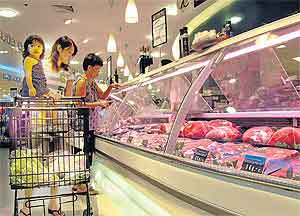
Meanwhile, beef buyers can be categorised in two groups _ Japanese beef connoisseurs, who are willing to pay a lot of money for premium wagyu beef (up to 10,000 baht per kilogramme) and those who seek more budget-friendly options from Australia and New Zealand.
Supermarket grocery sections, too, have enjoyed expansion thanks to overseas produce.
According to Kitipong Thumchutaphorn, Gourmet Market's general manager of grocery, more than half the 40,000 items displayed at his stores are imported.
Almost like in Italy, Gourmet Market stocks countless varieties of pasta. And sauce and seasonings from Europe, America, Japan and Korea have taken over the space that used to be dominated by mainstream local condiments.
''The astronomically priced truffle mushroom which used to be available only for the food service industry has now become a retail favourite. The market might be niche, but it's picking up quickly,'' Kitipong said.
''Normally we would import different varieties of new products and let the sales revenue tell us which are well-received and worth stocking. Sometimes, it's the consumers who educate us. They would come to us and ask for a particular product and we have to seek it out and that's opened our eyes.''
So as the world is gearing towards artisanal produce and sustainable gastronomy, would this small phenomenon be a reversed evolution?
''There are quite a number of local food producers that produce fantastic quality goods, but we have to admit that in terms of quantity, consistency and distribution, they still need to improve,'' said Patcharin of Gourmet One.
Reitmeier of Central Food Retail added: ''The world is getting smaller. And as long as diners refuse to give up indulging their tastebuds, there will always be a certain amount of food importation.''
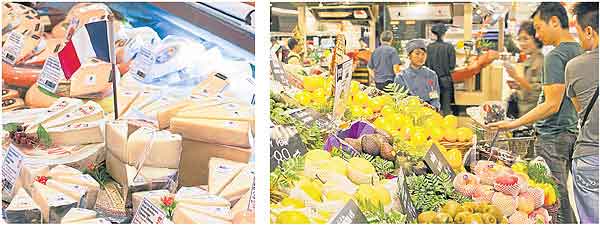
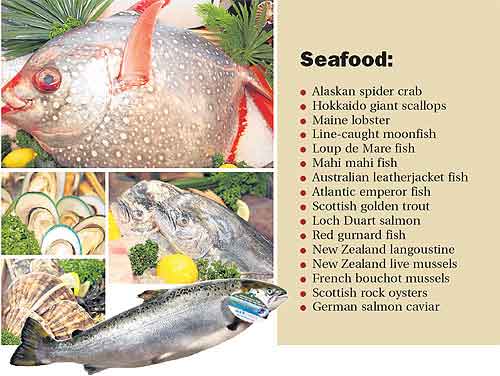
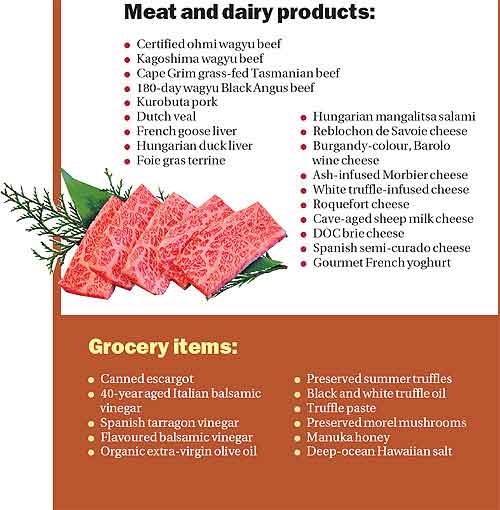
 IMPORTED FINE FOOD IN SUPERMARKETS
Here are some imaginative ingredients currently available in Thai supermarkets: