Listen


 Facebook
 Reddit
 Copy Link


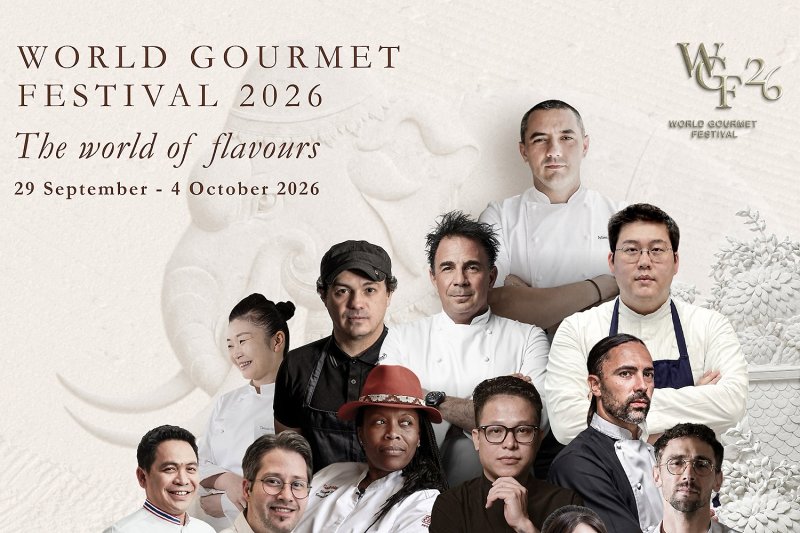
The 26th World Gourmet Festival returns to Bangkok from Sept 29 to Oct 4, 2026, bringing together some of the world's most distinguished chefs. More than a showcase of gastronomic talent, the event serves as a multicultural narrative rooted in food heritage and transnational exchange - and as a crucible where culinary philosophies clash and meld.
Internationally acclaimed chefs like Álvaro Clavijo from Bogotá, Julien Royer from Singapore, and Josiah Citrin from Los Angeles must confront the challenges of merging different epicurean approaches with Thai ingredients, all while maintaining their own culinary identities. In this demanding environment with the world's top food critics and most ardent foodies present, the stakes are high, and the potential for creative breakthroughs - and culinary disasters - lurks around every corner.
Josiah Citrin, chef-owner of restaurants Mélisse and Citrin in Los Angeles (LA), acknowledges the pressure this event brings. "The expectation is always high, but that's what makes these events exciting," he explains. "In the kitchen, food becomes its own language quickly. Once you start cooking together, you find a rhythm, and that's part of the fun of doing these events around the world."
This balancing act - maintaining one's gastronomic identity while embracing the unknown - is central to the festival's spirit.
Pastry chef Piyachart "Boy" Puttawong of Saneh Jaan in Bangkok frames the goal precisely. "A successful collaborative menu should allow guests to recognise each chef's individual personality while still experiencing a clear and harmonious connection from the first course to the last."
Creating a cohesive dining experience amid such diversity can be daunting. Chefs must develop a menu together that reflects their individual styles while maintaining culinary continuity across courses. "Menu development begins with understanding each chef's strengths," remarks chef Pilaipon "Toi" Kamnag of Saneh Jaan. "Compromise doesn't mean weakening anyone's culinary identity; it's about making thoughtful adjustments."
Clavijo stresses the importance of listening rather than competing for space on the same plate: "I wouldn't really call it 'compromise'. If both chefs are trying to prove their identity in every single course, the guest feels that tension. A good partnership requires enough confidence to know when to speak and when to let the other person speak."
Communicating can be a challenge in itself, with chefs from so many different countries taking part. But for many involved, food serves as a universal tongue, reducing friction.
Thanh Vuong Vo, executive chef of Coco Dining in Ho Chi Minh City, shares his perspective: "In a professional kitchen, communication goes beyond spoken language. You communicate through technique, timing, gestures, tasting and repetition," he says. "If there is a difference in interpretation, we taste together and use the food itself as the common vernacular." This fluidity allows chefs to communicate through actions and shared experiences rather than relying solely on verbal exchanges.
"It's all about both chefs working together to allow the ingredients to speak for themselves; that is what defines high-level cuisine." This synergy cultivates an environment where innovation thrives despite the pressures of the event.
Ingredient-led approaches
Despite the challenges, one of the event's most exciting aspects is the opportunity to experiment with niche Thai ingredients, from produce to proteins. For the chefs involved, these ingredients offer both inspiration and a challenge. Says Vo, "I want to understand the Thai ingredients and techniques first, then see how they can enter my own culinary language naturally."
This mindset of exploration is essential for chefs seeking to create dishes that resonate with both their own background and the local culture.
Clavijo's approach at his restaurant, El Chato, is deeply rooted in Colombia's ecological variety, and he sees Thailand as a mirror rather than a contrast. "Even though Colombia and Thailand are far apart, there are many similarities in our ingredients as both countries share a tropical climate," he says. "Rather than forcing Colombian and Thai cuisines together, I prefer to find natural connections and let the products guide us."
The costs and benefits of participation
While the festival offers significant exposure and brand building, it also comes with sacrifices. Chefs must balance their responsibilities at home with the demands of such high-profile events. Citrin acknowledges this cost, stating, "Leaving your restaurant means leaving your team, your business, and your family. It has to have a meaningful purpose that extends beyond that one single event."
Clavijo agrees, explaining that collaboration must go further than mere visibility. "The real value is exchange," he says. "The lasting benefits of meeting other chefs, discovering new products, and creating ongoing relationships are what make these experiences worthwhile for chefs and attendees alike."
A celebration of gastronomy
The World Gourmet Festival mirrors the evolving culinary landscape in Bangkok and Asia. As local chefs collaborate with international talents, they bring new perspectives and techniques to the fore. "As Thai chefs, we are proud to be part of the hosting city," says chef Toi. "Bangkok is no longer simply a destination where international cuisine is presented; it has become an active and influential participant in the global culinary conversation."