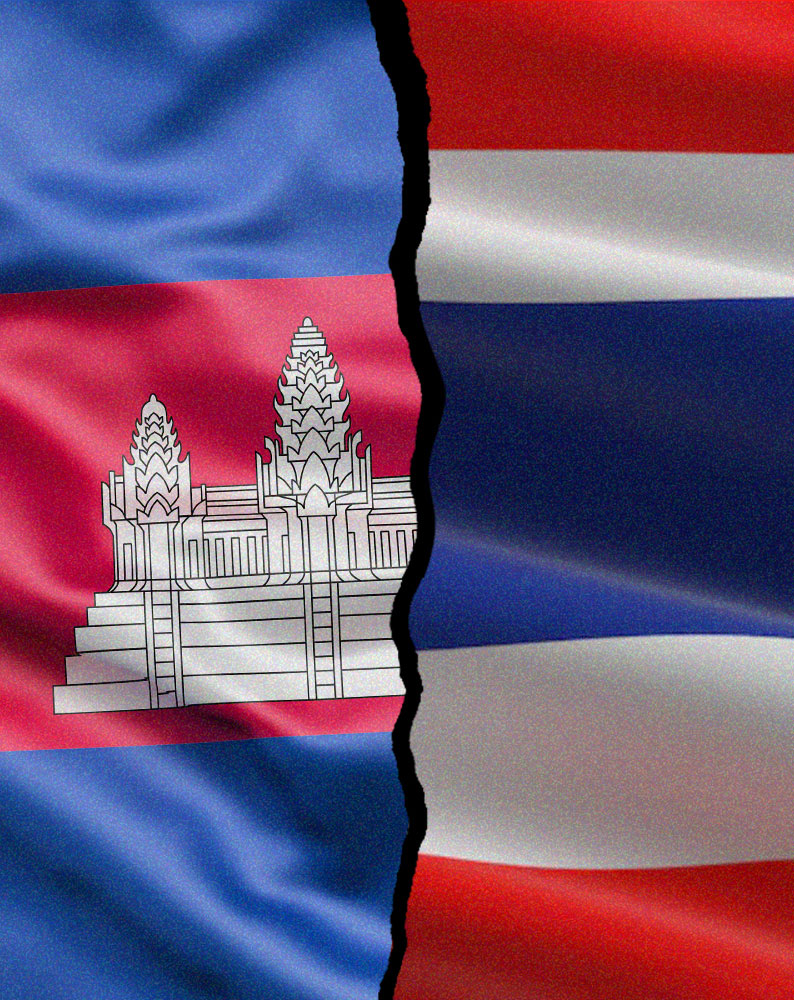

2026 began with good news: Thai–Cambodian ties showed signs of improvement following the release of 18 Cambodian soldiers on the final day of 2025. The fighting has stopped, but the wounds have left deep scars that are highly visible and difficult to heal. Worse, public trust across the border remains low, while anguished emotions remain high.
Furthermore, given the current media ecosystem and heightened emotions, one careless statement or a single piece of hate speech could easily stir up a hornet's nest and dismantle fragile peace efforts.
At this juncture, both sides have already inflicted mutual damage on their economies and social fabric. To ensure that Bangkok and Phnom Penh fully understand the delicacy of this do-or-die moment, the following 10 steps are needed to mend the fence in their love-hate relationship.
1. Beginning to heal at a people-to-people level
Thailand and Cambodia must begin the healing process among border communities without delay. At the grassroots level, local people can come together without protocol. Five months of border tensions have torn apart daily lives. Families have lost income, and the region's most dynamic cross-border trade has collapsed. These deep wounds must not fester. Both governments should support community exchanges, cooperation, and humanitarian access in all forms.
2. Protecting public trust in Thai military through restraint
The Thai armed forces have received strong public endorsement for their response to the conflict. They must now protect that trust by acting with discipline and restraint. Victory narratives or condescending language could undermine long-term stability. The armed forces should continue to focus on security and law enforcement along the volatile border.
3. Moderating comments on Thai social media
The Thai media must act responsibly in the post-conflict period. Media professional organisations have issued ethical guidelines across platforms to avoid sensational reporting, emotional commentary, and unverified claims. Fact-checking groups have already played a helpful role. Editors and producers should be briefed regularly to prevent opportunistic journalism based on imagined or selective sources.
4. Demanding discipline from scholars and experts
Academics and analysts also bear heavy responsibility. During the border tensions, some made careless or ill-considered remarks. After the conflict resumed on Dec 7, several crossed the line into speculation, inflammatory language, or hollow accusations. Quite a few so-called experts proved unreliable, appearing more interested in stirring emotion and attracting clicks. Some commentators even became overnight "national heroes" by bringing what they claimed was "secret" battlefield information into the living room.
5. Preventing nationalist exploitation ahead of election
With a general election just four weeks away, political risks are rising. Some of the 5,000 candidates may seek to exploit the conflict to gain attention and support. Thailand has witnessed this tactic before, particularly during the 2011 election, when a small group of politicians attempted to stir nationalist anger against Cambodia. While the strategy failed then, public sentiment today is far more volatile.
6. Recalibrating relations with US and China carefully
Thailand must manage its relations with major powers calmly and realistically. Amid the unpredictability of the Thai–Cambodian tensions, a perception has emerged that external powers favoured Cambodia. This view spread rapidly through narratives portraying Thailand as a bully targeting a weaker neighbour. Western media often echo Cambodia's narratives, even when they lack balance. Phnom Penh has skilfully played the victim role, frustrating Thailand's information efforts. The danger now lies in an overreaction from the Thai side, which should not assume hostility from its allies and partners.
7. Using the Chanthaburi–Pailin border as a building block
The 89-kilometre border stretch between Chanthaburi and Pailin province in western Cambodia offers a clear opportunity. During the conflict, these adjacent areas avoided armed clashes. Communities on both sides remain closely connected through family ties, trade, and daily movement. This channel should be expanded to help build trust and confidence in other areas.
8. Building dialogue and preventive mechanisms at local levels
To keep the border peaceful, Thailand and Cambodia should establish local dialogue channels and preventive mechanisms at the township level. Existing mechanisms operate mainly at the national level, where procedures are slow and outcomes are delayed.
Preventive mechanisms -- such as clear communication channels, joint monitoring, and early-warning systems -- can stop small incidents from being exploited and escalating into political crises. Thailand already has such a mechanism with Myanmar.
9. Reconnecting regional military commanders
Regional commanders must meet and rebuild working relationships, however uncomfortable this may be. During peacetime, commanders from Thai Army Regions 1 and 2 and Cambodia's Army Region 4 met regularly, shared meals, and resolved problems directly. That trust must be rebuilt as soon as possible.
10. Making use of Thai–Cambodian Friendship Association
The newly formed Thai–Cambodian Friendship Association can help break the ice by bringing stakeholders together for dialogue and future planning to promote mutual trust. It can serve as a useful sounding board. Track 2 diplomacy allows officials, academics, and civil society representatives to speak freely without political pressure.
Thai–Cambodian relations have stepped back from the precipice but remain fragile. This is not a moment for loud or hateful speech, or for public displays of victory. Stability will depend on restraint, careful conduct, and sincere language on both sides.