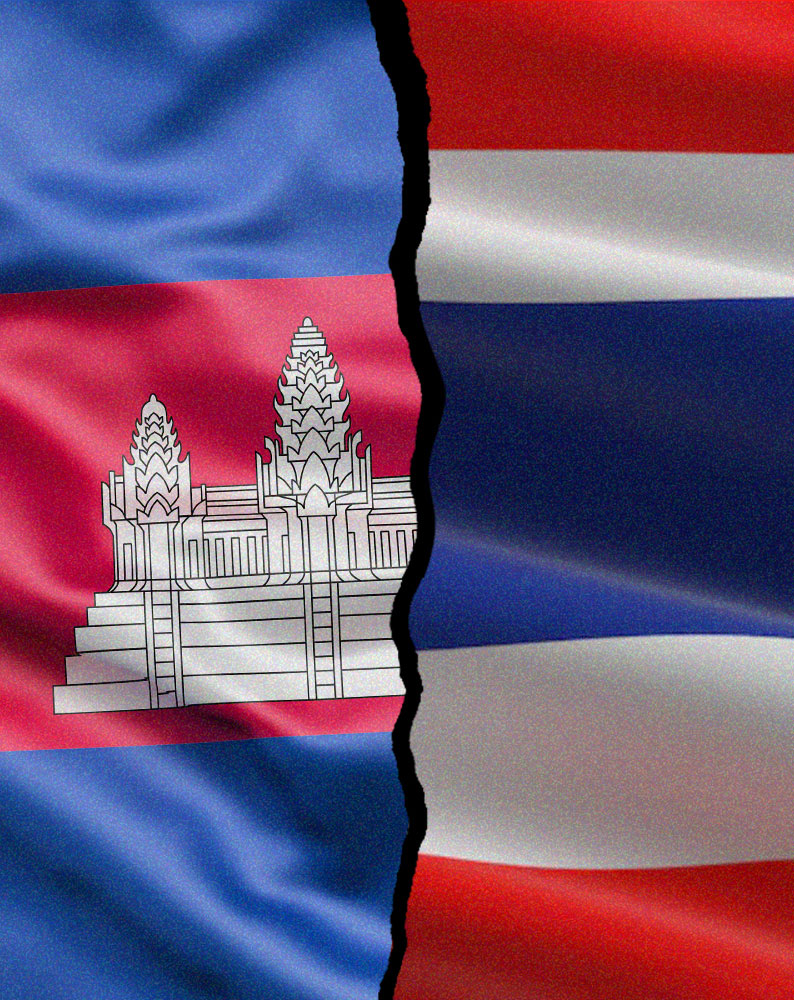


As Thailand and Cambodia observe a truce, a group of social media users is pursuing aggressive online campaigns to incite hatred between the peoples of the two countries.
These netizens, who describe themselves as digital creators, typically use disinformation and fake news to attract people in a bid to increase engagement and earn more income. This occurs on both sides of the border.
This week, at least one Thai Facebook page posted what appeared to be a fierce reaction from the caretaker foreign minister to a senator and human rights advocate over her alleged call for state assistance to Cambodia in forest-fire combat and scholarships for Cambodian schoolchildren.
However, the information was entirely fabricated. The senator had made no such proposal. The post quickly attracted several thousand views in a short time -- an easy way to generate revenue.
As usual, commenters on the page verbally attacked the senator, falsely branding her unpatriotic while making derogatory remarks about Cambodians, creating a toxic atmosphere among people who fall victim to hate campaigns.
Credit goes to Cofact Thailand, a non-profit fact-checking organisation, which promptly verified the post as fake news.
The same page also insulted Malaysian Prime Minister Anwar Ibrahim, whose country played a key role in bringing the two neighbours to the negotiating table last year. Again, the posts were based on false information aimed at sowing misunderstanding.
While the damage has been done, it is unfortunate that state agencies appear to have no clear strategy for dealing with such digital creators and their posts, which clearly violate legal and ethical standards.
Such online hostility strips the public of empathy when armed forces resort to aggressive measures instead of dialogue to resolve border disputes, as jingoism and xenophobia peak.
In September, a few weeks after the first border clashes, the National Digital Economy and Society Commission reported an increase in fake news stories requiring verification. Security issues between Thailand and Cambodia topped the list, followed by government services, disasters and health concerns.
The commission stopped short of detailing what authorities had done to curb such practices. Yet authorities have the means to track down irresponsible page administrators and take action.
Misinformation and disinformation campaigns pose a serious challenge if the two countries are to restore people-to-people relations. Authorities must regulate the system while balancing responsibility with freedom of expression.
Ultimately, society must invest in social media literacy. A 2025 World Economic Forum report ranked misinformation and disinformation as the fourth most significant global risk, after state-based armed conflicts, extreme weather and geoeconomic confrontation.
The report projected that misinformation and disinformation would become the top global risk next year.
Several countries have adopted best-practice guidelines to address the issue proactively. In Thailand, however, the Ministry of Digital Economy and Society and cyber police appear to lag behind online disinformation actors.
Authorities must recognise that the situation cannot continue unchecked and act decisively.