


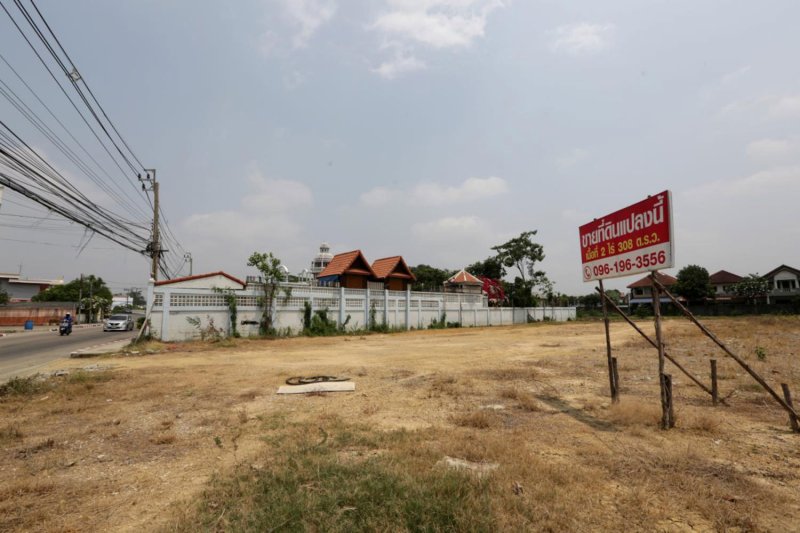
The Bangkok Metropolitan Administration (BMA) has urged owners of vacant land to utilise their plots to reduce the burden of the land and building tax, as rules on agricultural use claims will be tightened to prevent tax avoidance from next year.
Aekvarunyoo Amrapala, assistant secretary to the Governor of Bangkok, said the Treasury Department is preparing new regulations requiring land registered for agricultural use to be used for commercial farming, rather than token cultivation aimed solely at avoiding tax.
"We held a joint meeting two months ago, during which criteria were discussed to specify the number of trees or plants per square metre required for land to qualify as agricultural use," he said.
"The new regulations are expected to take effect for next year's tax assessment."
The Treasury Department is responsible for appraising land and property values used as the basis for tax calculation, as well as issuing rules and guidelines. This includes definitions of land use categories such as residential, agricultural and commercial, which determine applicable tax rates.
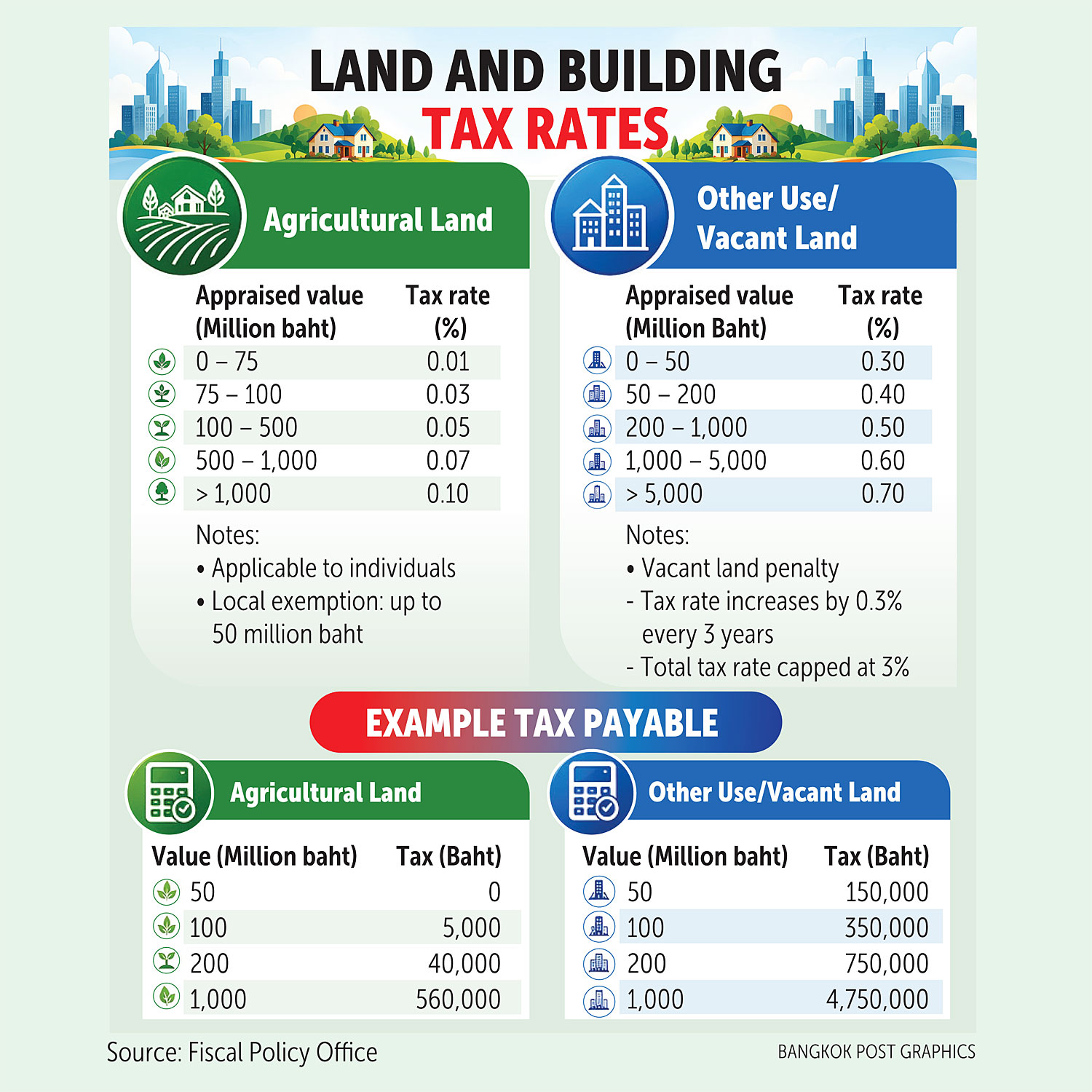
Agricultural land owned by individuals is subject to a progressive tax rate of 0.01-0.1% on the portion of appraised value exceeding 50 million baht.
For example, if a plot is valued at 51 million baht, the tax is calculated at 0.01% on the excess 1 million baht, resulting in a payable tax of 100 baht.
If the land does not qualify as agricultural use and is deemed vacant, it is subject to a progressive tax rate of 0.3-0.7%. This means the same plot would incur a tax of 154,000 baht.
Mr Aekvarunyoo said if owners of vacant land are unable to find tenants or wish to hold their land without incurring tax liabilities, they can enrol their plots in the BMA's "15-minute garden" scheme.
Under the scheme's criteria, landowners, whether individuals or juristic persons, can propose plots of any size to the BMA for consideration, with no minimum land area required.
Landlocked plots with no access to a public road as well as farmland and ponds do not qualify for the scheme.
Once approved, landowners must invest in developing the land into a public park in line with BMA requirements and enter into a lease agreement with the authority for a period of seven years, with the agreement registered on the land title deed.
If the BMA undertakes the development, the lease term will be 10 years, said Mr Aekvarunyoo.
"This lease will be rent-free. Landowners will not earn rental income, but while the land is used as a public park, they will be exempt from the land and building tax," he said.
"Although there is no income, there will also be no tax expense."
Some 74 privately owned land plots in Bangkok have joined the scheme since it began in 2020.
The smallest plot measures just six square metres, located on Soi Thong Lor, and has been developed into a pocket garden with seating for public use.
The plot with the highest tax liability under the scheme is a four-rai site in the Klong Toey area near Bon Kai, which would otherwise incur an annual land and building tax of around 10 million baht.
