


THE ROUND TRIP UNDER BRI: HOW THAILAND AND HONG KONG NOW GROW OFF EACH OTHER
THE ROUND TRIP UNDER BRI:
HOW THAILAND AND HONG KONG
NOW
GROW OFF EACH OTHER
This summer, one of Asia’s leading energy groups made a telling choice. Bangchak Corporation Public Company Limited, a Thai group operating in about ten countries, with two world-class refineries and a footprint spanning refining, fuel marketing, trading and new energy, completed its full acquisition of Chevron Hong Kong, naming the city its regional commercial and trading hub. Renamed Bangchak Hong Kong, it now runs Caltex service stations alongside oil storage terminals, and industrial, marine and commercial fuel operations, and plans to explore bio-based and lower-carbon solutions to support the city’s green-economy goals. Yet the deeper signal lies in its strategic trajectory. Bangchak did not come to Hong Kong only to sell into the local market; it came to use the city as a springboard into North Asia and out to the world. That is the essence of the Thailand–Hong Kong story — it has never been about a oneway trade relationship, but a round trip: Thai enterprise reaching through Hong Kong into the Greater Bay Area and beyond, and Chinese Mainland and Hong Kong enterprises venturing out to Thailand and the wider ASEAN.
“Our investment in Hong Kong is a long-term commitment to a premier international energy market,” said the Group Chief Executive Officer and President of Bangchak Corporation Public Company Limited, Mr Chaiwat Kovavisarach. “Hong Kong is our gateway to North Asia, serving as the commercial and trading hub as we expand our retail, commercial, marine, aviation and trading businesses globally.” That circuit is now running faster than ever. Two-way merchandise trade between Thailand and Hong Kong reached some US$22.1 billion in 2025 — remarkably balanced between the two directions. Thailand also ranks as Hong Kong’s fourth-largest trading partner in ASEAN, and its second-largest export market in the bloc. Zoom out and the same current runs across the region: ASEAN has been Hong Kong’s second-largest trading partner for sixteen straight years. What is changing is not only the strategic trajectory, but the pace of growth, and Hong Kong is deliberately re-engineering itself to carry more of it, both ways.
Leading Thai energy group Bangchak Corporation Public Company Limited has commenced its Hong Kong fuels business in July 2026, marking a significant long-term commitment to the city and positioning Hong Kong as its regional commercial and trading hub.
AN ESTABLISHED PRESENCE ON THE GROUND
Hong Kong’s commitment to Thailand is long-established and physical. The city maintains a dedicated Economic and Trade Office in Bangkok, one of its four in ASEAN, alongside InvestHK, the investment promotion agency of the HKSAR Government, with a team on the ground. That presence is two-directional. Last year, InvestHK has brought delegations of Hong Kong start-ups to the city’s — Southeast Asia’s premier technology event — pairing them with Thai corporates, investors and tech leaders across fintech, digital transformation and smart-city solutions. Reaching the other way, the team’s day-to-day mandate is to guide Thai companies into Hong Kong, connecting them to capital, sites, licensing and talent, and smoothing every step of setting up. One office, both directions: a sustained bridge sitting in the middle of the traffic rather than at either end of it.
InvestHK leads start-up delegation to Bangkok to attend Techsauce Global Summit 2025 and promote two-way investment.
WHAT HONG KONG PUTS WITHIN REACH
For a Thai enterprise weighing that move, the first thing Hong Kong puts on the table is access to capital on a scale few places can match. The city is already Asia’s largest hedge fund centre and the world’s largest cross-border wealth management hub, expanding at a projected 9 per cent a year, and it has just moved to widen its lead. A landmark bill now before the legislature would exempt private equity, venture capital and other fund managers from tax on performance-linked income, and spare their managers salary tax on performance-linked bonuses, a move that would make Hong Kong the first city in the world to set out clear rules of this kind.
That capital story is increasingly a family story, too. InvestHK’s FamilyOfficeHK team recently travelled to Bangkok to engage the next generation of Thailand’s leading ultrahighnetworth families on legacy, succession and longterm wealth stewardship, a reminder that behind every expanding Thai business is a family deciding where to anchor its wealth for the generations to come, and, increasingly, that anchor is Hong Kong.
A MARKET AT THE DOORSTEP
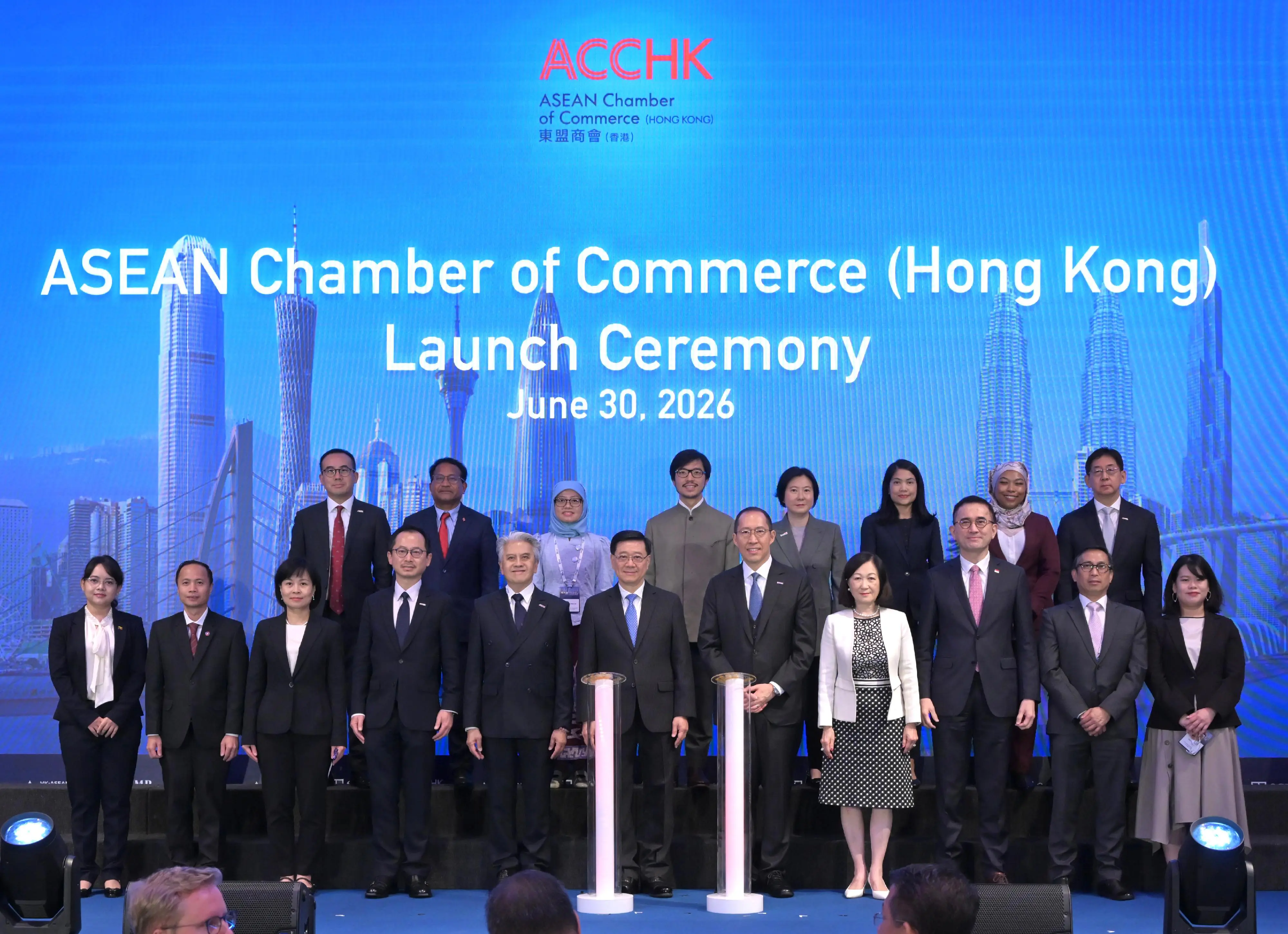
The official launch of the ASEAN Chamber of Commerce (Hong Kong) (ACCHK) in June 2026, deepening economic ties between China, Hong Kong, and the member states of the Association of Southeast Asian Nations (ASEAN), fostering business dialogues and collaboration.
If capital is one thing a Thai firm gains through Hong Kong, a market is the other, and this year Hong Kong built new structure to open it. InvestHK welcomed the launch of the ASEAN Chamber of Commerce (Hong Kong), founded expressly to drive two-way trade and investment between Chinese Mainland and ASEAN. The Chamber’s very first act was telling: it took more than 100 delegates on a guided tour of the Northern Metropolis.
The Northern Metropolis is where the abstract becomes physical. Stretching across roughly a third of Hong Kong’s land along the Shenzhen border, it is the “north engine” of a dual-engine economy — innovation and industry to the north, finance and professional services to the south. For a Thai enterprise that establishes there, it opens the door to an enormous customer base: R&D and new-industrialisation land, a cross-border innovation testbed with Shenzhen, and the Greater Bay Area’s US$2-trillion economy and 88 million consumers only minutes away. And here the rules of entry are unusual: land is awarded less on the size of the bid than on the substance of the plan, i.e., what a company will build, how quickly, how much it will invest, how many jobs it will create. For a genuine builder, it is a foothold that cannot simply be bought.
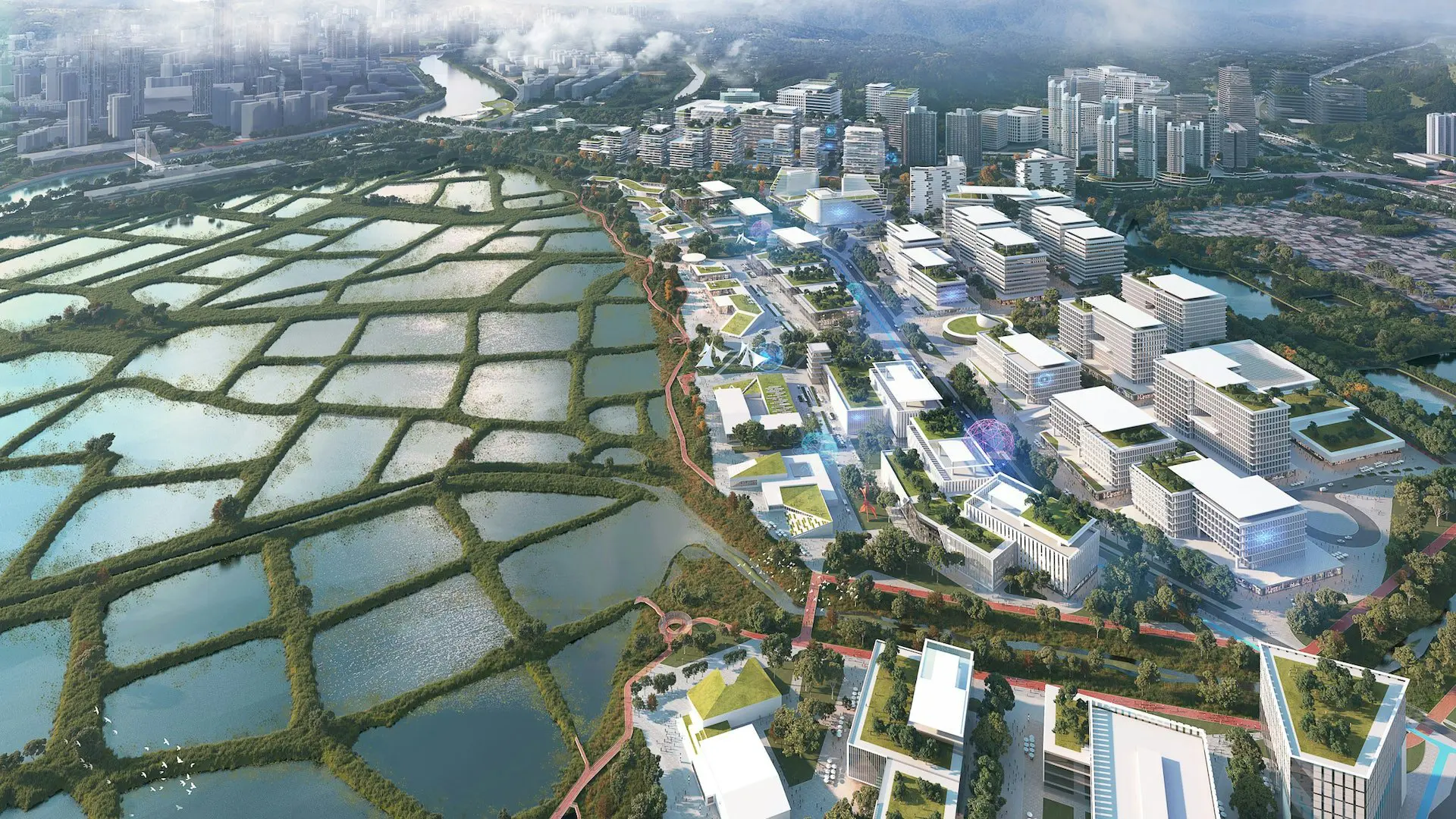
Situated near Shenzhen’s metropolitan core, the Northern Metropolis serves as Hong Kong’s primary I&T hub to drive strategic cooperation across the Greater Bay Area.
THAI AMBITION HEADING OUT
With capital and market both within reach through Hong Kong, the pay-off is what a Thai firm can then do with them, and Thai brands are already proving the route. In the first half of 2026, the number of ASEAN companies InvestHK helped set up or expand in Hong Kong rose by nearly 30 per cent year on year.
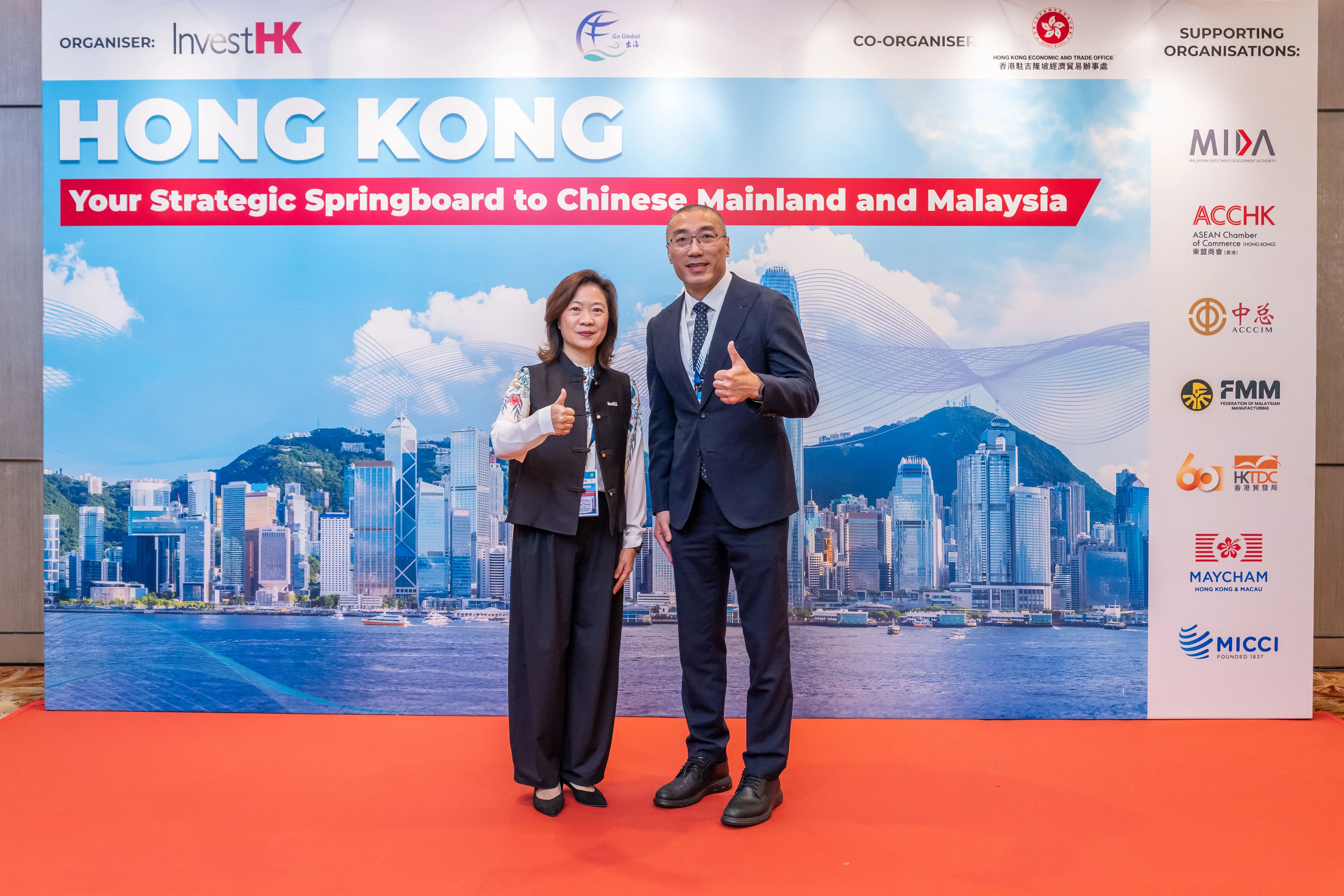
Associate Director-General of Investment Promotion, Ms Loretta Lee (left), promotes Hong Kong as a two-way investment platform for ASEAN and Chinese Mainland businesses in Malaysia in August 2026.
“For companies across Thailand and ASEAN, Hong Kong is far more than a market in its own right — it is the platform that connects their capital, talent and ambition to the Greater Bay Area, the Chinese Mainland and the wider world,” said Associate Director-General of Investment Promotion, Ms Loretta Lee, “What we increasingly see is two-way investment: Hong Kong’s financial and professional strengths paired with the drive of ASEAN enterprises. That synergy is what turns a regional presence into a global one.”
WHY THE ROUND TRIP MATTERS NOW
That is why Thailand is best understood not as a destination but as a corridor — one node in a network Hong Kong is actively widening. What connects a Thai firm to ASEAN through Hong Kong is the same infrastructure now reaching much further afield: in recent seasons Hong Kong has led high-level business missions to Central Asia, the Middle East and Africa, opening fresh channels and forging new partnerships along the way. Each mission extends the same promise — that a business anchored in Hong Kong is plugged into a genuinely global grid, not a regional one.
The next chapter comes home this September, when Hong Kong hosts the 11ᵗʰ Belt and Road Summit on 9–10 September 2026, gathering officials and business leaders from along the route and beyond — the place to hear the latest updates and test the newest opportunities first-hand.
Bangchak proved that a global business can be built by using Thailand and Hong Kong together, not one instead of the other. What is new is that the same route now runs in both directions at once — Hong Kong reaching into Thailand through its people and presence, and Thai enterprise reaching out to the world through Hong Kong’s capital, opportunities and expertise. The companies that move early will set the terms for the rest. InvestHK stands ready as your on-the-ground partner, connecting you to the right capital, sites, licensing and talent, and smoothing every step of the way.
And the traffic already runs both ways in the sweetest terms. Thai holistic wellness brand PAÑPURI, beloved at home for its clean, botanical fragrances and beauty rituals, chose Hong Kong for its first step beyond Thailand, and has since grown to several boutiques across the city, using it as the base from which its regional office oversees operations across the Chinese Mainland, Hong Kong and Macao. Among those following the same route is the gelato sensation Blendies, which also chose Hong Kong for its first store beyond Thailand — so that today you can breathe in a little of Bangkok’s calm and taste a scoop of it too, a reminder that what flows along this corridor is not only capital and contracts, but a taste of home.
To find out more about how Hong Kong can meet your investment ambitions, contact the Head of Business and Talent Attraction / Investment Promotion at InvestHK, Mr Panakorn Dejthumrongwat, at panakorn@hketobangkok.gov.hk