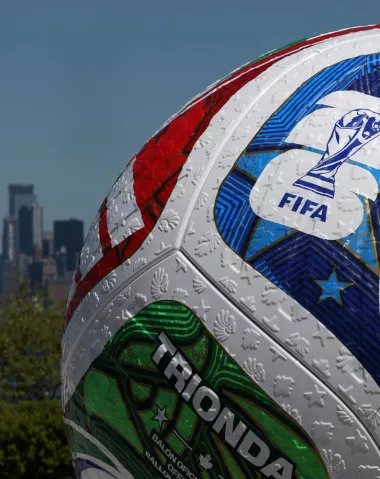
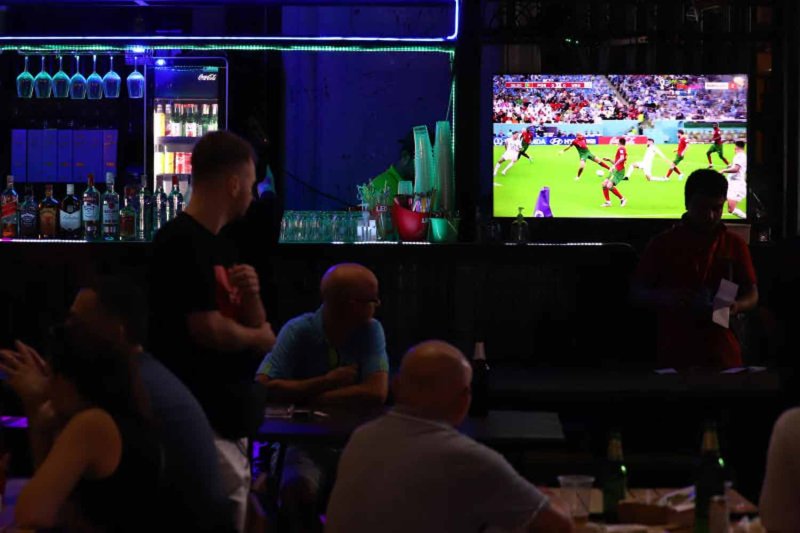
Prime Minister Anutin Charnvirakul has pledged to ensure Thais can watch the 2026 World Cup next month.
He was responding on Tuesday to public concern about a possible repeat of the events of 2022 when disputes over broadcast rights resulted in millions of people being unable to view some matches.
Following the 2022 controversy, the National Broadcasting and Telecommunications Commission (NBTC) removed the football tournament from its “must have” list.
A “must-have” sports event is one that must be made available to the Thai public via terrestrial television channels.
Mr Anutin said public access is guaranteed, although uncertainty remains over details of the coverage.
With kick-off less than a month away, Thailand is among a number of Asian countries that have yet to reach an agreement on broadcast rights for the tournament.
Because the tournament is being held in North America, most matches will take place at 12.30am, 3.30am and 6.30am Thailand time.
The unsociable match times have been a deterrent for prospective rights bidders in many Asian countries. They fear low viewership numbers could limit their ability to attract commercial sponsors.
In India, local media reported that Fifa originally wanted $100 million for the 2026 and 2030 World Cup rights. The best offer it has received so far was $20 million, AFP reported.
In Thailand, the NBTC said the main reason for removing the World Cup from the “must have” list were its high broadcast rights fees and the absence of the Thai national team in the finals.
The NBTC in 2022 allocated 600 million baht from its Universal Service Obligation fund for the Sports Authority of Thailand (SAT) to purchase the broadcasting rights for the tournament, which cost 1.4 billion baht in total. The agreement was subject to the “must-have” rule.
The rest of the money to purchase the rights was raised from a handful of big-name sponsors.
However, the SAT later made an agreement with a third party, the telecom and broadcasting group True Corp, one of the major sponsors, for match licensing.
True, which contributed 300 million baht towards the purchase of the rights, was given exclusive rights to show 32 matches of its choosing. True then obtained a court injunction to prevent rival internet protocol TV (IPTV) platforms from showing any matches.
An estimated one million households nationwide with IPTV saw only blank screens when they attempted to watch matches.
To resolve the conflict over fairness, True ultimately agreed to relinquish some of its exclusive rights, and 17 channels agreed to split the match broadcasts in a rotating system.
Asked by AFP if it was worried about the rights issue, Fifa said that it had sealed agreements with broadcasters in more than 175 countries.
“Discussions in a few remaining markets regarding the sale of media rights for the Fifa World Cup 2026 are ongoing and must remain confidential at this stage,” it said.
The 2026 World Cup will be staged in the United States, Canada and Mexico from June 11 to July 19.