
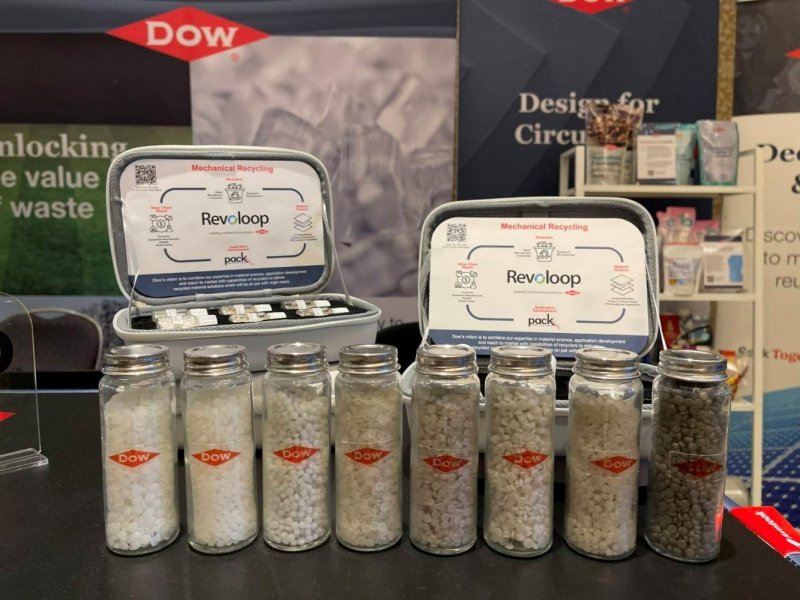
As Dow takes steps to grow its chemical business, the US-based company is looking back to ensure it has left no or little carbon footprint behind.
Specialising in materials science, Dow makes full use of its know-how to develop eco-friendly materials to manufacture new products, aligning with its mission to build business sustainability.
"We have joined the global community to combat carbon dioxide in order to attain a low-carbon future," said Ekkasit Lakkananithiphan, Executive Vice President of Dow JV Business, Dow Thailand.
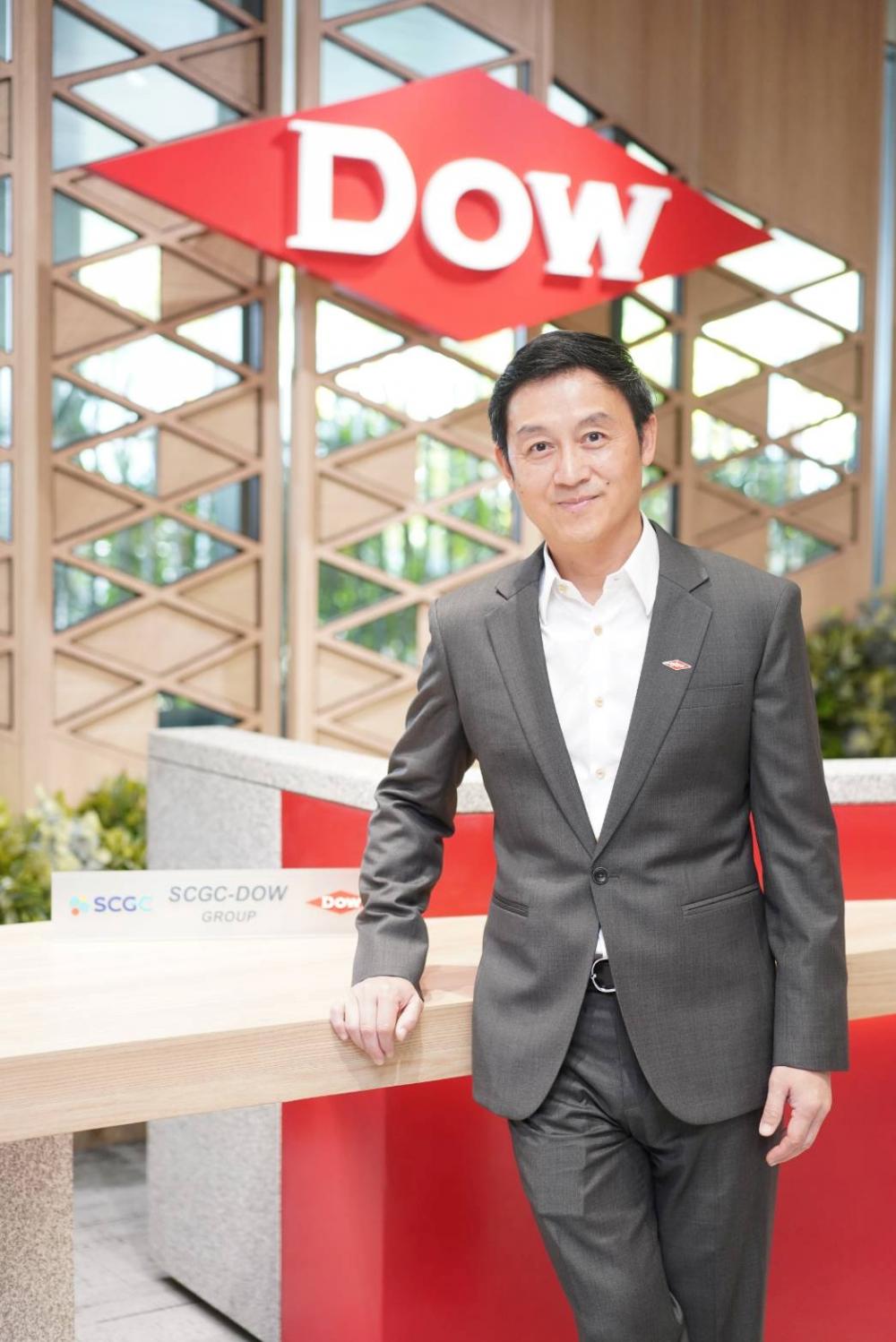
Mr Ekkasit is helping Dow implement eco-friendly projects to support the company's campaign to combat carbon dioxide emissions.
Dow's product portfolio is primarily composed of plastics and polymers that support high-growth markets such as flexible packaging, infrastructure, cars and consumer products.
When these products or their components are used and discarded, they become plastic waste, one of the major contributors to greenhouse gas emissions.
"We aim to reduce plastic waste through a comprehensive strategy that includes developing circular and renewable solutions, designing packaging to be reusable or recyclable, expanding plastic recycling through strategic partnerships, and incorporating post-consumer recycled [PCR] plastics into new materials," said Mr Ekkasit.
MATERIALS REBORN
To reintegrate plastic waste into the value chain, Dow is focusing on a mechanical recycling method to produce PCR resins, he said.
Unlike advanced or chemical recycling, which uses modern technologies to break down used plastics into their original molecular building blocks, traditional mechanical recycling melts and reshapes plastics, which are sorted and cleaned after being separated from garbage.
The latter gives new life to plastic waste by converting it into high-quality resin suitable for manufacturing new products, thereby reducing reliance on virgin plastics.
Advanced recycling also supports Dow's efforts to develop more sustainable products by enabling the conversion of hard-to-recycle plastics into valuable feedstock. While it involves a more complex process and can be influenced by market factors such as naphtha pricing, it plays a critical role in addressing materials that mechanical recycling cannot easily handle, said Mr Ekkasit.
"At the same time, mechanical recycling remains a highly efficient and cost-effective solution for reducing plastic waste, particularly for well-sorted streams, and is central to our circular solutions," he said, referring to how recycling can add value to unwanted materials, making them usable again.
GREEN DESIGN
Dow promotes Design for Recyclability, also known as "D4R", in designing a product or package from the outset so it can be easily collected and efficiently recycled after its use.
D4R is a foundational principle that involves aligning material choices and structural design with recycling guidelines so that high-quality materials can be recovered, supporting circularity and reducing waste. For example, creating mono-material packaging instead of multi-material structures improves recyclability and enables better-quality recycled plastics streams, suitable for manufacturing high-quality recycled content.
Dow collaborates with brands and converters across the value chain, guiding them to design new packaging using D4R principles. When this D4R packaging is collected, sorted and recycled, it results in a higher-quality post-consumer recycled (PCR) feedstock.
The company develops mechanically recycled plastic resins under its REVOLOOP brand to help entrepreneurs meet their sustainability goals by incorporating PCR content into their products and packaging.
"Up to 100% PCR materials are used to make non-food contact packaging," said Mr Ekkasit.
Dow also manufactures products that are a formulated grade of resin containing up to 85% PCR plastics.
"Dow serves customers across diverse industries who rely on our REVOLOOP PCR resins to enhance their sustainability portfolios in line with global and regulatory trends," said Mr Ekkasit.
Plastic waste such as PET (polyethylene terephthalate) bottles, plastic film and bags can be converted into PCR materials, notably polyethylene and linear low-density polyethylene (LLDPE), which can be used to make new plastic products.
Dow has partnered with Copeland (Thailand), Makita Manufacturing (Thailand) and MMP Corporation to launch a new stretch film containing 30% PCR plastic, produced using Dow Thailand's REVOLOOP recycled resins.
Copeland is participating in the supply chain and the application of the new film, while MMP is a stretch film manufacturer. Makita Manufacturing is a power tool brand committed to sustainable logistics.
The new film is designed for non-food contact logistics applications, such as pallet wrapping and product bundling.
It maintains clarity, strength and performance comparable to virgin plastic films.
The PCR resin used in the new film demonstrates cradle-to-gate greenhouse gas emissions that are 52.5% lower than the global average for virgin LLDPE production, as verified by an independent third-party study, said Mr Ekkasit.
This collaboration underscores Copeland's dedication to advancing sustainable packaging and logistics in Thailand, supported by Dow's Global Recycled Standard-certified PCR resin and MMP's manufacturing capabilities.
The initiative marks a significant milestone in embedding sustainable materials into industrial logistics, propelling Thailand's industry towards a more sustainable future, said Mr Ekkasit.
CLEAN FUTURE
Under an effort to achieve its "Chemical Business for Sustainability" campaign by 2030, Dow will transform plastic waste and other forms of alternative feedstocks to commercialise 3 million tonnes of circular and renewable solutions annually.
"By 2035, Dow will close the loop by enabling 100% of Dow products sold into packaging applications to be reusable or recyclable," said Mr Ekkasit. Currently, more than 80% of Dow products sold into packaging applications are designed for recyclability.
The company is helping to advance a circular economy by collaboratively investing in key technologies and infrastructure enhancements that strengthen the materials ecosystem for plastics waste.
Dow also intends to help Thailand build a cleaner future for its petrochemical industry, he said.
The company recognises the potential for PCR materials to contribute meaningfully to the chemicals industry by helping to reduce plastic waste in landfills and oceans.
In Thailand, PCR supports a more sustainable chemicals sector by decreasing dependence on virgin fossil resources, said Mr Ekkasit.
"Demand for PCR materials is rising in response to global sustainability trends, positioning PCR as an important solution for reducing environmental impact," he said.
"As a regional hub for chemical production, Thailand plays a pivotal role in advancing the integration of sustainable materials into industrial supply chains."