

SET-listed SKY ICT, a smart aviation technology company, and its smart facility service subsidiary Metthier are committed to capitalising on technology to help Thailand build smart cities and achieve energy efficiency and better environmental management.
Metthier is offering Metthier Reformative IQ (METTRIQ), a core open platform designed to integrate and connect all Internet of Things (IoT) devices and other devices with facility management systems in a building.
Kayon Tantichatiwat, chief executive of Metthier Co Ltd, said the platform allows operators of all sizes that prioritise environmental, social and governance (ESG) factors to achieve efficient and sustainable building management.
The platform supports both corrective and preventive maintenance strategies. In addition, its 3D visualisation system enhances resource management efficiency and allows for quick adaptation to future challenges, he said.
Mr Kayon said as a leader in property management, Metthier's focus is on helping buildings collect data which will be used by artificial intelligence (AI) and IoT to strengthen their building security and improve sustainable energy and environmental management with measurable results.
This focus led to the development of the METTRIQ integrated intelligent building management platform.
As the world faces an economic slowdown, AI revolution and a climate change crisis, urban development must be adjusted, he said.
"The key is integrating a sustainable city structure with technologies such as AI, big data and IoT to drive progress towards a smart sustainable city that is safe and low-carbon," said Mr Kayon.
He said Metthier adopted AI, IoT and database technologies to develop an integrated building management approach covering both safety and energy management.
Examples include its use of AI-powered CCTV and a visualisation system that connects real-time data from cameras, electrical systems and IoT devices; cleaning robots; air quality monitoring; lighting control systems; and automation systems with smart sensors to manage energy consumption.
These systems can accurately measure reductions in carbon emissions and greenhouse gases, said Mr Kayon.
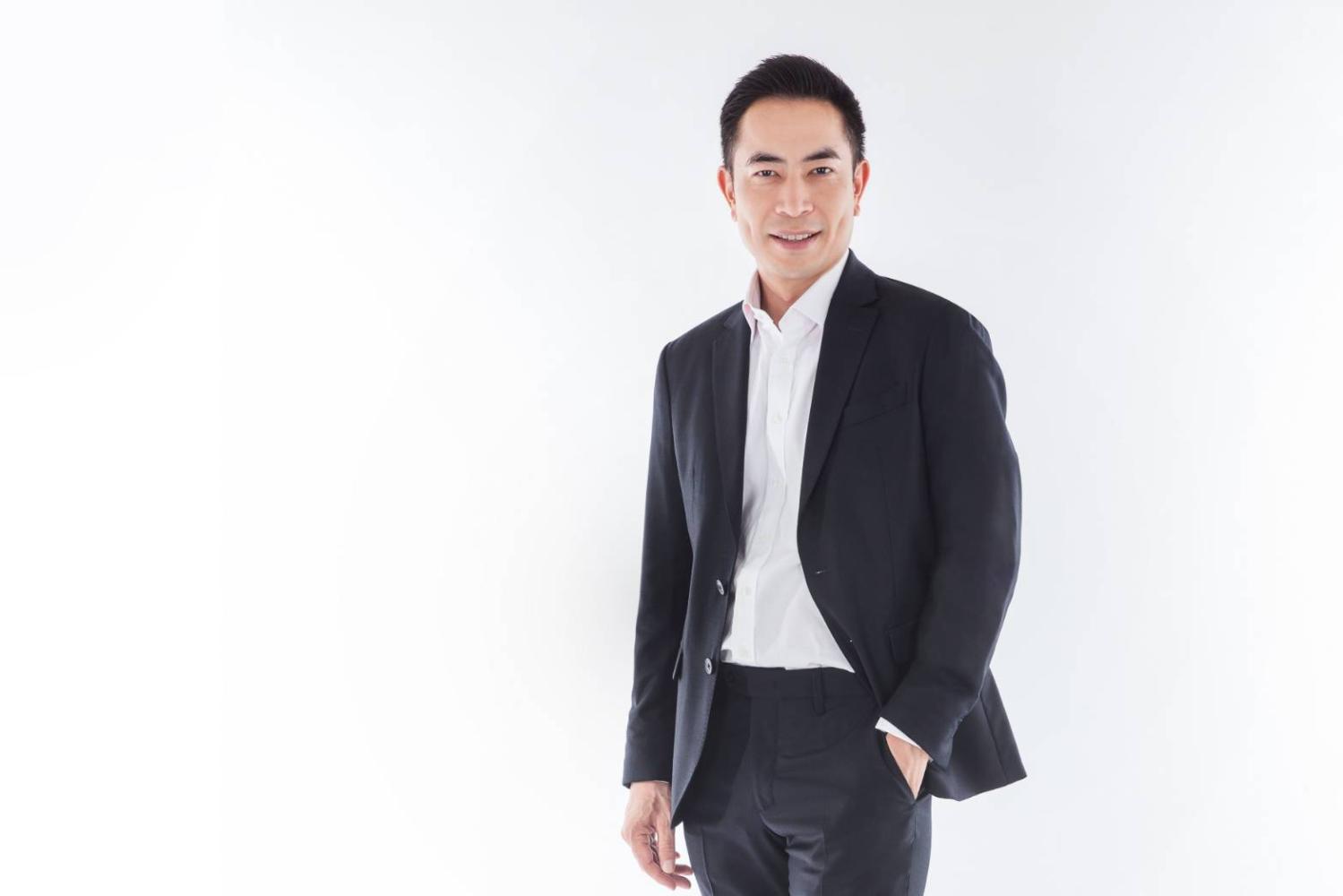
Mr Sithidej promotes SKY ICT's top ESG rating from the SET.
SIX PILLARS
He said the six core pillars for sustainable building management comprise: durable and maintainable design, energy efficiency, use of environmentally friendly materials, waste reduction, water efficiency and indoor environmental quality.
These pillars are supported by the integra- tion of technology for data collection to assess how much carbon dioxide and greenhouse gases a building emits.
Mr Kayon said the METTRIQ platform emphasises data analytics and displays results in digital twin format to increase accuracy in resource management and support sustainable building operations.
A digital twin refers to a virtual representation of a physical object or system that uses real-time data to accurately reflect its real-world counterpart's behaviour, performance and conditions.
The METTRIQ platform combines 12 features in a single platform, ranging from CCTV systems and automatic access control to electricity and water management systems.
"If Thailand is to move towards becoming a smart city in the near future, both the public and private sectors must work together to make it a reality," he said.

The METTRIQ platform features adaptive 3D visualisation, which integrates all building data into a digital twin display.
ESG RATING OF AAA
In December last year, SKY ICT was awarded the highest rating of AAA in the Stock Exchange of Thailand's (SET) ESG Ratings 2025, underscoring its commitment to sustainable business practices.
Sithidej Mayalarp, chief executive of SKY ICT, said the rating is used to assess sustainability and promote responsible investment. The SET uses the ESG ratings to compile its SET ESG Index.
The rating is divided into four levels: AAA (score of 90-100), followed by AA (80-89), A (65-79), and BBB (50-64).
SKY ICT earned a score of 92, with high marks for ESG performance, systematic environmental management, and its good treatment of all stakeholders, employees, partners, customers and communities.
"Our AAA rating reflects our sustainable operations and the value generated for shareholders and society," said Mr Sithidej.
In terms of the environment, the company leverages information and communications technology to increase its energy management efficiency and reduce carbon dioxide emissions.
SKY ICT developed digital technology to reduce its use of paper documents and devised solutions to bolster its aviation-related operations, while reducing organisational waste, in alignment with international standards.
Regarding the social dimension, he said the company continues to prioritise safety, personnel and aviation technology.
SKY ICT focuses on enhancing the skills of employees in aviation technology and cybersecurity, while prioritising data protection and systems security for passengers, said Mr Sithidej.
In terms of corporate governance, SKY ICT operates using good governance and transparency, in line with global standards, he said.
According to the company, the group key environmental targets include reducing electricity consumption per person by 2.5% by 2028 compared with the 2023 baseline.
Other goals include cutting greenhouse gas emissions by 5% by 2029 compared with the 2024 baseline, and cutting paper usage by 2.5% by 2028 compared with the 2023 baseline.
The group's core social targets include providing an average of at least six training hours per employee per year, an employee turnover rate not exceeding 10%, and at least 50% of employees hired locally by 2029 compared with the 2024 baseline, said Mr Sithidej.

Mr Kayon says with the world facing an economic slowdown, AI revolution and a climate change crisis, urban development must be adjusted.