
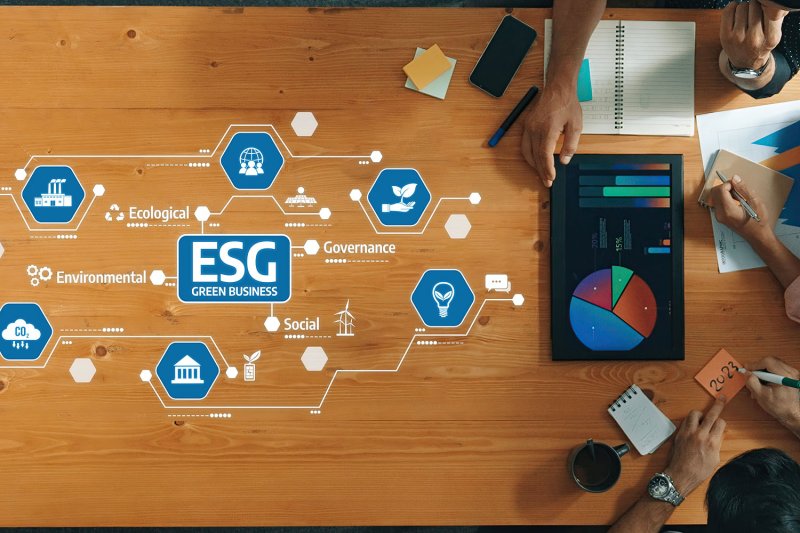
For decades, success in Thailand's corporate sector was measured largely by a single benchmark: profit. Today, the metrics are evolving as the global economic landscape changes.
Investors, regulators and policymakers are increasingly asking broader questions -- how those profits are generated, and do they contribute to a more sustainable future?
The philosophy "profit with purpose" is steadily gaining ground, reflecting a growing recognition that long-term economic growth must pair with environmental responsibility and social inclusion.
Capital market associations recently joined forces to develop a platform to shape Thailand's sustainability agenda. The initiative brings together a broad coalition of institutions across the country's financial and development landscape.
Participants include the Securities and Exchange Commission (SEC), the Board of Investment (BoI), the Stock Exchange of Thailand (SET), the Thai Listed Companies Association (TLCA) and the Federation of Thai Capital Market Organizations (Fetco).
They are joined by social development organisations such as the Community Organizations Development Institute and the Thai Health Promotion Foundation.
Together, these institutions are working on a shared goal: mobilising the power of the capital market to drive sustainable development, from corporate boardrooms to grassroots communities across the country.
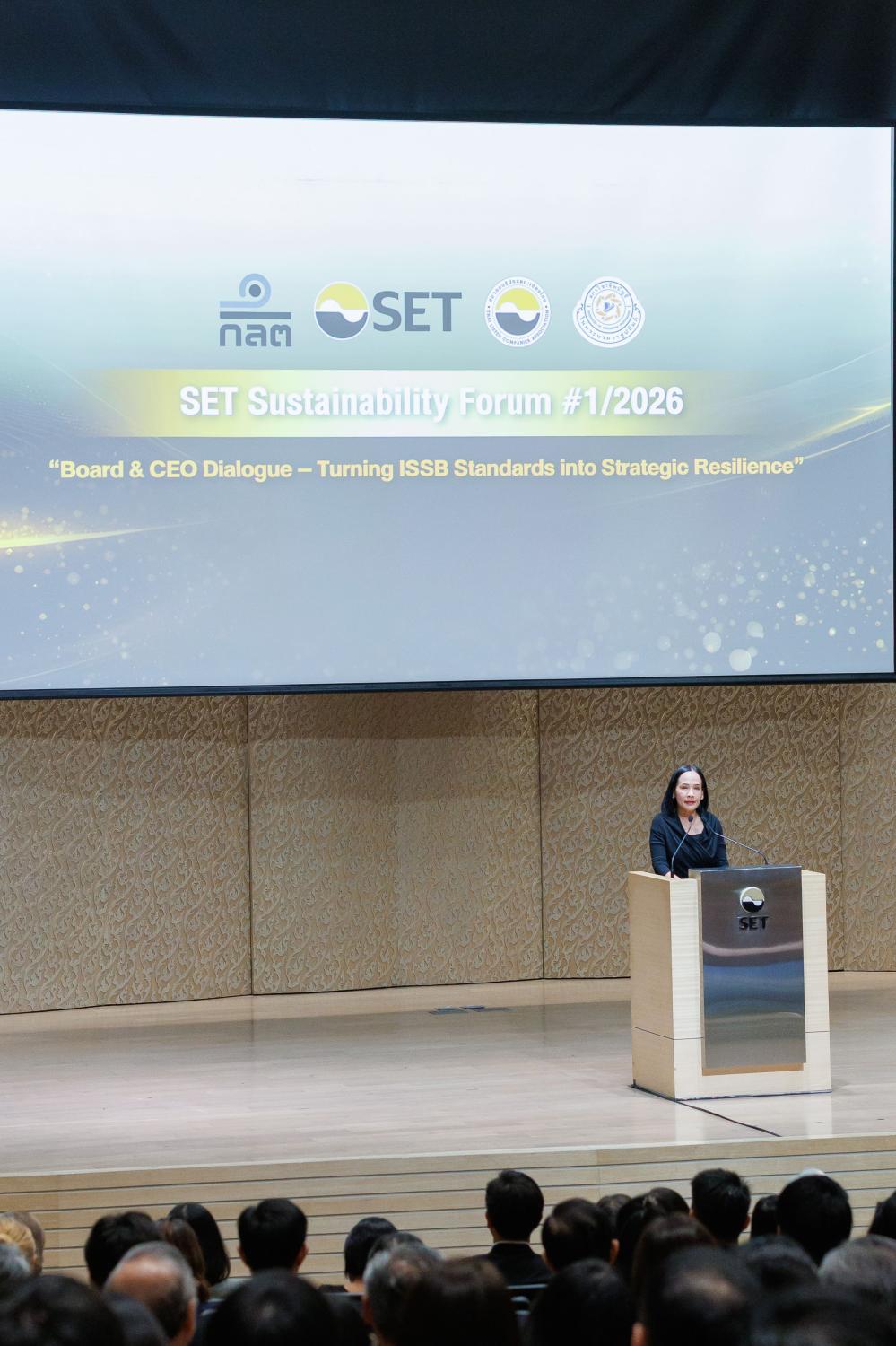
Mrs Pornanong says sustainability involves managing long-terms risks and opportunities.
Capital Market Role
At the centre of Thailand's sustainability transition is the SEC, which is gradually redefining its role beyond traditional market supervision.
Rather than acting solely as a watchdog, the regulator is positioning itself as an architect of Thailand's sustainable finance system, guiding capital towards businesses and projects that support long-term environmental and social goals.
Sucha Boonyanate, deputy secretary-general of the SEC, said the capital market has the potential to become a powerful driver of sustainable economic growth.
"Our goal is to position the capital market as a key engine of sustainable economic development," she said.
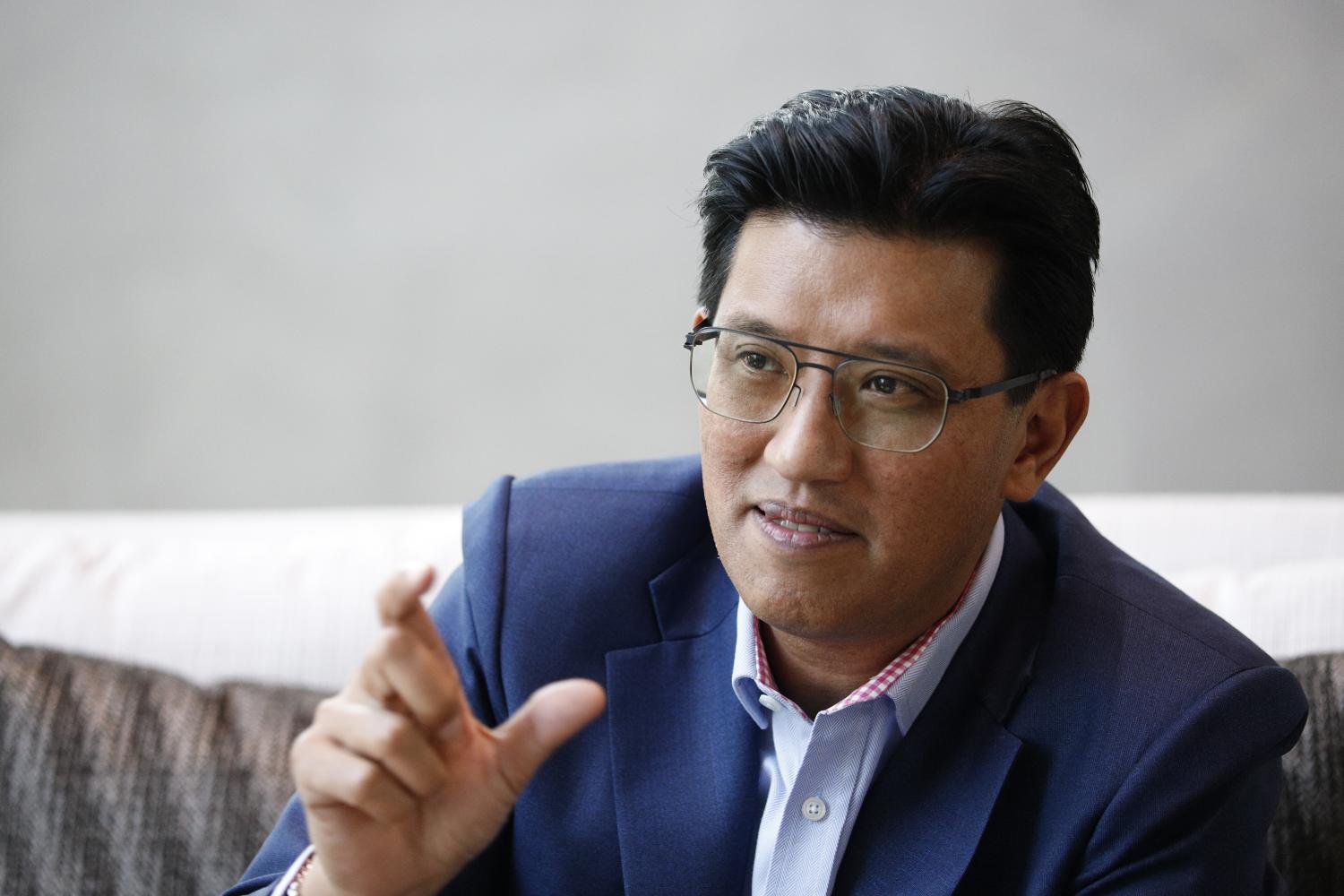
Mr Asadej says boards and chief executives are critical in embedding ESG into corporate strategy, risk management and operations in a meaningful way. (Photo: Pattarapong Chatpattarasill)
"Financial returns should go hand in hand with social and environmental responsibility."
A foundation of this transformation is transparency. Investor confidence increasingly depends on the quality and comparability of corporate disclosures. Thai listed companies already publish the 56-1 One Report, which integrates financial reporting with environmental, social and governance (ESG) information.
Regulators are now implementing the Thai ISSB Road Map, which aims to gradually align Thailand's disclosure standards with those developed by the International Sustainability Standards Board (ISSB).
For global investors, this alignment is significant. Comparable ESG data enables international asset managers to evaluate Thai companies alongside those in other markets, potentially strengthening Thailand's appeal as a destination for sustainable investment.
Low-Carbon Transition
Beyond disclosure standards, regulators are encouraging the development of financial instruments that support Thailand's transition towards a low-carbon economy.
In recent years, ESG-related bonds and investment funds have gained traction in the Thai capital market. To accelerate adoption, the SEC introduced incentives such as regulatory fee waivers for ESG bond issuance.
One concept attracting attention is transition finance. Unlike traditional green finance, which typically supports industries that are already low-carbon, transition finance focuses on sectors that face greater challenges in reducing emissions.
Industries such as heavy manufacturing, energy production and transport often require significant time and capital to shift towards cleaner technologies.
Transition finance enables these sectors to access funding to upgrade production processes, improve efficiency, and gradually reduce carbon emissions.
"Some industries cannot transform overnight," Ms Sucha noted. "Transition finance allows them to move towards sustainability step by step while remaining competitive in global supply chains."
Regulators are also strengthening oversight to ensure the credibility of the ESG market.
Concerns about greenwashing, where companies exaggerate environmental commitments, have led to stricter standards for sustainable investment products. Sustainable and Responsible Investment funds must comply with clearly defined criteria and labelling requirements.
Meanwhile, Thai ESG funds are increasingly focusing their investments on companies with strong governance practices, often those receiving high scores in the Corporate Governance Report.
The goal is to ensure sustainability claims are backed by transparent and measurable practices, she said.
Markets and Communities
While regulators focus on financial markets, structural inequality continues to shape Thailand's long-term development path.
Despite decades of economic growth, many communities still have limited access to financial resources, face environmental pressures or have uneven economic opportunities.
For Kobsak Pootrakool, chairman of Fetco, strengthening grassroots economies is essential to maintaining the country's long-term economic resilience.
"If structural challenges remain unresolved, they could deepen social divisions and weaken economic stability," he warned.
To address this issue, Mr Kobsak proposed a three-stage wealth strategy aimed at building sustainable community economies.
The first stage focuses on wealth restoration. Many rural communities once relied heavily on natural resources that have gradually deteriorated over time.
Reviving these resources through initiatives such as community forest restoration and innovative tree banks, where trees are treated as economic assets, helps rebuild the ecological and financial foundations of local economies.
Financial resilience is another key component. Community savings initiatives, including programmes such as "one baht a day" savings groups, encourage long-term financial discipline while strengthening local financial networks.
The second stage is wealth preservation, focusing on strengthening local institutions capable of managing community resources effectively.
Digital accounting systems and modern financial tools are introduced to improve transparency in cooperatives and community enterprises, helping them operate more sustainably, he said.
The final stage is wealth creation, connecting communities to broader markets.
Here, the private sector can play a transformative role. Companies can contribute expertise in branding, logistics, technology and marketing -- skills that small producers often lack but that are essential for scaling local businesses, noted Mr Kobsak.
In one example, a local vendor's annual revenue rose from 4 million baht to nearly 200 million after gaining access to a nationwide retail distribution network, he said.
"This demonstrates how powerful market access can be," said Mr Kobsak.
Aligning with Social Impact
The BoI also has a role to play in the sustainability landscape as it shapes the country's investment outlook.
Global investors increasingly prioritise sustainability, and the BoI is redefining what constitutes "quality investment".
According to BoI secretary-general Narit Therdsteerasukdi, economic growth must be evaluated not only by financial returns, but also by its broader impact on society.
"Investment today must generate value for communities as well as for businesses," he said.
To support this vision, the board introduced investment promotion measures for community and social development, designed to encourage companies to invest directly in local development projects.
Under the initiative, eligible community development expenses can be deducted from corporate income tax, effectively turning social responsibility initiatives into strategic financial incentives.
The programme gained traction with businesses. Between 2023 and early 2026, the BoI approved 106 projects worth roughly 3 billion baht, involving 946 local organisations across Thailand.
These initiatives span a wide range of areas, including water resource management, sustainable agriculture, and forest conservation programmes aimed at mitigating PM2.5 air pollution.
For policymakers, the initiative demonstrates how investment policy can address environmental challenges while strengthening local economies, said Mr Narit.
"These achievements reflect cooperation across all sectors in driving sustainable development from grassroots to the national level," he said.
Beyond Financial Returns
As sustainability initiatives expand, the measure of their success is changing.
In the past, many corporate social responsibility (CSR) programmes focused primarily on the amount of funding allocated to projects. But Thailand's evolving sustainability framework increasingly emphasises measurable outcomes.
Companies participating in the multilateral collaboration are expected to report indicators such as the number of beneficiaries reached, increases in household incomes, and the broader economic multiplier effects generated within local economies.
These results are compiled into a National Social Impact Dashboard, providing policymakers and investors with a clearer picture of how private capital contributes to grassroots development.
The shift reflects a broader transition from traditional CSR activities towards data-driven impact measurement.
Virtuous Cycle
As Thailand moves towards its long-term net zero emissions goals, collaboration between regulators, investors, businesses and communities is becoming increasingly important.
What is emerging is a new model of economic development in which each sector plays a complementary role. The capital market provides funding, the BoI provides policy incentives, the private sector contributes expertise and innovation, and communities generate sustainable economic value.
Together, these forces create what policymakers describe as a virtuous cycle of sustainable growth. Discussions at the third Multilateral Collaboration Forum underscored an important reality: sustainability cannot be achieved by any single institution acting alone.
Instead, it requires coordinated efforts across financial markets, regulatory institutions and local communities.
For Thailand, the challenge is not merely to follow global ESG trends, but to adapt them in ways that reflect the country's unique economic structure.
If successful, the country could offer a valuable model for other emerging economies seeking to balance economic growth with environmental responsibility and social inclusion.
"ESG has become a defining factor in how global investors allocate capital," said SET president Asadej Kongsiri, adding the roles of boards and chief executives are critical in embedding ESG into corporate strategy, risk management and business operations in a meaningful way.
For Oranuch Apisaksirikul, vice-chairman of TLCA, sustainability factors, particularly climate-related issues, represent critical risks that must be appropriately managed for companies' survival and long-term growth in order to safeguard their financial position, operational performance and competitive standing.
Pornanong Budsaratragoon, secretary-general of the SEC, said credible disclosure must begin with the board's vision and strategic governance oversight.
"Sustainability today is no longer about producing reports. It is about managing long-term risks and business opportunities," she noted.