
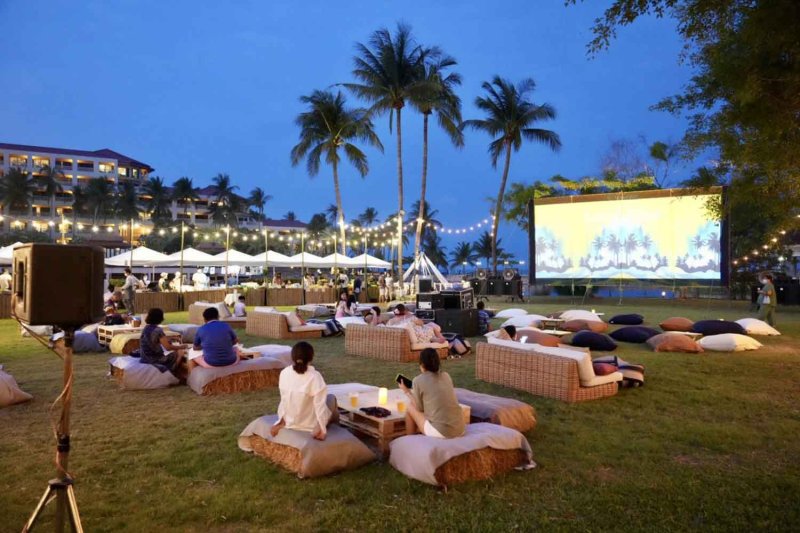
The Mice (meetings, incentives, conventions and exhibitions) sector includes business activities at event venues as well as the entire supply chain, including catering companies, organisers and transport providers.
According to the Global Sustainable Tourism Council (GSTC), this sector has a significant impact on the environment and local communities, and it is growing annually.
Mice operators and customers are now more aware of sustainable travel trends, planning events aligned with the UN's Sustainable Development Goals.
Both public organisations and private stakeholders are utilising an ESG (environmental, social and governance) framework to promote Thailand as a preferred sustainable meeting and event destination.

Hotels are offering local cultural experiences for Mice guests, such as Thai rice farming, as part of an ESG strategy and sustainability trend.
SUPPLY DEVELOPMENT
Pantakamol Amatayakul, standards and sustainability chairperson at the Thai Exhibition Association (TEA), said the Mice sector is often perceived as producing high waste and emissions because it uses many resources for transport, hotels, venues, food and booth construction, but operators are increasingly conscious about this issue.
"If we do not adapt to sustainable practices, we will lose business opportunities as customers will choose other well-prepared operators instead," said Ms Pantakamol.
Meeting and exhibition suppliers are being shaped by customer demand, such as companies in both Thailand and overseas who have a list of key performance indicators for their operations, she noted.
Customers are demanding events and venues that measure carbon footprint, effectively manage waste and utilise clean energy, as well as offer local products.
Integrating ESG standards into all forms of Mice procedures and event formats is one of the five core strategies of the Thailand Convention and Exhibition Bureau's (TCEB) 2026 plan.
The bureau set up a certificate named the Thailand Sustainable Event Management Standard (TSEMS), where operators can apply and get certified by completing checklists.
Ms Pantakamol said under the environmental pillar, reducing the carbon footprint applies to the supply chain, such as hiring certified event organisers, building showcase booths with recycled materials and avoiding single-use plastics.
TCEB announced earlier an update to its terms of reference for event bidders, requiring them to plan carbon-neutral events.
Organisers need to calculate the carbon footprint for events, which can be done via the Zero Carbon application developed by the Thailand Greenhouse Gas Management Organization.
Organisers are encouraged to offset emissions by buying carbon credits in the market, with TCEB offering assistance to connect with available projects.
The bureau also works with related organisations to coordinate increasing the number of new projects to match demand.
Supawan Teerarat, president of TCEB, said the bureau targets a reduction of 10,000 tonnes of carbon dioxide across all events this year. The sector cut 2,445 tonnes and 780 tonnes of carbon dioxide in 2025 and 2024, respectively.
In 2030, the industry aims to reduce 20,000 tonnes of carbon dioxide, building up to a net zero future.
Under TCEB's social pillar, operators need to consider creating a positive social impact, such as hiring local staff or incorporating local products within the event.
Organisers must also ensure transparency and ethics in their business management under the governance pillar, said Ms Pantakamol.
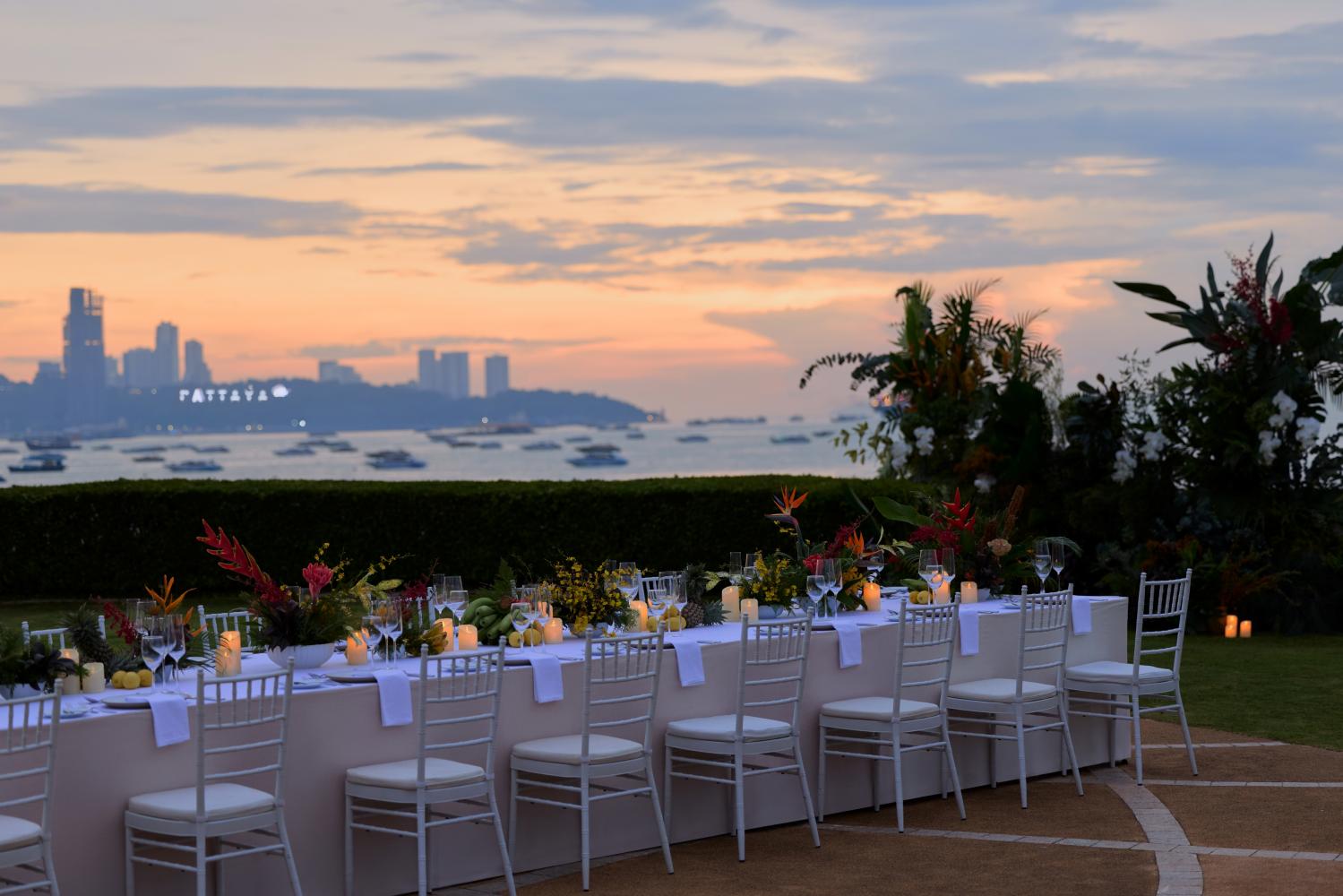
The setting for an outdoor meeting at Dusit Thani Pattaya.
CHALLENGES REMAIN
She said a major challenge for the industry is the lack of understanding among small and medium-sized operators regarding sustainability.
Large organisations have sufficient resources and largely obtain certification, whether TSEMS or more advanced standards under ISO20121 or the GSTC.
TCEB has been increasing budgets to connect with and educate small operators annually, especially in upcountry or second-tier cities.
The bureau formed partnerships with private operator representatives such as the TEA, comprising venues, organisers, logistics and construction providers, and the Thailand Incentive and Convention Association (Tica), which comprises destination management companies and hotels.
TCEB also provides incentives for operators adapting to this trend, such as status as a preferred venue or organiser for government events, said Mrs Supawan.
Prachoom Tantiprasertsuk, president of Tica, said while small and medium-sized operators often lack a sufficient budget for this transition, they can start with small details such as reducing single-use plastics and food waste or incorporating local offerings.
"Thailand already has an advantage in terms of sustainability, as it is a top tourism destination filled with natural resources and local communities to conserve," said Ms Prachoom.
"Customers not only want meetings and business matching, but also look for local experiences or some way to give back to society through their work."
For instance, a hotel can provide coffee breaks by hiring local vendors to serve local dishes and snacks.
On days off, community tourism can be added to the itinerary, which most foreign tourists prefer.
To succeed, she recommended operators ensure their employees have a passion for their work and are properly trained.
Once their business becomes more mature, operators can start looking into larger investments, particularly clean energy systems, which require green loans from financial institutions, said Ms Prachoom.
Ms Pantakamol said investing in these technologies will eventually lead to long-term cost savings and efficiency, but it requires a large upfront payment that could be a barrier for small businesses.
Ms Prachoom said the government must provide more incentives such as tax rebates to reward operators making the transition, while also helping them with marketing to increase business opportunities for the local Mice industry.
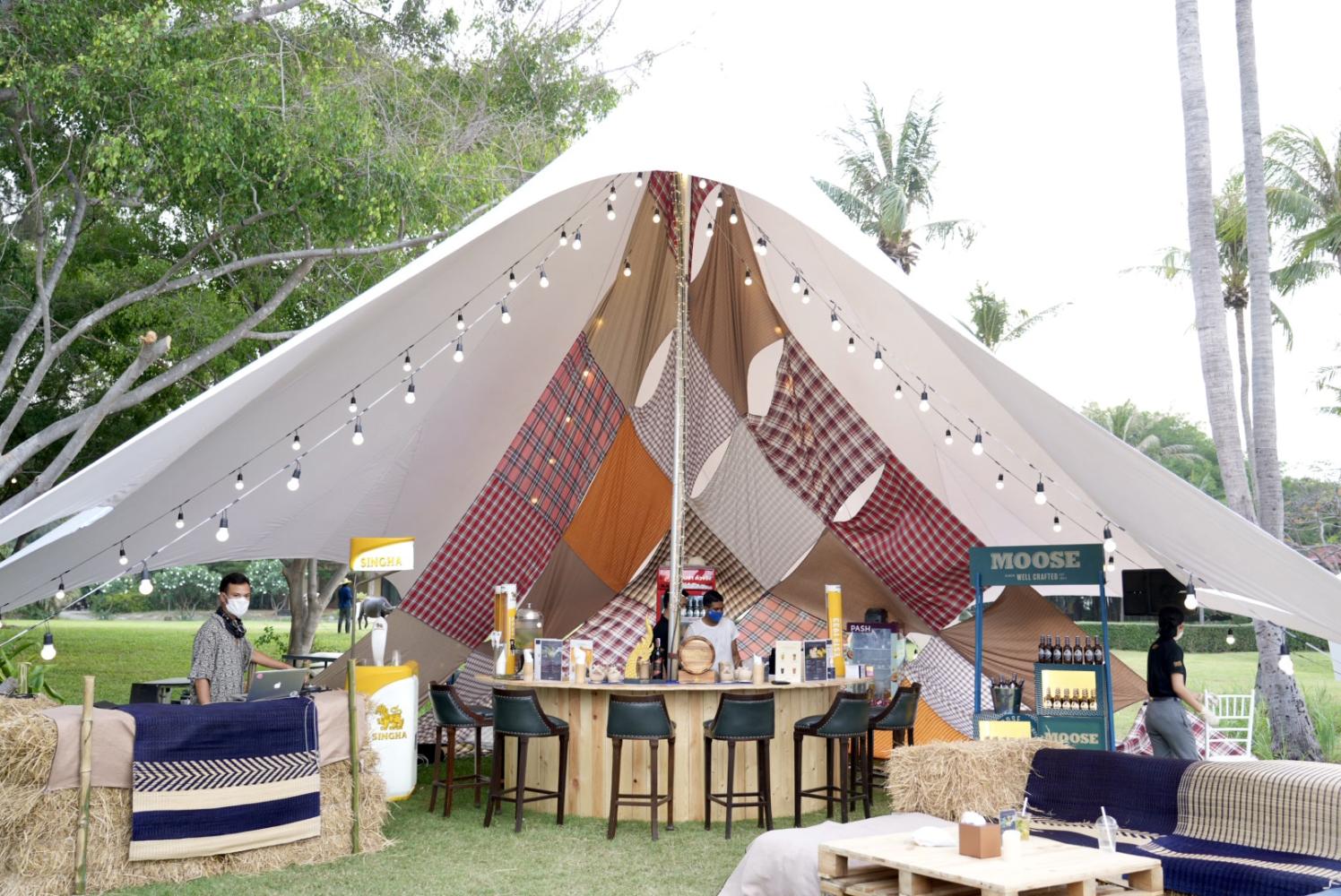
More hotels offer outdoor activities for guests.
BANKING'S ROLE
Financial institutions are aware of the demand for green loans, especially among small and medium-sized enterprises (SMEs), according to the Bank of Thailand.
Under the central bank's "Financing the Transition" scheme, it partnered with eight commercial banks to launch financial products that match Thailand's context, particularly helping small operators to transform their operations to be more green.
At the end of last year, the loan value under this scheme tallied 163 billion baht, exceeding its target of 100 billion.
Chananun Supadulya, director of the Financial Institutions Strategy Department at the central bank, said a key lesson from this scheme is SMEs are often unaware of environmental issues.
However, commercial banks cannot drive this transition alone without support from other organisations, she said.
The programme is expanding towards more solutions support, selecting sectors that face high pressure in the green transition, said Ms Chananun.
In addition to loans, the scheme offers incentives such as trade show promotions for hotels participating in the green journey with the Tourism Authority of Thailand, as well as training supported by the Department of Climate Change and Environment as part of application for Green Hotel Plus certification.