 Listen


 Facebook
 Reddit
 Copy Link


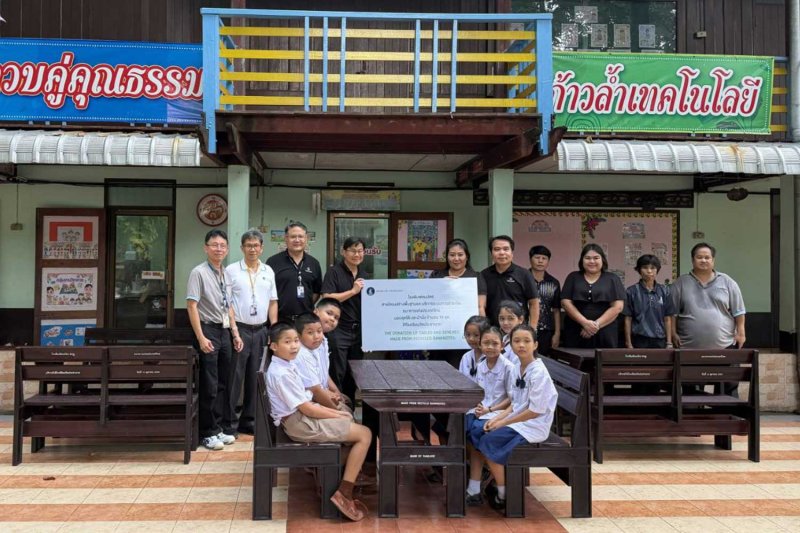
Polymer banknote recycling in Thailand took a major and meaningful step forward on Thursday with a donation of tables and benches made from the recycled waste of polymer banknotes by Note Printing Works under the Bank of Thailand.
The polymer banknote project team at the Bank of Thailand initiated the recycling project last year. It coordinated with various stakeholders to kickstart polymer banknote recycling.
Polymer waste from the banknote production process was recycled into plastic pellets for injection moulding applications, said Pairote Balun, director of the Note Printing Works.
Resulting products included tables, benches, industrial pallets and building materials. Shredded unfit polymer banknotes from the production process were also recycled into wall panels, corrugated roof tiles and furniture pieces, he said.
According to Mr Pairote, Thailand has produced its own polymer banknotes for five years. The 20-baht polymer banknote was issued in March 2022 and has made a significant and sustainable impact.
Due to the durability of the new notes, the volume of banknotes needed to replace old and unfit banknotes has decreased significantly, helping reduce the carbon footprint of the cash cycle.
Last year, the Bank of Thailand introduced 50-baht and 100-baht polymer banknotes. More importantly, all waste from the production process of polymer banknotes is now 100% recycled.
“Note Printing Works is fully committed to recycling 100% of polymer waste from the production process of banknotes. This reduces the carbon footprint of the cash cycle and is an important part of the broader strategy of the Bank of Thailand for sustainability," said Mr Pairote.
On Thursday, the banknote recycling team from the Bank of Thailand donated ten sets of tables and benches, recycled from polymer banknotes, to Wat Prachanart School, a primary school with about 100 students in Nakhon Chaisi district, Nakhon Pathom.
It was the Bank of Thailand’s first donation of products made from recycled polymer banknotes, Mr Pairote said.
"We are very pleased to donate these tables and benches for the young students to use during lunch time and during their learning activities outside of the classroom."
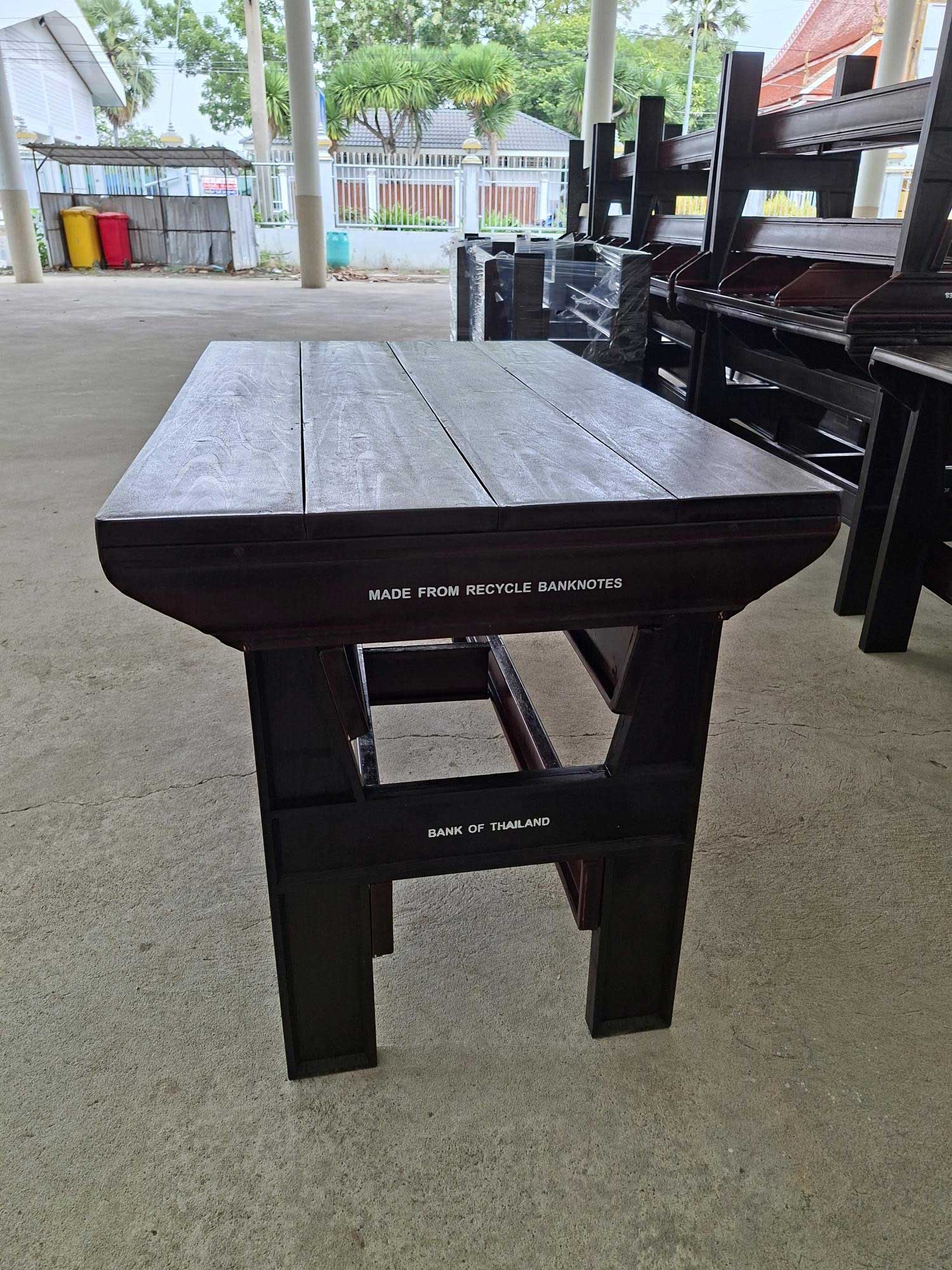
Donated tables were delivered to the school.
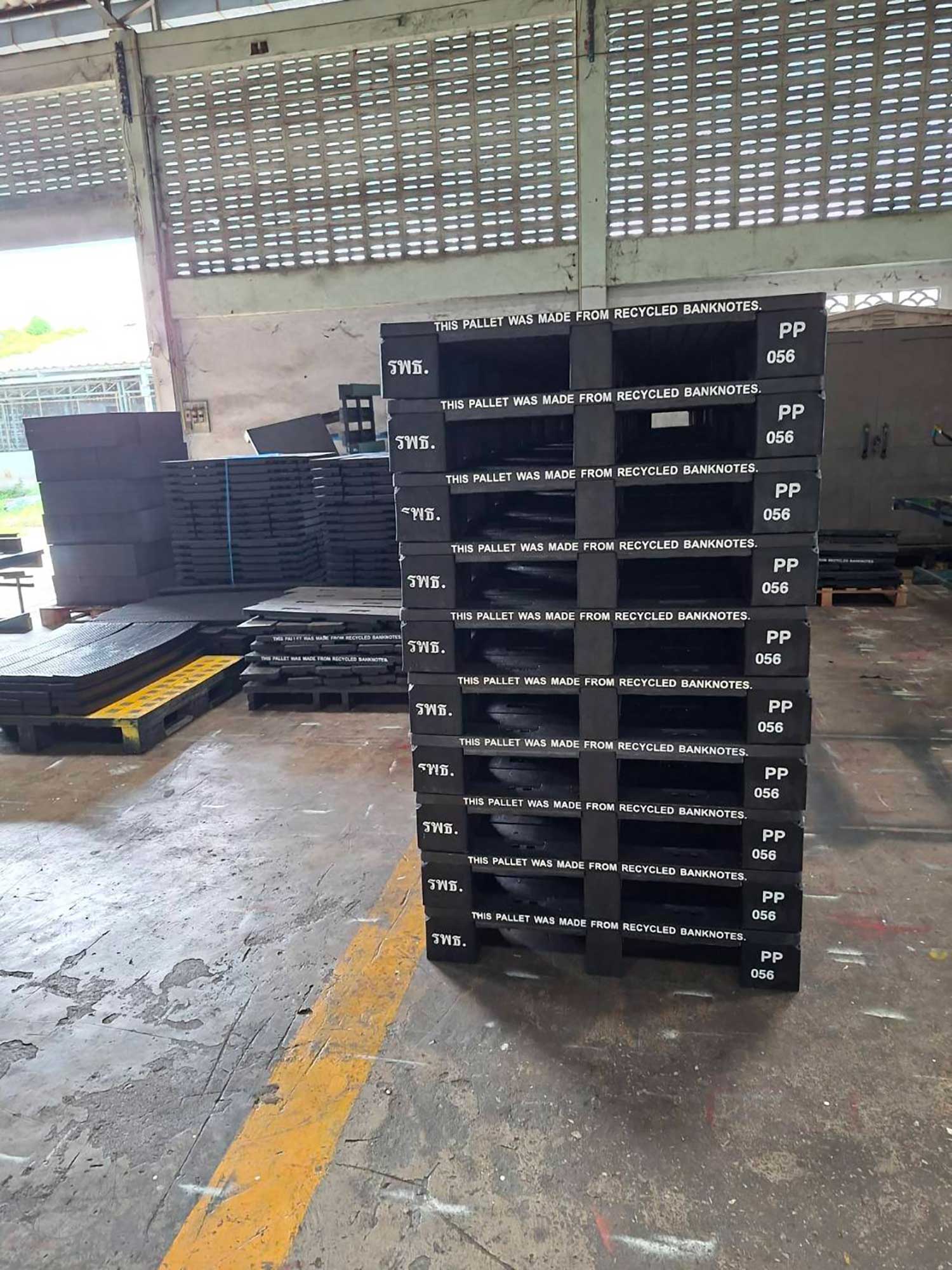
Pallets made from recycled polymer banknotes.
