


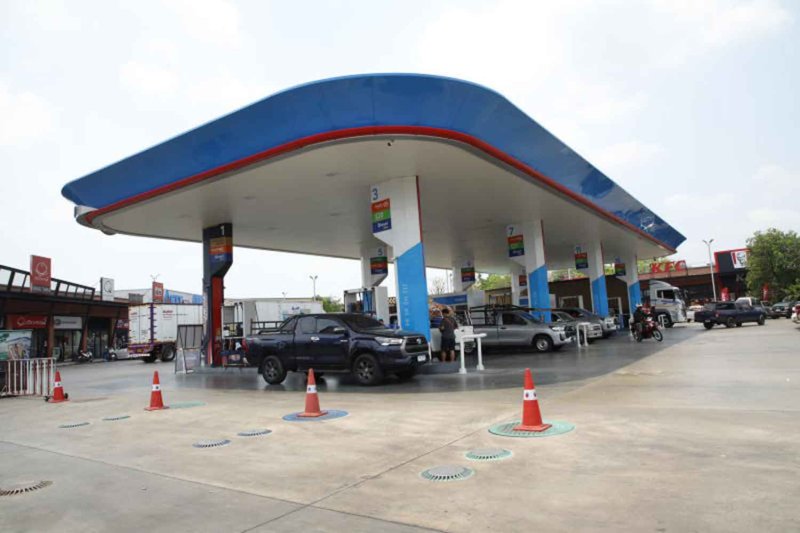
Retail petrol and diesel prices in Thailand soared by six baht per litre on Thursday morning after the government abandoned costly attempts to cap them.
The decision by the state Oil Fuel Fund to slash subsidies, announced late Wednesday, set off a rush by drivers to fill up before the new prices took effect at 5am Thursday, with lengthy queues overnight at service stations nationwide.
The change means diesel prices are up by 18%, with more modest increases for other types of fuels.
At PTT petrol stations, prices increased to 38.94 baht a litre for high-speed diesel, 54.64 baht for B7premium diesel, 40.68 baht for gasohol 91 petrol, 41.05 baht for gasohol 95, 36.05 baht for gasohol E20, 32.79 for gasohol E85, 52.04 baht for gasohol 95 premium and 49.64 baht for gasoline 95.
The government said on Wednesday that it was becoming too expensive to maintain a cap on prices pushed up by the Middle East war, and that instead it would offer targeted assistance for those hardest-hit, such as poor consumers, farmers and truckers.
Finance Minister Ekniti Nitithanprapas said price caps had led to market distortions, hoarding and unnecessary budget losses.
The Oil Fuel Fund is still subsidising prices but at far lower rates than before. Subsidies have been reduced from 26.99 baht to 19.12 baht per litre for high-speed diesel and B20 diesel, from 12.85 baht to 5.94 baht for gasohol E20, and from 9.73 baht to 3.26 baht for gasohol 95 and gasohol 91. The subsidy of 4.28 baht for gasohol E85 has been eliminated entirely.
Diesel consumption in Thailand normally averages 65 million litres a day, but since the war began to push up oil prices, consumption has risen to between 85 million and 100 million litres per day.
Hoarding on a large scale — and not just panic buying by individual drivers as the government initially claimed — has been the main cause behind hundreds of service stations running out of fuel despite official assurances that the country’s reserves are adequate.
The Oil Fuel Fund burned through 20 billion baht in three weeks to keep prices capped. Officials considered borrowing to cover the losses but decided that was unsustainable.
The government has only about 300 billion baht of borrowing headroom left, Standard Chartered economist Tim Leelahaphan told Bloomberg on Wednesday.
During the 2022 energy crisis sparked by the Russian invasion of Ukraine, Thailand spent 270 billion baht on fuel subsidies and tax cuts, he said.
