The government has announced a three-phase contingency plan to cope with a potential full-scale energy crisis, including fuel rationing and limited operating hours for petrol stations and shopping malls, should the war in the Middle East lead to the closure of two crucial maritime chokepoints.
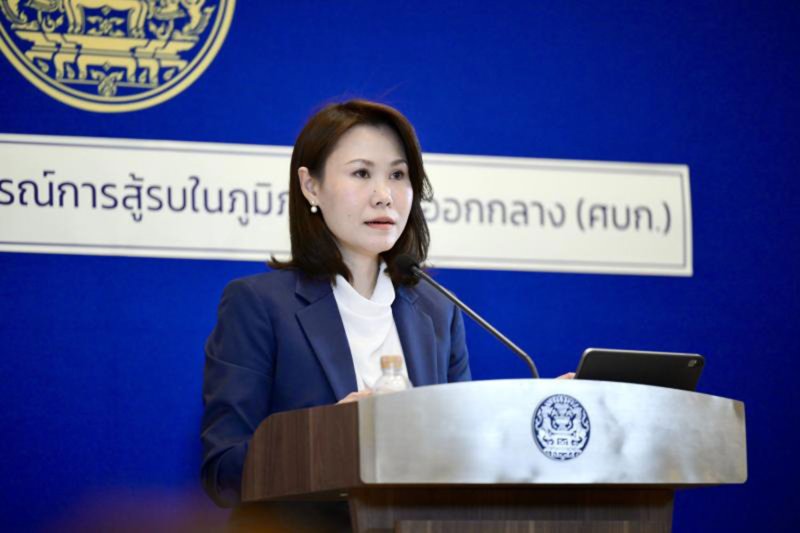
Nuttaa Mahattana, spokeswoman for the Centre for Monitoring the Situation in the Middle East, said on Tuesday the planning took into account three key issues — the evolving risk in the Middle East and its implications for Thailand’s energy management; examples of how other countries have responded as risk levels rose; and measures being taken by the Ministry of Commerce.
She said tensions in the Middle East continued to escalate. While Thailand had successfully negotiated passage for Thai vessels through the Strait of Hormuz, there was growing concern that the Bab el Mandeb Strait in the Red Sea, which is also a vital route for oil and commercial shipping, could also face disruption.
Ms Nuttaa, a former political activist and social media influencer and newly appointed spokeswoman for the government monitoring centre, said the Ministry of Energy had prepared for three scenarios:
The first involved rising risk with limited impact, such as slower shipping.
The second scenario envisioned the closure of the Strait of Hormuz for more than one month but with crude imports from the Middle East continuing and domestic refineries adjusting output to meet demand.
The third, and most severe, scenario assumed a complete halt to crude imports from the region due to the closure of both straits.
Thailand at Phase 2.2
Ms Nuttaa said Thailand is currently assessed to be at phase 2, specifically level 2.2, where no oil shortages have emerged and the situation is expected to ease within a month.
To mitigate risk, authorities have diversified import sources, adjusted refinery production — with six refineries currently operating at 109-110% of normal capacity — increased the blending of biofuels to reduce crude oil imports, and restricted exports to essential uses only.
The energy ministry is reviewing the possibility of escalating measures should the situation suddenly deteriorate to phase 3, she said. Contingency plans were already in place as part of proactive planning.
As for B20 diesel, she said it could only be used in vehicles certified by manufacturers, primarily trucks and pickup trucks. Standard diesel is B7, or 7% biofuel.
Currently, 15 makes support B20 use, and vehicle owners are advised to verify compatibility by model or consult the Department of Energy Business website.
She said that as the Middle East risks intensify, many other countries have also stepped up measures to protect their populations.
For example, South Korea had imposed a five-day-a-week vehicle usage limit for government agencies since March 25, a move expected to save more than 3,000 barrels of oil per day.
The policy may later be extended to private vehicles and is accompanied by work-from-home arrangements, staggered working hours and 12 additional public measures, such as alternating driving days based on licence plate numbers, promoting cycling and walking, adjusting air conditioning settings, and shortening shower times.
France and the United Kingdom have implemented targeted fuel subsidies and allocated budgets to assist low income households. Jordan has banned the use of air conditioners and water heaters in government offices and prohibited the use of official vehicles.
Ms Nuttaa said the Philippines became the first country to declare a national energy emergency, to enable stricter legal enforcement, while Egypt has instructed some public employees to work remotely, postponed state projects and ordered shops to close earlier, at 9pm.
“Prime Minister Anutin wants the focus to be on overcoming the crisis in the long term,” said Ms Nuttaa. “The effort is like a marathon race which requires careful management of resources and energy. Vulnerable groups will be prioritised.”
Rationing details
Also speaking during the briefing, Weerapat Kiatfuengfoo, deputy permanent secretary for energy, said that under a phase 3 energy crisis, where oil supplies fall short due to the closure of the Strait of Hormuz and the Red Sea route, the government would impose strict controls on fuel consumption.
Oil rationing would prioritise essential services such as hospitals and ambulances, alongside measures including set operating hours for petrol stations, controls on electricity use, and adjusted opening hours for shopping malls to match available energy supplies.
Ms Nuttaa said that although global pressure on the conflicting parties could help ease tensions, Thailand must prepare for a worst-case scenario and avoid complacency.
She also explained that fuel price adjustments were announced late at night to prevent hoarding and chaotic shortages at petrol stations. With Thai pump prices lower than in some neighbouring countries, failing to adjust prices could encourage illegal fuel exports for profit.
Pornchai Jirakulpaisal, director of policy and planning at the Oil Fuel Fund Office, said global oil prices were extremely volatile, with sharp differences between daytime and nighttime trading. As a result, the fund’s management committee must wait until the Singapore market closes around 7-8pm to calculate prices in baht and assess the fund’s status and economic impact, leading to price announcements at 8.30 or 9pm each day.
He said the fund is currently absorbing a significant burden. For example, when retail prices rise by 1.80 baht per litre, the fund adds a further 2.90 baht per litre in subsidies. This has resulted in daily cash outflows of around 1.5 billion baht and an accumulated deficit of 42 billion baht. Any additional borrowing requires legal procedures and cabinet approval.