


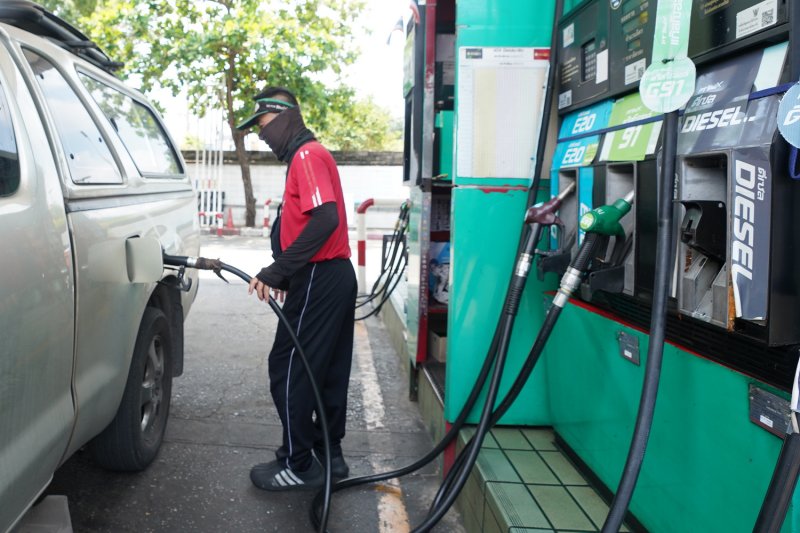
Public confidence in the government's ability to handle the energy crisis remains low, a new poll indicates, as fuel prices surge and economic pressure intensifies nationwide.
The King Prajadhipok's Institute (KPI) reported that 82.1% of respondents expressed little or no confidence that the new administration could manage the economic impact if Middle East tensions persist. Only 12.8% expressed confidence, while 5.1% were unsure.
The survey of 2,000 people aged 18 and above, conducted nationwide between March 27 and 30, reflects growing anxiety over economic stability as energy prices continue to climb, KPI said. Since March 18, domestic fuel prices have risen eight times, increasing by a total of 17.80 baht per litre, placing mounting pressure on household budgets and transport costs.
Despite low confidence, respondents did not reject government intervention. Around 39% supported a mixed approach, combining temporary price controls for most consumers with targeted assistance for those most affected.
Another 30.7% favoured broad price caps for fuel, while 11.1% preferred market-based measures with long-term support for vulnerable groups.
Many respondents were also open to state spending to subsidise energy costs during the crisis to ease the burden. About 38.6% said it was acceptable to reallocate the government's budget from other policies to subsidise energy costs in the short term, while 25.3% supported such measures only during brief crises.
About 15% said it was acceptable only if support targeted low-income groups and the transport sector, while 11.1% did not accept this option, arguing funds should be reserved for long-term priorities.
On the ground in Nakhon Ratchasima, rising fuel costs have already hit livelihoods. Lek, 54, a tour bus driver, described the mounting strain. "Fuel prices rise almost every day. My costs have increased by nearly 10 baht per kilometre. I do not know how to keep working," he said.
From March 18 to April 3, diesel prices have risen by a total of 17.80 baht, causing significant hardship for him, he said.
He added that frequent fuel price hikes were draining incomes, with each refuelling emptying his pocket. "If this continues, many may stop travelling during Songkran because they cannot afford it," he said.
Veerayooth Kanchoochat, deputy leader of the People's Party, criticised the government for lacking adjustment support, targeted relief and a clear tax direction as diesel prices rose by 7 baht in two days.
He urged urgent parallel measures to ease public hardship.
