


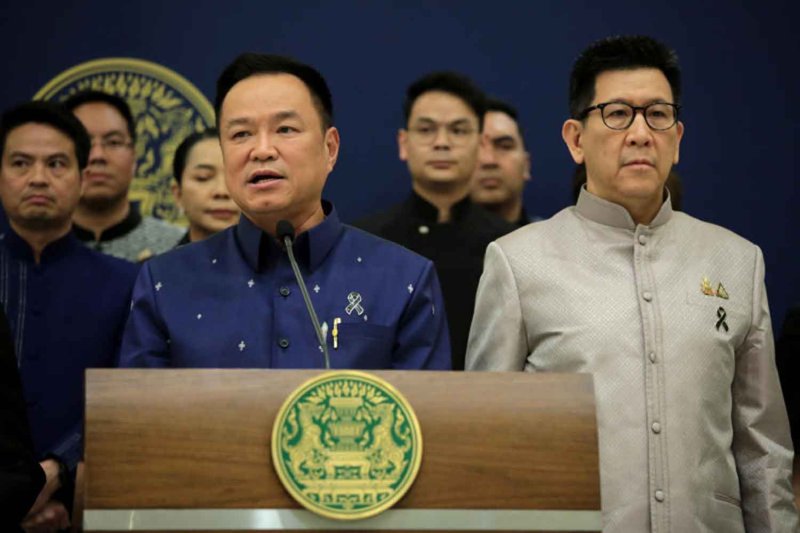
Prime Minister Anutin Charnvirakul has cast aside fears that the government's 400-billion-baht emergency loan decree could be derailed after the opposition petitioned the Constitutional Court for a ruling on its legality.
Mr Anutin defended the decree, arguing the administration considered the measure both urgent and necessary to address mounting economic hardship.
He said it had already taken legal effect following its publication in the Royal Gazette and insisted that relief programmes for the public would continue uninterrupted.
The opposition has challenged the decree on the grounds that the borrowing does not meet the constitutional requirement of urgency.
However, Mr Anutin said the court petition would affect only the parliamentary process for formal consideration of the decree rather than the implementation of government assistance measures that are already under way.
Asked whether the government had prepared contingency plans in the event the Constitutional Court ruled against the decree, Mr Anutin rejected suggestions of a "Plan B", saying the administration had only one objective: helping the public cope with economic difficulties.
Deputy Prime Minister and Finance Minister Ekniti Nitithanprapas said Thailand was facing a serious economic security crisis linked to rising living costs, global energy volatility and the continued impact of international conflicts.
He warned that delaying intervention could unleash deeper economic problems, including shrinking household incomes, the collapse of small businesses and rising unemployment.
Mr Ekniti said the 400-billion-baht package was designed not only to provide immediate relief but also to strengthen the country's long-term economic resilience and energy transition efforts.
He insisted the government had carefully assessed available fiscal resources before deciding that emergency borrowing was necessary.
Deputy Prime Minister Pakorn Nilprapunt said the main legal test concerned if the measure was intended to safeguard national economic security.
