


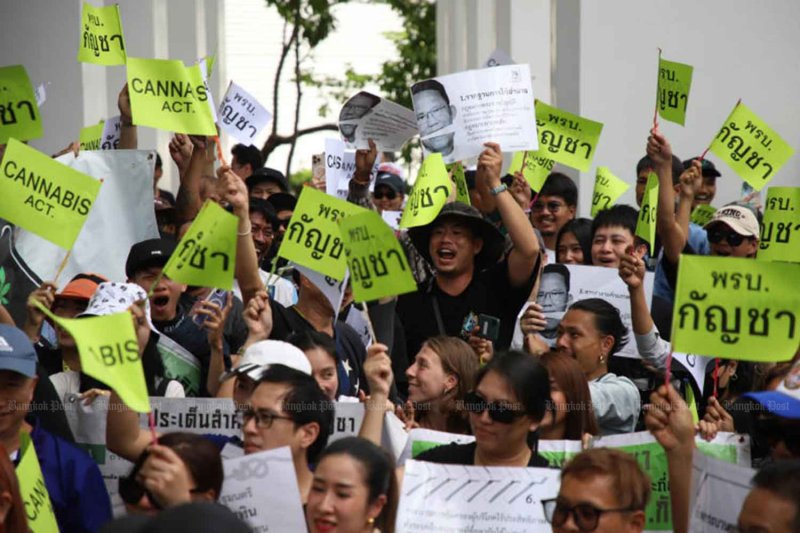
The Department of Thai Traditional and Alternative Medicine has tightened controls on cannabis sales following new ministerial regulations restricting cannabis use strictly to medical purposes.
Department chief Dr Pongsadhorn Pokpermdee said the measures would help reorganise cannabis businesses nationwide in line with government policy.
Cannabis shops would gradually be upgraded to operate more like medical clinics, ensuring cannabis products are prescribed only by doctors or authorised practitioners for recognised medical treatment.
The regulations also strengthen inspections by local officials and introduce digital systems allowing the public to report illegal cannabis businesses.
The regulations, published in the Royal Gazette on April 29 and effective from April 30, cover permits for the research, import, distribution and processing of controlled herbs for commercial purposes.
Dr Pongsadhorn described the move as a significant step towards tighter cannabis control following concerns over widespread recreational use after decriminalisation.
The ministry also aims to improve safety standards and reduce misuse, particularly among young people.
Authorities hope the new rules will bring an end to four years of confusion and uncertainty that have prevailed since cannabis was decriminalised in June 2022. In the absence of a proper law to regulate the industry, recreational use exploded, and so did public complaints.
Creating a thriving cannabis economy was a flagship policy of the Bhumjaithai Party led by Anutin Charnvirakul, who was public health minister in 2022 and today heads the government that is rolling back the changes.
Under the new rules, entrepreneurs applying for new cannabis distribution licences must now be linked to medical or healthcare-related businesses, including clinics, pharmaceutical or herbal product manufacturers and distributors, or licensed traditional healers.
Each licensed outlet must also have staff who have completed training courses supervised by the department during operating hours.
“The new regulations apply to all new licence applications from now onwards,” he said. “Existing shops can continue operating until their licences expire, but any renewal must comply with the updated rules.”
The ministry has faced criticism over the rapid growth of cannabis shops, particularly in tourism areas such as Bangkok, where some businesses were accused of exploiting loopholes to allow recreational use.
Residents have raised concerns over cannabis smoke and easier access for minors, while hospitals reported increasing cases linked to excessive cannabis consumption.
According to the department, around 12,000 cannabis distribution licences valid between 2026 and 2028 have been approved. About half will expire this year.
