


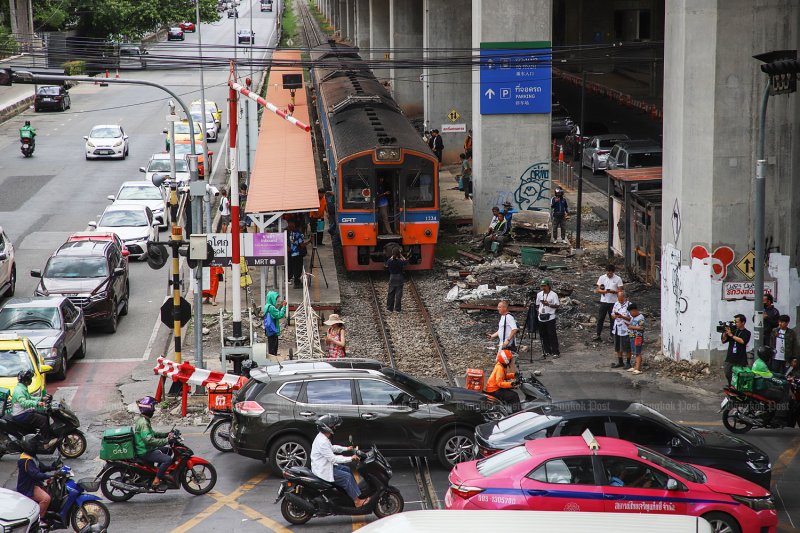
Prime Minister Anutin Charnvirakul has pledged to pursue long-term safety measures, including replacing railway crossings with tunnels or elevated routes, following Saturday's fatal collision between a freight train and a public bus at the Makkasan level crossing in Bangkok.
Speaking after visiting survivors at Camillian Hospital on Sunday, Mr Anutin, who also serves as interior minister, said authorities could no longer leave dangerous crossings unaddressed.
The crash at the Asok-Phetchaburi intersection near the Makkasan railway crossing left eight people dead and 32 injured after a freight train struck a Route 206 bus before the vehicle burst into flames.
Accompanied by senior officials from the Ministry of Transport, the Ministry of Public Health, the Bangkok Mass Transit Authority (BMTA) and the State Railway of Thailand (SRT), the prime minister visited patients in intensive care and general wards, while pledging full assistance to victims and bereaved families.
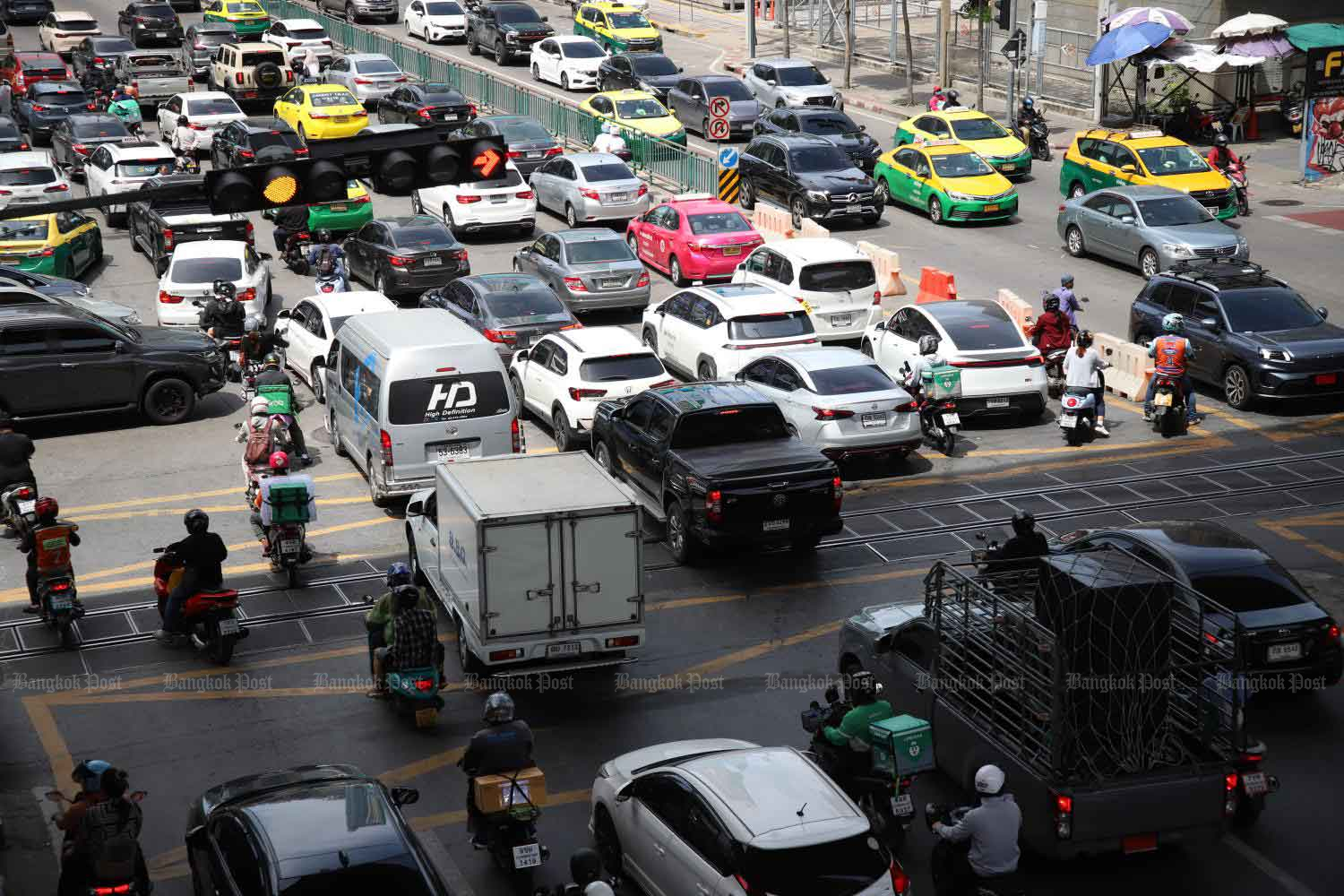
Cars stop on the railway track as they wait for the traffic to turn green at Asok-Phetchaburi intersection.
He expressed condolences to the families of those killed and injured, calling the incident deeply tragic.
"No one is psychologically well after such a sudden and traumatic incident," Mr Anutin said. "The driver and bus conductor are in particularly poor emotional condition. Right now, the priority is ensuring they recover while the legal process takes its course."
Police have filed charges of reckless conduct causing death and serious injury against the train driver, while investigations continue into the actions of railway crossing staff and other officials involved.
Mr Anutin said video footage suggested the crossing barriers failed to lower because traffic congestion left vehicles stranded on the tracks.
He said trains had stopped on previous occasions when crossings were obstructed, raising questions about why the train involved in Saturday's crash did not slow down or stop in time.
"We must reduce the number of level crossings," he said. "At some point, there may need to be route changes or tunnel construction. We also cannot rely solely on the judgement of station staff or signal operators because human error is always possible."
The SRT confirmed the crossing operated under a manual barrier system controlled by on-site personnel.
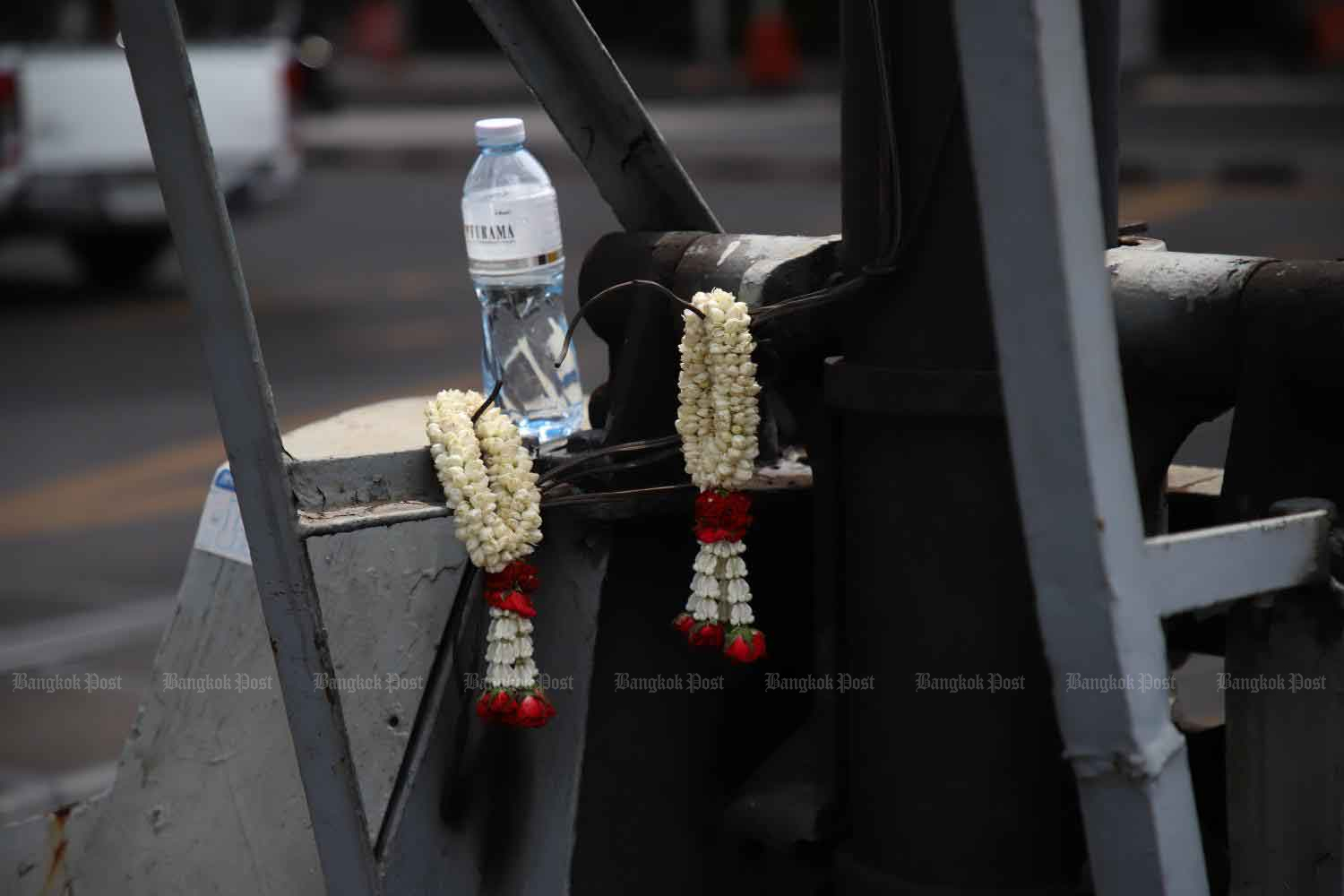
Garlands hung by victims' relatives are seen on the railway barrier at the site of Saturday's accident.
Under railway procedures, warning lights and alarms are activated before barriers are lowered. However, officials said the barriers could not descend because vehicles remained on the crossing due to heavy congestion.
Under the rules, if train drivers do not receive confirmation that barriers are fully lowered, they must rely on visual signals from crossing staff.
Authorities are now examining data from the train's "black box" to determine whether proper procedures were followed.
BMTA director Kittikarn Jomduang Charuworapolkul said compensation for victims' families would be coordinated with insurers under the Third-Party Liability Protection Act.
He said initial compensation for the families of those killed is expected to reach 1.5 million baht per victim, while injured passengers would receive between 80,000 and 500,000 baht depending on their injuries.
Local motorcycle taxi riders said accidents and collisions with crossing barriers occurred regularly at the junction because of chronic congestion and impatient driving.
