 Listen


 Facebook
 Reddit
 Copy Link


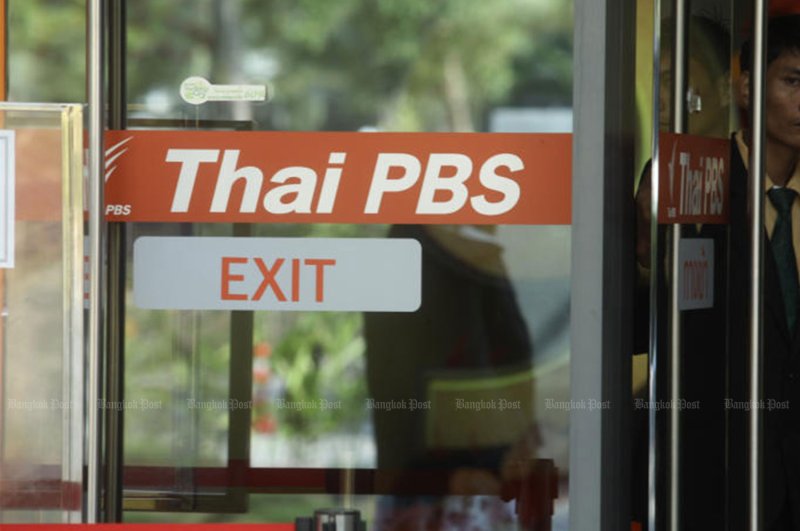
Replacing earmarked tax funding with annual government budget allocations for Thai PBS could expose the public broadcaster to greater political influence, say media academics, who have called for stronger financial transparency and more diverse revenue sources.
Public-service broadcasting must remain independent of both the state and commercial interests, offering an alternative to state media vulnerable to political pressure and private outlets beholden to advertisers and owners, they said.
The Faculty of Journalism and Mass Communication at Thammasat University held an online seminar on Thursday to discuss media reform, proposed legislation and sustainable funding for Thai PBS.
The debate comes amid scrutiny of the broadcaster’s financial management — including a controversy over an audit in progress — and a proposal to replace its earmarked funding, drawn from alcohol and tobacco taxes, with annual budget allocations.
Assoc Prof Ruj Komonbut, a Thammasat mass communication faculty member, cited the May 1992 political crisis, when state- and military-controlled television restricted coverage of protests and independent newspapers faced intimidation.
The subsequent establishment of iTV, with a more dispersed ownership structure, offered an alternative source of news. However, later legal changes allowed Shin Corporation, the telecoms firm founded by Thaksin Shinawatra, to take control shortly before he was elected prime minister in 2001, undermining the station’s independence, he said.
Assoc Prof Ruj argued that annual budget allocations would not necessarily improve transparency or curb corruption. He proposed allowing citizens to direct tax contributions to Thai PBS, similar to donations to political parties, to encourage public participation and a sense of ownership.
Asst Prof Jessada Salathong, from the Faculty of Communication Arts at Chulalongkorn University, said the rise of artificial intelligence had made it increasingly difficult to distinguish reliable information from misinformation.
Public media must be independent of political and commercial interests and able to scrutinise the government without being driven by ratings or commercial considerations, he said.
Drawing on his experience with state and private media outlets, he said government broadcasters can face pressure from senior officials, while private operators might avoid coverage that upsets sponsors or owners.
Thai PBS has faced fewer such constraints. “The most important guarantee is that, whatever the source of funding, the editorial team must remain independent and free,” he said.
He proposed diversifying revenue through memberships, programme sales and broadcasting-related funds.
Thai PBS should also strengthen investigative journalism and promote Thailand’s image and soft power overseas. However, it should pursue quality programming that attracts audiences rather than dismiss ratings altogether, he said.
Asst Prof Jessada also called on the broadcaster to explain whether long-running contracts involving specialised recruitment and salaries of hundreds of thousands of baht had delivered results.
Public money must be spent efficiently, regardless of whether it comes directly from taxation, he said. He also warned that the controversy could make executives reluctant to investigate powerful interests.
Assoc Prof Narin Namcharoen, from the Faculty of Mass Communication at Chiang Mai University, said inconsistent reporting and sensational social-media content had made it harder for audiences to verify information. Media reform should strengthen public trust rather than undermine it, he said.
Angkana Promruksa, of Mahasarakham University, warned that cumbersome government budget rules could hamper field reporting and community engagement.
Asst Prof Samatcha Nilaphatama, of Prince of Songkla University, said public media should remain media “of the people, by the people and for the people”. Thai PBS must be subject to rigorous scrutiny without being deterred from investigating powerful interests, he said.
“Sin taxes” could remain its main funding source for now, while memberships and other revenue streams could be developed to strengthen public ownership, he added.
