 Listen


 Facebook
 Reddit
 Copy Link


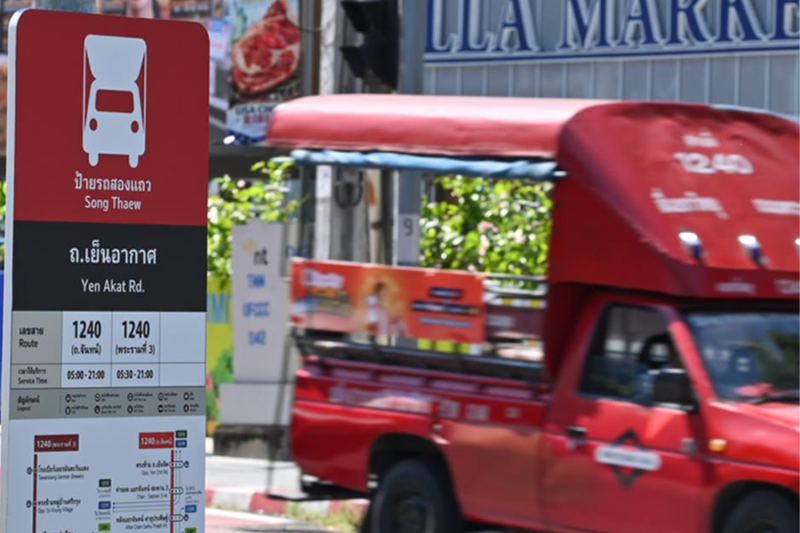
Bangkok has placed 47 new information signs explaining services of songthaews, or two-row pickup trucks, across three districts, aiming to make the informal transport network easier for commuters and tourists to navigate and improve connections with mainline public transport systems.
The Bangkok Metropolitan Administration (BMA), working with the Muang Vivat Foundation and urban transport advocacy group Mayday, installed the signs in areas of Sathorn, Bang Rak and Yannawa districts, including Suan Phlu and Saint Louis.
The signs provide route names and maps, operating hours, travel directions and connections to other transport services, including public buses, the BTS (Bangkok Mass Transit System) and MRT (Mass Rapid Transit) rail systems, the Bus Rapid Transit (BRT) network and boat services.
BMA adviser Aekvarunyoo Amrapala said the initiative was part of efforts to strengthen first- and last-mile connectivity by linking neighbourhoods and smaller streets with Bangkok’s main public transport network. He added that the information would even be accessible online in the future.
Unlike conventional public transport, dual-row truck services offer flexible routes and affordable fares, making them particularly useful for commuters travelling through narrow streets and local neighbourhoods. However, their operations often lack standardised schedules and official operating protocols.
A 2025 study titled Songthaew Service Patterns in Areas Surrounding Rail Transit Stations in Bangkok and its Vicinity, published by the King Prajadhipok’s Institute, identified service flexibility and affordability as key strengths of songthaews, while highlighting challenges arising from the lack of standardised operating practices.
The study found that drivers’ decisions are often influenced by operating costs and profitability. As a result, some services concentrate on morning and evening rush hours and reduce operations during weekends when passenger demand is lower.
It recommended establishing clearer operating protocols and providing subsidies for songthaew operators, alongside creating a government agency responsible for overseeing feeder transport services to ensure more targeted policy development
