 Listen


 Facebook
 Reddit
 Copy Link


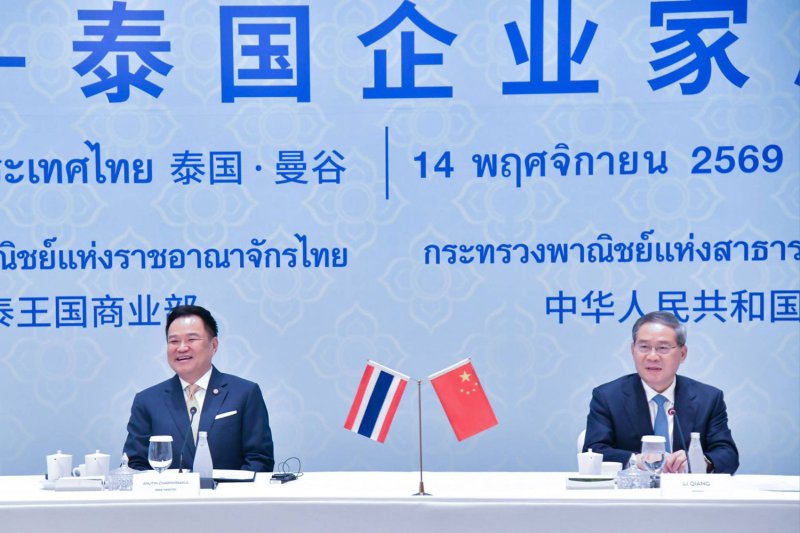
Prime Minister Anutin Charnvirakul and his Chinese counterpart Li Qiang on Saturday pledged to accelerate an upgrade to the Asean-China Free Trade Agreement (ACFTA) and push ahead with the first phase of the Thai-Chinese high-speed railway, with services targeted to begin in 2030.
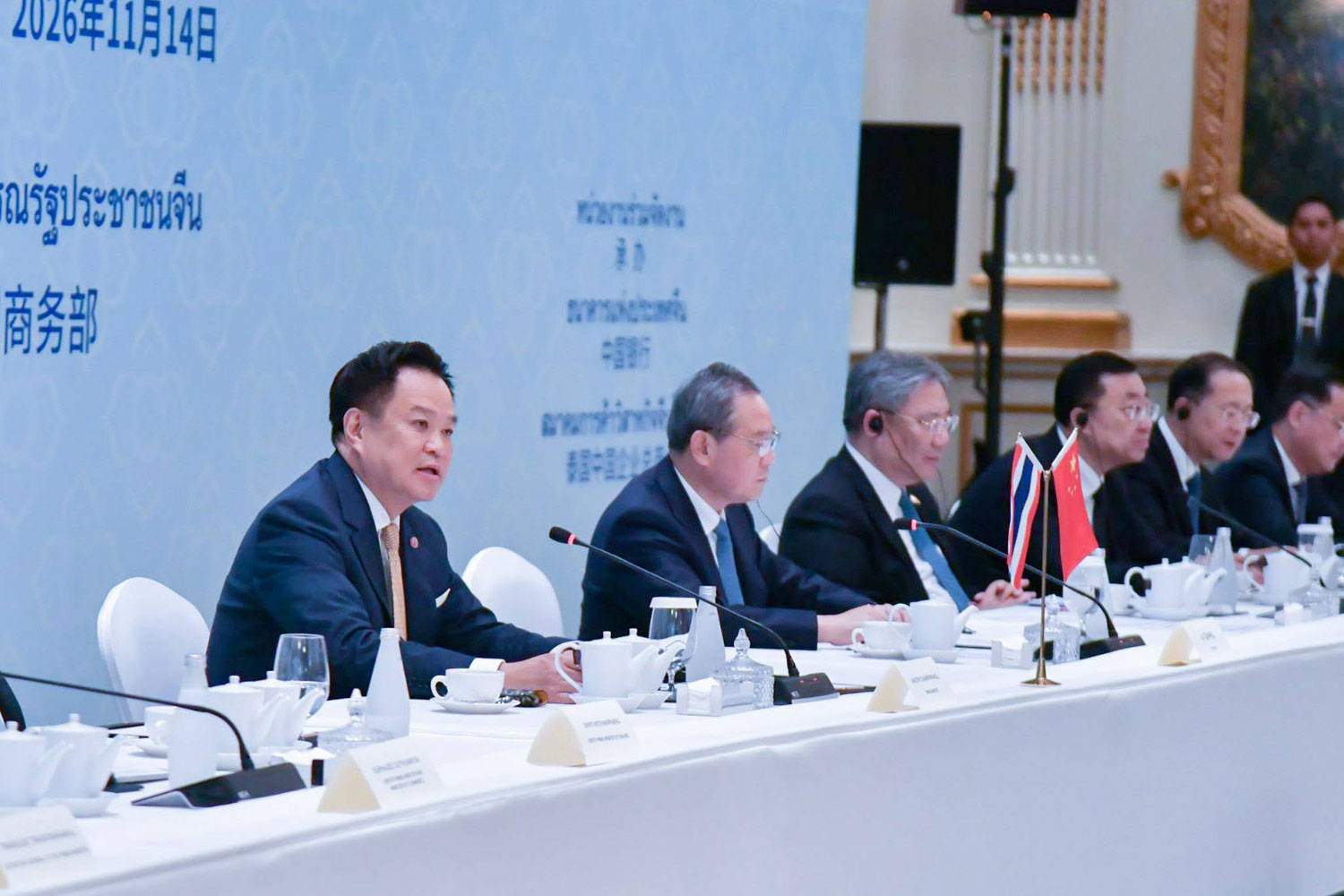
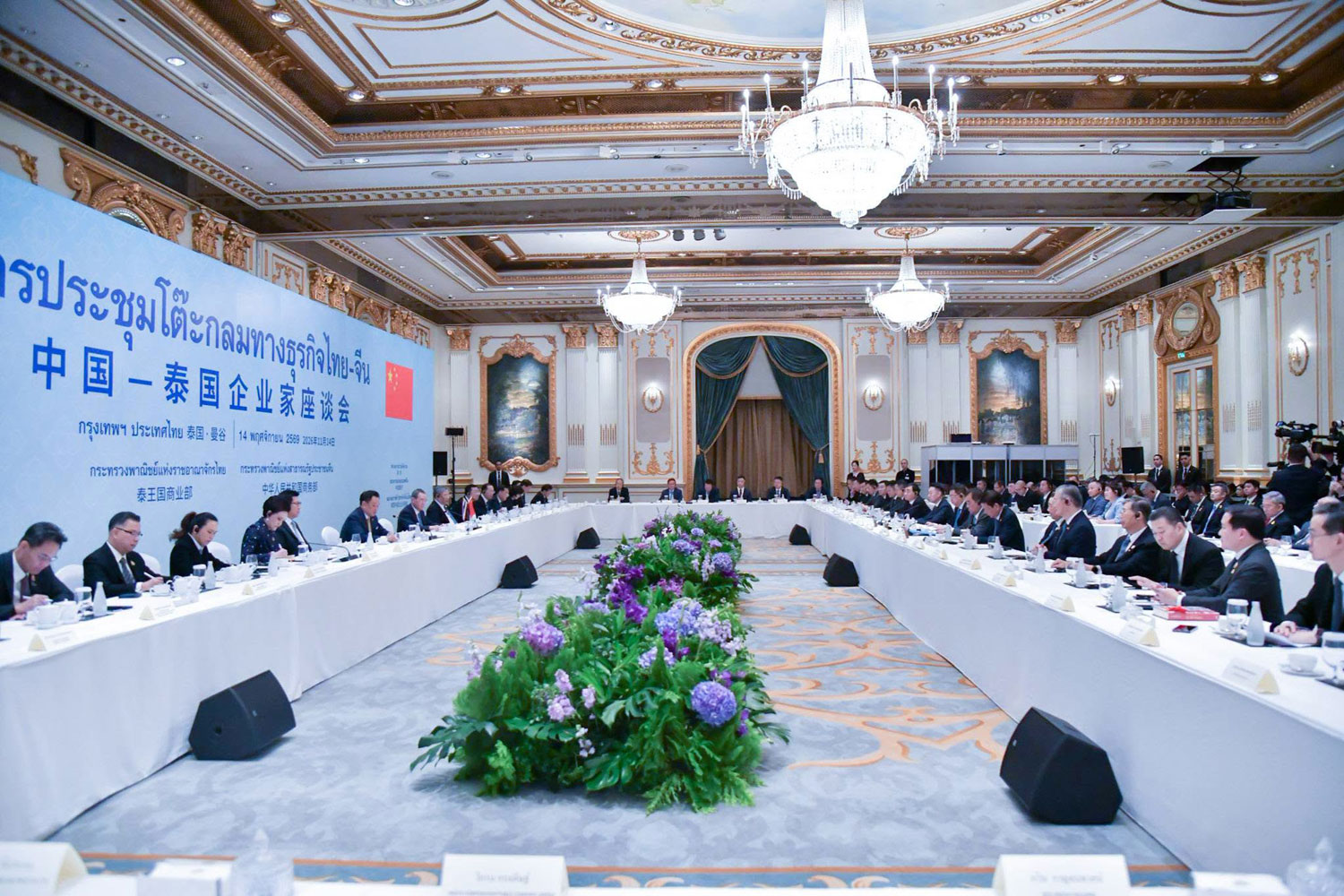
Mr Anutin and Mr Li, who is on a three-day official visit to Thailand, announced the pledges at the Thailand-China Business Roundtable at the Mandarin Oriental Bangkok. More than 100 representatives from the public and private sectors of both countries attended.
Senior Thai officials at the meeting included Deputy Prime Minister and Finance Minister Ekniti Nitithanaprapas, Deputy Prime Minister and Commerce Minister Suphajee Suthumpun, Board of Investment secretary-general Narit Therdsteerasukdi and National Economic and Social Development Council secretary-general Danucha Pichayanan.
Mr Anutin said Thailand would work with China in all areas under the concept of “building together”, elevating bilateral ties from a trading relationship to one involving joint planning and investment.
The government would also push for the upgraded Asean-China Free Trade Agreement, known as ACFTA 3.0, to take effect as soon as possible, accelerate the first phase of the Thai-Chinese high-speed railway project to ensure it opens by 2030, and encourage more Chinese investment in Thailand’s targeted industries, said Mr Anutin.
“The meeting is not simply intended to reaffirm the good relations between Thailand and China. It is also an opportunity to discuss how we can turn these ties into tangible benefits for our economies and people,” he said.
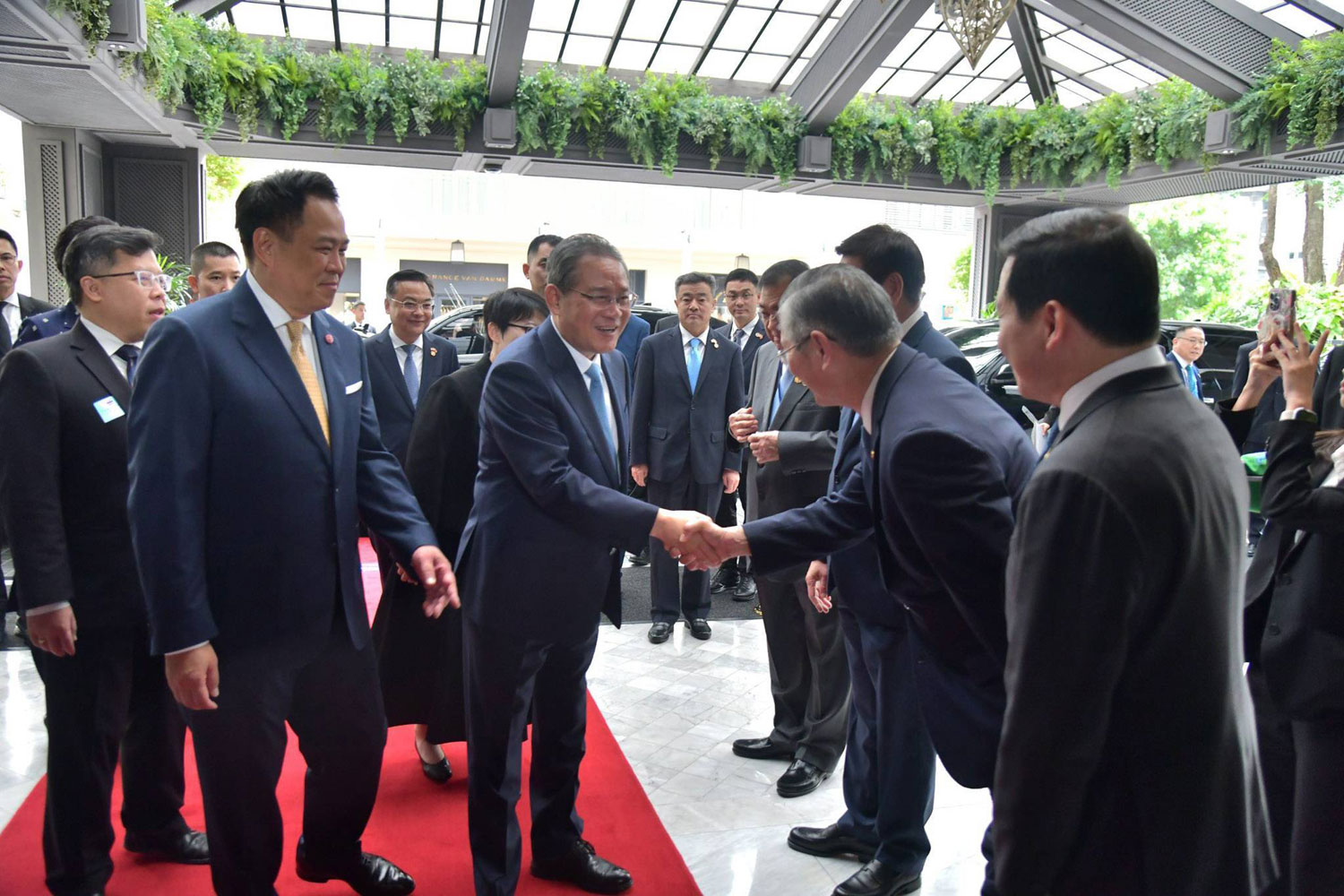
Chinese Prime Minister Li Qiang is greeted by representatives from the public and private sectors attending the Thailand-China Business Roundtable in Bangkok on Saturday. (Photo: Royal Thai Government)
‘Building together’
Both countries face common challenges, including environmental issues, technology, ageing societies and opportunities for younger generations, Mr Anutin said. No country or business could achieve sustainable growth without cooperating with others and building broad-based partnerships.
The concept of “building together” involves combining the strengths of both sides to achieve greater results and represents the next step in Thailand-China relations, he said.
Thailand will also use its strategic location at the heart of Asean to connect China with Asean and link regional economies with global markets.
Turning to economic policy, Mr Anutin said the government was working to establish a new phase of growth for Thailand, which already had an industrial base, established entrepreneurs and a skilled workforce with considerable potential.
The government’s role is to promote technology and skills transfers and new forms of cooperation, turning them into business opportunities and higher incomes for the public. The private sector would lead the way, while the government would facilitate investment, remove obstacles and help businesses move forward more quickly.
The government would also strengthen energy security, expand alternative and clean energy sources, and modernise regulations to support future industries, including data centres, semiconductors and artificial intelligence (AI).
These efforts would go hand in hand with the development of established Thai industries such as automobiles, electronics, banking and finance, agriculture and food, and medical and healthcare services.
Investment in infrastructure and human capital would be pursued simultaneously, with China remaining an important partner, he said.
Mr Anutin highlighted two areas where cooperation could deliver clear results.
The first was electric vehicles (EVs). He acknowledged that several Chinese manufacturers have chosen Thailand as a production base in recent years. The next step was to link their investments more closely with Thai parts manufacturers and local businesses, strengthen domestic supply chains and establish production bases for exports.
A stronger supply chain would enable businesses to expand on a more sustainable footing, he said.
(Photo: Thai Khu Fah)
Agriculture and food
The second area is agriculture and food, the prime minister said. Thailand had high-quality raw materials and products popular with Chinese consumers, while China had processing technology, logistics systems and access to markets. The two sides should work together to add value to investment in the sector.
Apart from serving as a source of quality food, Thailand was also ready to become a medical and healthcare hub capable of meeting the needs of an ageing global population. Mr Anutin said Thailand would support an open trading system and accelerate efforts to bring ACFTA 3.0 into force.
Since the government took office, Chinese investment in Thailand had continued to increase, according to Mr Anutin. During the first nine months of this year, Chinese companies submitted nearly 500 applications for investment promotion in Thailand, the highest number among all countries and accounting for more than one-third of all foreign investment applications, said Mr Anutin.
“This figure reflects the mutual confidence between our two countries, and the government’s responsibility is to turn that confidence into successful investment,” he said.
Mr Anutin said Thailand would lay the foundations for future growth around three key areas: speed, human resources and national resilience.
On speed, he said the government recognised that time is a cost for businesses. It would therefore use the BoI’s Thailand Fast Pass as a channel for large-scale projects and push ahead with the proposed Super Licence legislation to enable viable investments to begin operations more quickly.
On human resource development, he said modern factories, data centres and technology businesses of all kinds required skilled workers. The government would therefore upgrade Thai workers’ skills in engineering, digital technology and AI.
Chinese companies are also being invited to work with Thai universities and colleges to develop training programmes and curricula to produce a workforce equipped for modern industries.
On security cooperation, Mr Anutin said Thailand was ready to address all forms of threats, as investors needed freedom, safety and long-term confidence.
Thailand and China would work together to combat transnational crime and scam gangs to protect the public, tourists and legitimate businesses, he said.
On infrastructure, Thailand aims to complete the first phase of the Thai-Chinese high-speed railway by 2030 and prepare to proceed with the second phase, which will connect Thailand, Laos and China.
The railway would facilitate the movement of goods and people across borders and help position Thailand as a base for Chinese investors seeking access to the Asean market, which has a population of nearly 700 million.
Mr Anutin said the two countries had considerable scope for further cooperation in clean energy, green industries, digital technology, AI and space exploration.
He said he hoped young Chinese people would view Thailand as more than just a tourist destination, but also as a home for investment and innovation. At the same time, Thailand would encourage its younger generation to see China as a place to learn, conduct business and develop new partnerships.
He also assured Chinese businesspeople operating in Thailand of the government’s support and invited them to help build the country’s future.
He urged Thai businesspeople to become partners with Chinese companies in joint investment and technology development, both in Thailand and the Chinese market. The government would keep its doors open, remove obstacles, facilitate business operations and establish clear, modern regulations to ensure the discussions produced tangible results, he said.
The roundtable was jointly organised by the commerce ministries of Thailand and China as a parallel event marking Mr Li’s official visit to Thailand on Nov 13-15. It provided a platform for government and private-sector representatives from both countries to exchange views and advance economic cooperation.
(Photo: Thai Khu Fah)
