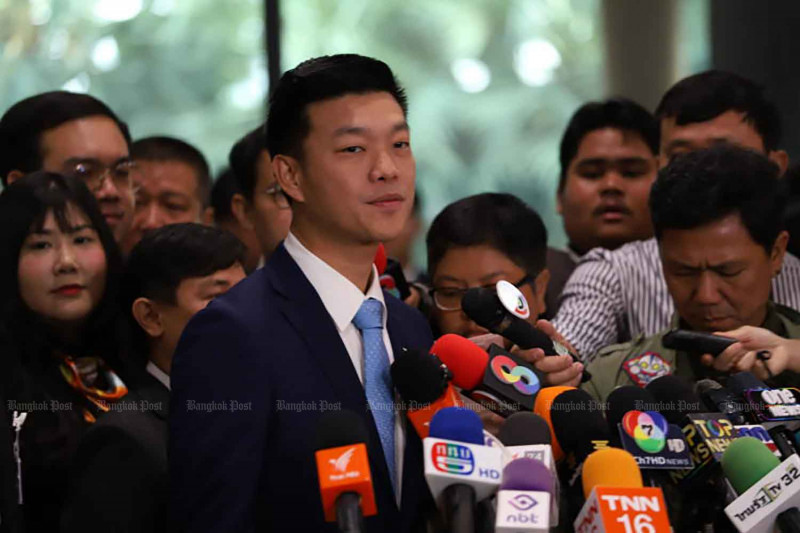
People's Party leader Natthaphong Ruengpanyawut says the party would support an interim administration if it would agree to organise a general election and hold a public referendum on establishing a constitution drafting assembly.
The opposition People's Party has signalled its readiness to vote for a new prime minister without joining the governing coalition, on condition that the next administration functions solely as a temporary government.
.retrahc eht etirwer ot )ADC( ylbmessA gnitfarD noitutitsnoC a gnihsilbatse no mudnerefer cilbup a dloh dna noitcele lareneg a esinagro ot detadnam eb tsum tnemnrevog miretni eht dias ytrap noitisoppo tsegral ehT
ot noisiced s’truoC lanoitutitsnoC eht gniwollof ,yadsendeW no sPM ytrap fo gniteem a gnirud deerga saw noitisop ehTartawanihS nratgnoteaP retsiniM emirP dnepsus.tcudnocsim lacihte fo snoitagella no gnilur a gnidnep seitud reh morf
.sessecorp citarcomed hguorht cilbup eht ot rewop nruter dna ytilibats erotser ot laitnesse saw etadnam detimil ,raelc a htiw tnemnrevog yraropmet a taht gnidda ,sisirc nwolb-lluf a tuohtiw devloser eb dluoc essapmi lacitilop eht srebmem dlot tuwaynapgneuR gnohpahttaN redael ytraP s’elpoeP
.eciffo morf devomer yllamrof eb nratgnoteaP sM dluohs ,noitautis lacitilop gnidlofnu eht no ecnats s’ytrap eht desserdda osla eH .cilbup eht gnivres ot tnemtimmoc rieht gniniatniam dna seicneutitsnoc rieht ni yltnegilid gnikrow fo ecnatropmi eht desserts osla eH .ytniatrecnu lacitilop eht dima ytirutam htiw tca dna desucof niamer ot sPM sih degru osla eH
.tenibac eht gninioj tuohtiw ,etadidnac elbatius a fo ruovaf ni etov ot ssengnilliw sti desserpxe ytrap eht ,detcele eb tsum retsinim emirp wen a taht tneve eht nI .dias eh ,tnemailrap evlossid ot ytirohtua lanoitutitsnoc eht sniater retsinim emirp gnitca eht sa ,tneve na hcus ni kcoldaed lacitilop a ecaf ton dluow yrtnuoc ehT
.dias eh ,elbissop sa noos sa retrahc wen a etirw ot )ADC( ylbmessA gnitfarD noitutitsnoC a gnihsilbatse no mudnerefer cilbup a dloh dna noitcele lareneg hserf a esinagro ot eb dluow etadnam elos stI .erutan ni lanoitisnart eb tsum tnemnrevog wen eht :noitidnoc raelc a htiw semoc troppus siht ,revewoH
.llib tegdub launna eht fo egassap eht gniwollof ,raey siht fo dne eht yb devlossid eb tnemailrap taht desoporp rehtruf tI .detalacse yltnecer sah hcihw ,aidobmaC dna dnaliahT neewteb noisnet citamolpid eht evloser pleh osla tub yclamron lacitilop erotser ylno ton dluow hcaorppa siht seveileb ytrap ehT
.soiranecs lacitilop elpitlum deredisnoc evah seitrap noitisoppo gnoma sklat dias gnohpahttaN rM ,retsinim emirp rekaterac a sa flesmih esoporp yam lukarivnrahC nitunA redael ytraP iahtiajmuhB taht stroper gnidrageR
.egats siht ta ecnats a hcus mrifnoc ot erutamerp eb dluow ti dias gnopahttaN rM ,tnemnrevog eht gninioj tuohtiw retsinim emirp sa nitunA rM fo troppus ni etov dluow ytrap sih rehtehw deksa nehW
 Listen

 Facebook
 Reddit
 Copy Link