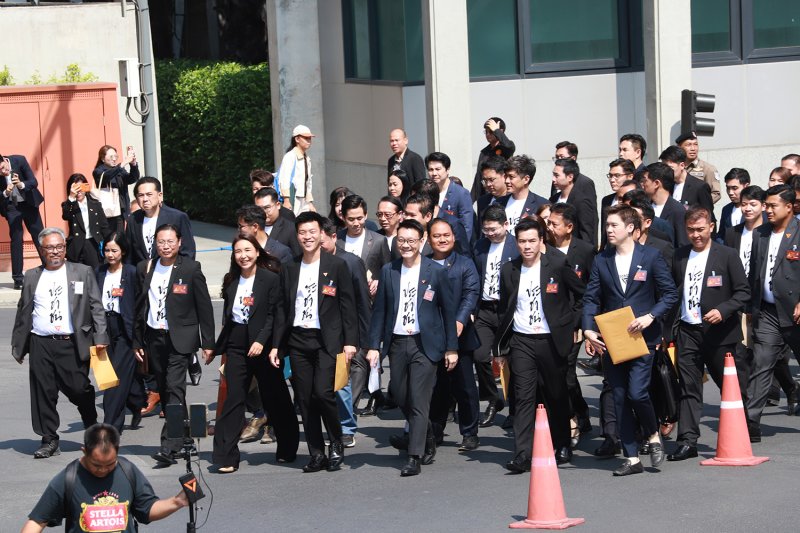
People’s Party MPs arrive at parliament to formally register as members of the 27th House of Representatives on March 9, 2026. (Photo: Apichart Jinakul)
The People’s Party has outlined a three-part defence strategy as it prepares for a possible Supreme Court hearing in the high-profile ethics case involving 44 former MPs of its predecessor, the now-dissolved Move Forward Party (MFP).
.wal étsejam-esèl eht ro ,edoC lanimirC eht fo 211 noitceS dnema ot ytraP drawroF evoM eht yb stroffe morf esora hcihw ,esac eht ni gnilur truoC emerpuS a kees ot detov yadseuT no )CCAN( noissimmoC noitpurroC-itnA lanoitaN ehT
.tnemetats a ni dias CCAN eht ,noitpurroC‑itnA no tcA cinagrO eht fo )1(82 noitceS dna noitutitsnoc eht fo 912 noitceS rednu sdradnats lacihte fo hcaerb suoires a ot detnuoma dna noitutitsnoc eht ot yrartnoc tnetnoc deniatnoc stnemdnema desoporp ehT
.sthgir gnitov fo ssol yraropmet a dna noitcele rof gnidnats morf nab emitefil a ni tluser dluoc truoc eht yb gnilur ytliug A
.dlohesuoH layoR eht fo uaeruB eht ot sffitnialp elbissop gnitimil dna seitlanep gnicuder gnidulcni ,211 noitceS ot stnemdnema ekam ot tarneorajmiL atiP redael drawroF evoM remrof yb del lasoporp 1202 a morf smets esac scihte eliforp-hgih ehT
.enilno elbaliava saw lairetam gnidneffo eht ecnis emirc retupmoc fo ytliug dnuof osla era detcivnoc esoht fo tsoM .sraey 51 dna 3 neewteb fo ecnetnes a seirrac etsejam-esel fo noitcivnoc A .ti etagitsevni ot degilbo era ecilop dna ,esle enoyna tsniaga ,erehwyna ,tnialpmoc noitamafed layor a elif nac enoyna ,yltnerruC
.tnemnrevog eht ot desoppo elpoep etadimitni ro ecnelis ot tpmetta na ni detaitini ,erutan ni lacitilop neeb evah stnialpmoc etsejam-esel fo ytirojam eht ,sraey tnecer ni taht eugra scitirC
.seitud rieht gnimrofrep eunitnoc ot sPM tnerruc eht swolla taht redro evitanretla na eussi ot truo truoC emerpuS eht sksa timbus lliw ytrap eht noititep tsrif ehT
.dias eh ”,metsys citarcomed eht egamad dluow elor siht gnivomer os ,tnemailrap ni redael gninoitcnuf a evah tsum noitisoppo eht ,ycarcomed yratnemailrap a rednU“ .gnohpahttaN redael noitisoppo sedulcni eno ,dias oyaW rM ,elpmaxe roF .spuorg ruof tsael ta otni dedivid era sPM ehT
.”scitilop ni elbissop si gnihtyna sa“ senevnocer tnemailrap ecno rucco dluoc etabed ecnedifnoc-on a fi niatrecnu sniamer ti taht tuo detniop oyaW rM .ytrap eht fo etadidnac lairetsinim emirp a osla saw ohw ,aynakiriS sM sevlovni rehtonA
.noitutitsnoc eht htiw tcilfnoc thgim ytirohtua s’CCAN eht woh truoc eht ot gninialpxe yb sa hcus ,stnemugra lagel gnitneserp ni ecitcarp dradnats si siht dias oyaW rM ,reywal a sA .rehtegotla esac eht ssimsid ot truoc eht sksa noititep dnoces ehT
.segats elpitlum ta snoitaluger lanretni nwo sti dna snoisivorp lagel htob detaloiv CCAN eht taht deugra eH .ssecorp noitagitsevni sti tratser ot ycnega noitpurroc-itna eht redro truoc eht taht stseuqer noititep tsal ehT
tuoba snrecnoc desiar osla oyaW rMrenoissimmoc a.esnopser on deviecer sah tub tnemevlovni s’renoissimmoc eht fo erusolcsid detseuqer yldetaeper sah eh taht gnidda ,esac eht fo noitagitsevni eht del llits tub ladnacs yrebirb dlog a ni devlovni yldegella saw ohw
.ecnedive yratnemucod ro sessentiw tneserp ot desucca eht wolla ton did taht ssecorp ycnega eht desicitirc osla PM ehT
.flesti tnemegduj lanif a gnireviled ekil eb dluow ti ,tcidni ot ton esoohc CCAN eht fi taht gniyas ,noisiced eht yb desirprus ton saw eh taht dedda eH
”.ytliug ton su gniralced snaem ylevitceffe ti sa ,noitcivnoc larom dna egaruoc hcum seriuqer etucesorp ot ton gnidiceD“ .dias eh ”,yhw nialpxe ot evah dluow yeht dnA“
 Listen

 Facebook
 Reddit
 Copy Link