
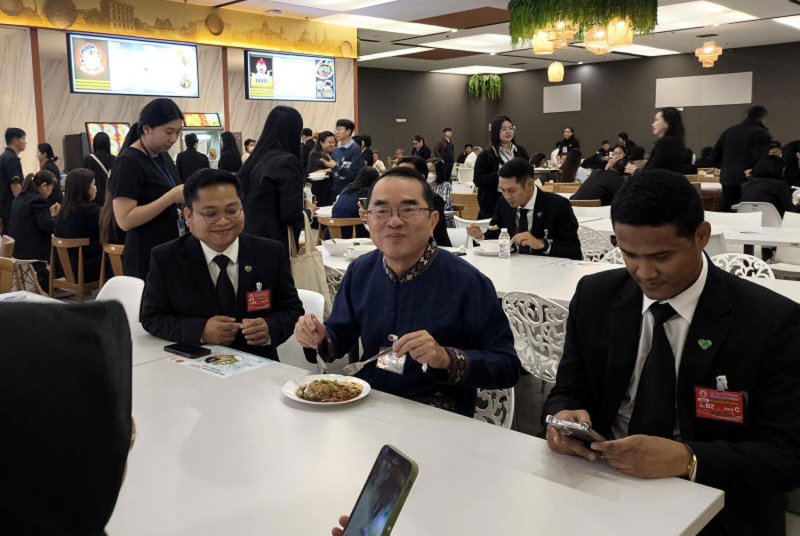
The Senate has agreed to have its secretariat arrange meals on sitting days, with senators covering the costs themselves, in a bid to curb public spending amid economic strain.
At a meeting of the Senate whip chaired by Senate President Mongkol Surasajja, members discussed lunch provisions for senators during the first ordinary parliamentary session of 2026. The meeting resolved that the secretariat would arrange lunch, while senators would bear the expense.
A source said the secretariat will initially provide boxed meals during the transition period. Each of the 200 senators is expected to contribute 10,000 baht, raising a total of two million baht for the current session, which ends on July 11 and includes 23 sittings. The arrangement will be reviewed again in the next session.
Under the 2026 Budget Act, the Senate secretariat has been allocated 14.28 million baht for meals and refreshments for senators and staff on meeting days throughout the year. The average budgeted cost is about 950 baht per person per day, covering morning and afternoon snacks and drinks, lunch, and dinner.
By comparison, the senators' one-time contribution would work out to about 435 baht per sitting, less than half the state allocation. Senate officials say the move could significantly reduce reliance on public funds.
According to the 2026 budget calendar, the Senate has already held 15 meetings this year. Based on the allocated food rates, about 2 million baht would have been spent, leaving roughly 12 million baht available for reallocation to other Senate needs, subject to the Senate president's discretion.
Mr Mongkol said senators must set an example by conserving public funds, stressing that spending should be strictly based on necessity and that lawmakers should be willing to make sacrifices during what he described as a national crisis.
Meanwhile, House Speaker Sophon Zarum said criticism of members of parliament's lunch spending was based on a misunderstanding. He said the House no longer pays a flat-rate meal budget for all 500 MPs, but instead pays only for the actual number of diners, currently averaging 250 to 300 people per day.
He added that MPs can also buy food themselves, and any unused lunch budget is returned to the Secretariat of the House of Representatives. The current transitional lunch system, he said, will be scrapped entirely within one week.
The Senate's decision follows remarks by Mr Mongkol on March 30, when he signalled support for ending free meals in line with the House of Representatives, as part of broader austerity measures that also include suspending non-essential overseas trips and trimming administrative expenses.