
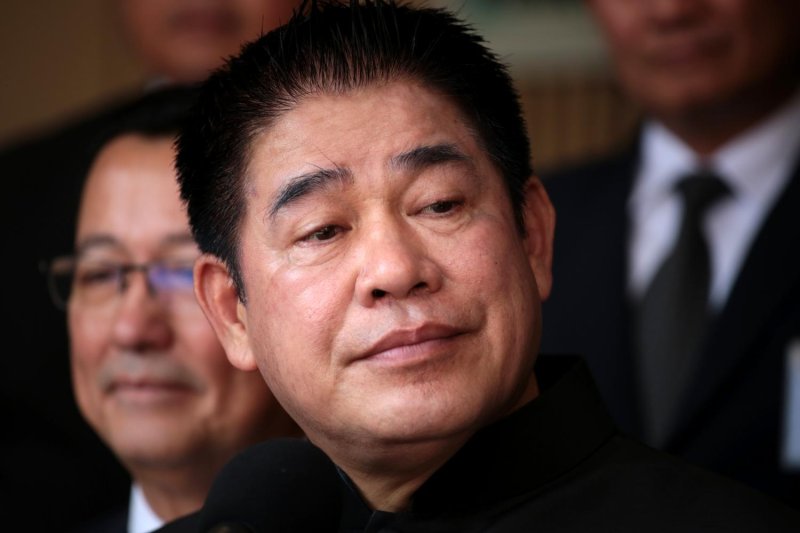
The Klatham Party’s decision to abstain rather than oppose Anutin Charnvirakul in the recent parliamentary vote for prime minister looks less like indecision and more like classic Thai coalition hedging — a calculated refusal to burn bridges with a man it may yet have to do business with.
On paper, the vote was straightforward. Mr Anutin, leader of the Bhumjaithai Party, secured 293 votes in parliament on March 19, enough to retain power and form a new administration after Bhumjaithai’s resounding victory in the Feb 8 election.
The Bhumjaithai-led bloc, together with Pheu Thai and smaller parties, comfortably crossed the majority threshold. The official tally also showed 86 abstentions in the premiership vote — a figure that has become politically more intriguing than the affirmative votes themselves.
Among those abstaining was the 58-seat Klatham Party, the faction effectively marshalled by Thamanat Prompow. In the run-up to the vote, it was reported that Klatham would not back Mr Anutin unless it was first brought into the coalition.
One report bluntly stated that no Klatham MP would vote for Mr Anutin unless the party was included in a Bhumjaithai-led government. That matters because abstention, in parliamentary arithmetic, is often the most revealing vote of all.
Had Klatham voted against Mr Anutin, it would have formally declared itself part of an anti-Bhumjaithai axis. Instead, it chose a middle course: denying Mr Anutin the symbolism of full support while stopping short of direct confrontation. It was a signal to Bhumjaithai that relations remain negotiable, and perhaps more importantly, a signal to Pheu Thai that its place in government is not guaranteed indefinitely.
This is where the deeper game begins — “a party parked just outside the tent”, as a political source put it.
Mr Anutin had publicly insisted that his coalition was complete. In early and mid-March, he said the government had enough seats — around 291 to 295 — and explicitly indicated there was no need to expand the alliance beyond 300 MPs. Media reports suggested that Klatham and the Democrats were left out because the numbers were already sufficient and a more compact coalition would be easier to manage.
That is the official line. But in politics, “enough seats” is not the same as “maximum leverage”.
Bhumjaithai leads the coalition from a position of unusual strength. It won 191 seats in the Feb 8 election, while Pheu Thai — once the unquestioned anchor of elected government — came third with 74. That leaves Pheu Thai as a necessary but diminished partner: no longer dominant, and potentially vulnerable to being treated as expendable should a more favourable arrangement emerge.
Klatham’s abstention keeps it parked just outside the tent, close enough to enter when the door opens. At first glance, it might seem odd that Thamanat’s camp would not push harder to secure cabinet positions immediately. But there are reasons why delayed entry could prove more advantageous than an early one, the source said.
First, joining now would likely mean accepting a weak bargaining position. Mr Anutin has the numbers. Bhumjaithai does not need Klatham to survive the investiture vote or to begin governing. That means any portfolios offered at this stage would likely be limited, secondary, or tightly controlled.
Second, remaining outside allows Klatham to retain flexibility. It can support or obstruct on an issue-by-issue basis, maintain pressure on the government, and avoid taking direct responsibility for unpopular economic decisions — especially at a time when Thailand faces rising fuel costs and broader inflationary pressures linked to the Middle East war. A party outside the cabinet but within the orbit of potential cooperation can accrue leverage without bearing full responsibility.
Third, waiting increases the likelihood of entering under crisis conditions, when its price rises. If cabinet tensions emerge, if Pheu Thai grows restless, or if a legal or parliamentary shock destabilises the coalition, Klatham could become the ready-made replacement bloc.
That is the essence of the waiting game: Don’t join when you are optional; join when you emerge indispensable, said the source.
The most consequential implication is not merely that Klatham seeks entry into government. It is that its presence on the sidelines provides Bhumjaithai with an alternative to Pheu Thai.
Pheu Thai is the coalition’s only other heavyweight, but it is also the most politically complex partner. It carries its own ambitions, patronage networks and red-line constituencies. It also remains symbolically tied to the Shinawatra camp, making coexistence with Bhumjaithai more tactical than organic.
As long as Klatham remains available, Bhumjaithai can quietly remind Pheu Thai that there is another 58-seat bloc in reserve. That does not mean Pheu Thai is about to be ejected tomorrow. But it does mean the party is less able to dictate terms, less able to threaten withdrawal, and less able to assume permanence, according to the source.
In that sense, Klatham’s abstention may have served Bhumjaithai almost as well as an affirmative vote would have. It demonstrated that Thamanat’s camp is not hostile, showed discipline, and preserved the possibility of a future blue (Bhumjaithai)–green (Klatham) realignment — one in which Pheu Thai could be reduced, marginalised or, in an extreme scenario, replaced.
Anyone familiar with coalition politics knows this is terrain where Thamanat is comfortable, the source said. His reputation has long been built on managing factions, engineering defections, and turning mid-sized blocs into kingmaker instruments. Klatham’s 58 MPs are not merely a number; they are a movable bargaining asset.
That makes the party especially valuable in a parliament where formal coalition agreements often matter less than sustained control of voting behaviour.
For now, Mr Anutin has no immediate reason to reshuffle the line-up. He has the premiership, a working majority, and momentum. But governments are rarely static. Cabinet allocations, budget battles, legal challenges and personal rivalries can all reorder alliances quickly, the source said.
If that happens, Klatham has positioned itself exactly where it wants to be: not inside the government, not fully outside it, and never far from the next opening. In politics, that is often the strongest place to stand, the source added.
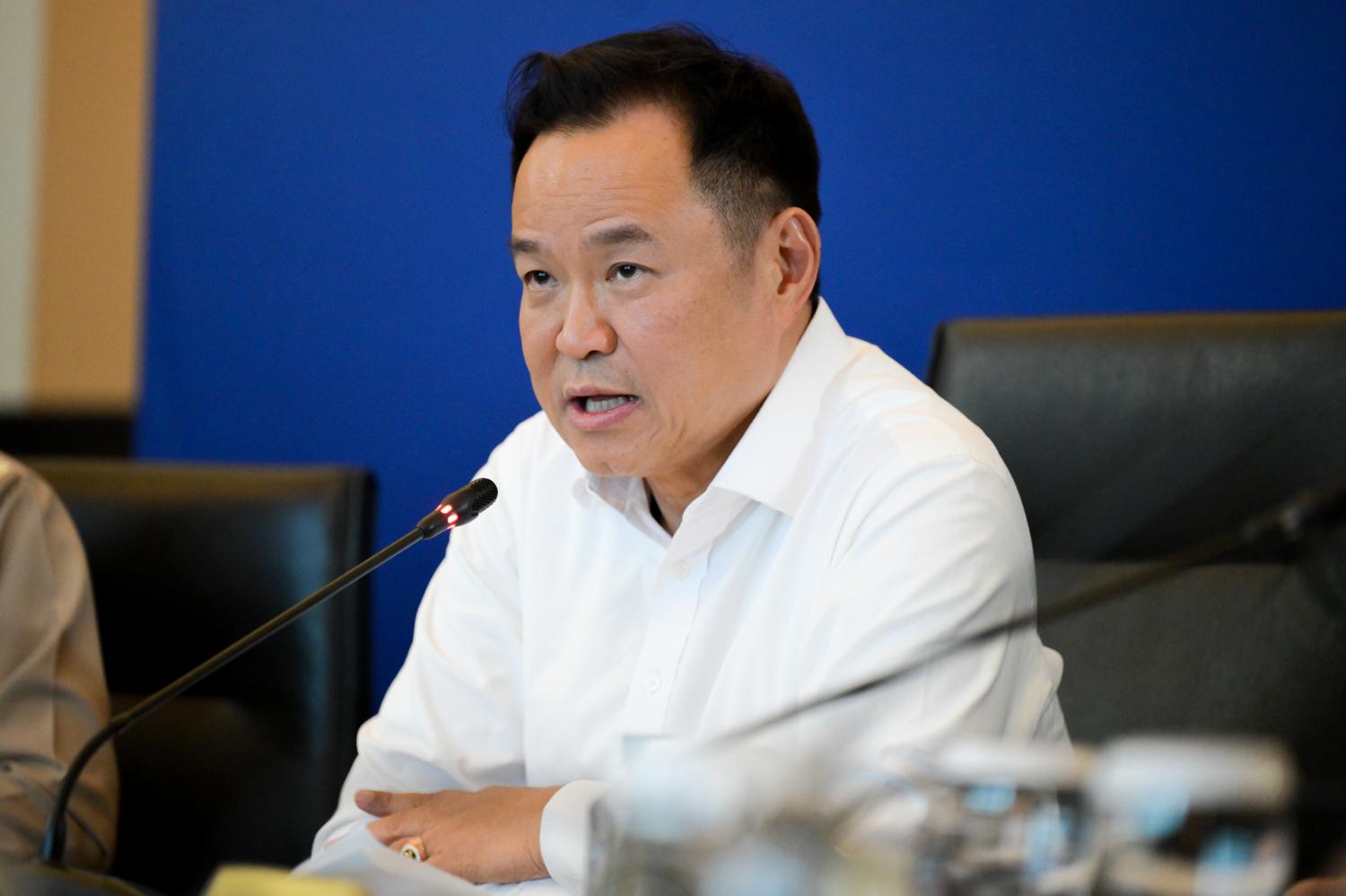
Anutin: Luck has been on his side
Poll boost masks some risks
Despite criticism of the government’s handling of the energy crisis, Prime Minister Anutin Charnvirakul’s approval rating has remained relatively steady, raising questions about what continues to sustain his support.
The government’s response to rising energy costs linked to the Middle East conflict has been criticised as slow and lacking clarity. Its communication with the public has also fallen short compared with that of other countries facing similar challenges.
Mr Anutin, leader of the Bhumjaithai Party, apologised for the “chaos” during a “Meet the Press” event at Government House last Saturday, following days of fuel supply disruption and sudden retail price surges.
Yet his popularity, prior to March 26 — when the government announced a reduction in fuel subsidies that pushed retail prices up by six to eight baht per litre — did not decline.
According to a Nida Poll survey conducted between March 19 and 24 with 2,500 respondents nationwide, Mr Anutin’s approval rating stood at 29.4%, a sharp rise from 12.32% previously. He was not far behind People’s Party leader Natthaphong Ruengpanyawut, who remained the most favoured candidate with 30.6% support, up markedly from 17.2% in the fourth quarter of 2025.
Suvicha Pouaree, director of the Nida Poll Centre, said Mr Anutin’s strong standing reflected less the government’s performance than the waning popularity of other figures.
Support for both the Pheu Thai Party and Economic Party leader Gen Rangsi Kitiyansap has dropped significantly since they joined the Bhumjaithai-led government, with a portion of that support appearing to shift towards Mr Anutin.
Pheu Thai prime ministerial candidate Yodchanan Wongsawat and Gen Rangsi attracted single-digit support at 8.08% and 2.64%, respectively. Meanwhile, the proportion of respondents indicating “no suitable candidate” fell sharply to 8.2% from 40.60% in the fourth quarter of 2025.
“I looked closely at the numbers and found that support from these two parties clearly moved to Mr Anutin. The public is still willing to give him a chance, and many see the energy crisis as largely driven by external factors,” he said.
However, he acknowledged that the survey was conducted before the fuel price increases, cautioning that Mr Anutin’s rating would likely have been lower had the poll taken place afterwards.
Mr Suvicha added that the government appeared to lack a clear strategy or broader plan for managing the energy crisis, instead responding on a day-to-day basis.
He noted that once the government formally outlines its policies to parliament, expectations will rise.
Measures such as the “Khon La Khrueng Plus” co-payment scheme may need to be rolled out quickly — and possibly expanded — to support lower-income groups. Other options could include tax reductions or scaling back large projects to free up funds to ease public hardship.
Deputy Prime Minister and Finance Minister Ekniti Nititunprapas, however, announced this week that a key government initiative scheduled to begin in May is the “Thai Chuay Thai Plus” programme. He said the scheme will combine the “Khon La Khrueng Plus” programme with the state welfare card scheme into a single integrated system.
According to Mr Ekniti, the merger will reduce complexity for participating merchants while improving convenience and flexibility for consumers.
The unified platform is expected to streamline operations for shops that previously had to manage separate systems, while allowing eligible users to access benefits more efficiently through a single mechanism.
Meanwhile, Mr Suvicha stressed that the government must improve its communication, explaining the oil crisis and its response in clearer, more accessible terms rather than allowing uncertainty to deepen.
“So far, luck has been on Mr Anutin’s side. The conservative protest groups have yet to mobilise and are still giving the government time as it settles in,” he said.
A source within a coalition party, however, expressed unease over the government’s handling of the crisis, particularly given its long-term implications for the cost of living.
The source said Mr Anutin is not widely regarded as a crisis manager, and improving the government’s standing will not be easy, especially as rising fuel costs begin to affect other sectors. Fertiliser prices could double, given their close link to energy costs. Farmers, already in the midst of the off-season rice harvest, face higher operating expenses due to fuel-dependent machinery.
With off-season rice prices remaining low, the government may struggle to provide swift or effective relief to farmers. The source added that questions have also been raised about the suitability of key economic appointments.
The appointment of Pheu Thai heavyweight Suriya Juangroongruangkit as agriculture minister has prompted doubts, given his perceived lack of enthusiasm for the sector.
According to the source, some within the Pheu Thai Party — which hopes to use the ministry to deliver campaign promises — are beginning to worry that the portfolio could become a liability rather than an asset.
For now, Mr Anutin’s approval rating is buoyed by shifting allegiances and public patience. But as economic pressures intensify and expectations rise, his administration will be tested — and optimism remains in short supply, according to political observers.