


The National Anti-Corruption Commission (NACC) delivered case files to the Supreme Court in a high-profile ethics case against 44 former Move Forward Party (MFP) MPs who signed a proposal to amend Section 112 of the Criminal Code, the lese majeste law.
Attention has now turned to whether the court could order currently serving MPs to suspend their duties.
At the Supreme Court on Thursday, NACC officials arrived in three vans carrying dozens of boxes of case documents. Court police and judicial staff were seen using trolleys to move the files into the court building, while officials closely checked the inventory.
The case dates back to 2021, when Pita Limjaroenrat, then leader of the MFP, led a group of 44 MPs in submitting a package of five bills aimed at protecting freedom of expression and due process rights, including a bill to amend Section 112, to the parliament president.
The NACC petition stemmed from a ruling issued by the Constitutional Court on Jan 31, 2024, which said the MFP's efforts to amend Section 112 constituted an attempt to overthrow the constitutional monarchy.
Of the 44 MPs named in the NACC petition, 10 are currently serving as MPs under the People's Party (PP), including PP leader Natthaphong Ruengpanyawut, deputy leader Sirikanya Tansakun, and senior figures such as Rangsiman Rome and Wayo Assawarungruang.
If the Supreme Court formally accepts the petition, the judicial panel may order those who remain in office to immediately suspend their parliamentary duties, unless the court rules otherwise.
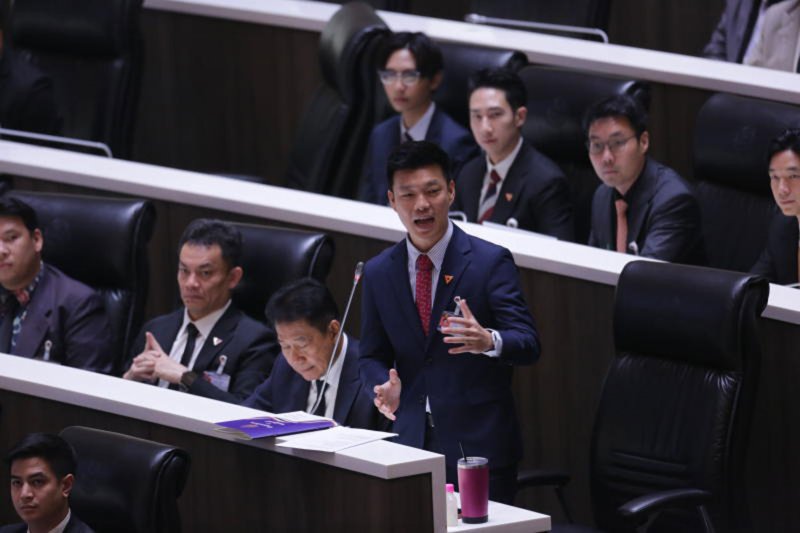
Speaking before a joint sitting of parliament, Mr Natthaphong said the PP remained focused on its role in scrutinising the government's policy statement, with more than 20 MPs prepared to speak on issues including the economy, energy and PM2.5 pollution.
On the 44 MPs, he said the party was waiting for clarity about the case and believed that, under normal procedures, any court order would likely come after next week's Songkran holiday, unless the process was accelerated.
Meanwhile, Suriya Hongwilai, spokesman for the Courts of Justice, said once a petition is accepted, respondents must cease performing their duties immediately pending judgement, unless ordered by a court otherwise.
The court will then schedule preliminary hearings, examine evidence and proceed to witness hearings before issuing a final ruling, the spokesman said.


