


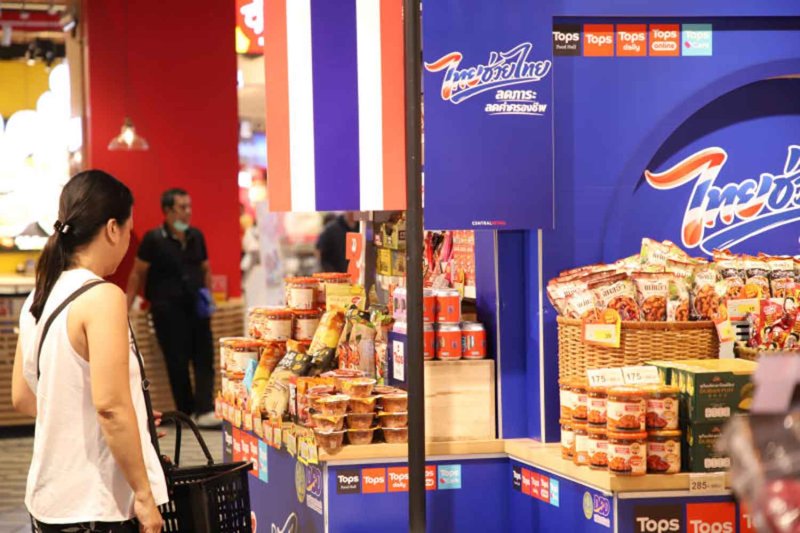
The government's new "Thai Help Thai Plus" subsidy programme is expected to be submitted to the cabinet in May and rolled out in June, with each eligible participant receiving 1,000 baht per month for four months, totalling 4,000 baht.
Prime Minister Anutin Charnvirakul confirmed the timeline on Saturday, following remarks by Deputy Prime Minister and Finance Minister Ekniti Nitithanprapas. The scheme is intended as a short-term measure to ease the cost of living and inject liquidity into the economy.
"The programme will be tabled for cabinet approval within May to ensure it can begin on schedule in June," Mr Anutin said.
Payments will be disbursed monthly at 1,000 baht over four months, he said, adding that the project builds on a Bhumjaithai (BJT) Party campaign pledge and draws on lessons from earlier co-payment schemes. Initially conceived as a two-month stimulus, the policy has been expanded after earlier versions proved popular.
Mr Anutin said the previous phase delivered tangible benefits but was interrupted by the dissolution of parliament. The revised programme reflects both continuity and adaptation to current conditions, he said.
He added the government deliberately avoided reviving the "Khon La Khrueng" (co-payment) branding, opting instead for a model focused more directly on financial assistance rather than matching consumer spending.
The change comes amid global uncertainties, including the Middle East war, which could affect energy prices and household expenses in Thailand. Under the revised framework, the government will shoulder a greater share of the burden, he said.
While details are still being finalised, Mr Ekniti has indicated a 60:40 split between the state and participants may apply in some cases, particularly for general consumers, while vulnerable groups could receive full support without co-payment requirements.
Mr Ekniti said registration is expected to open in May, with disbursement beginning the following month via the Paotang application, used in previous state aid schemes. He described the measure as part of a broader effort to ease living costs and provide targeted relief.
However, questions remain over funding sources and policy design. Democrat Party leader Abhisit Vejjajiva has called on the government to clarify how the programme will be financed, including whether it will rely on budget reallocation, the 2027 fiscal budget or new borrowing.
Mr Abhisit also urged the administration to ensure assistance is properly targeted, particularly towards vulnerable groups most affected by rising costs. He said alternative measures, such as reducing excise taxes or refining margins, could help lower prices at the source and reduce the need for subsidies.
When asked whether the programme would be effective, Mr Abhisit said he would need to review the details, noting past relief measures -- including those targeting the transport sector and taxi operators, as well as initiatives by the Commerce Ministry -- had not matched the scale of hardship faced by the public.
"The success of this scheme will depend on its main mechanism," Mr Abhisit said.
"It remains unclear whether it can be implemented through a budget transfer bill, the 2027 fiscal budget, or if it will require borrowing or special loans."
