

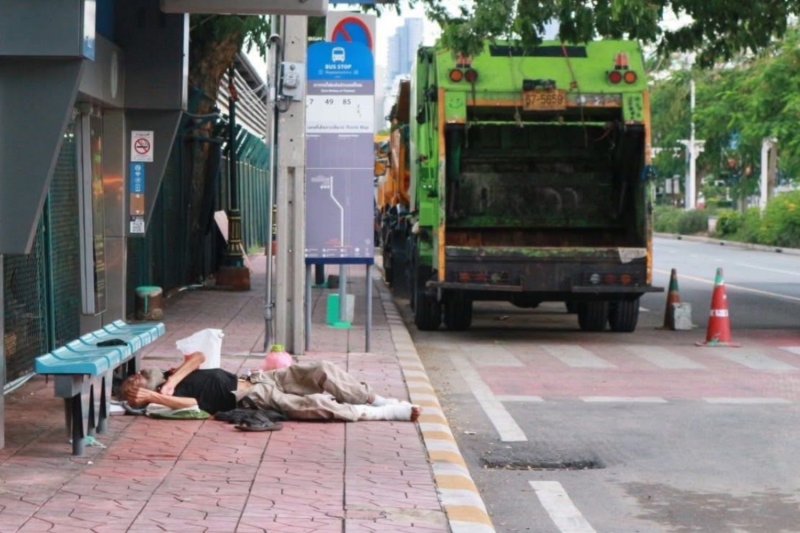
Thailand remains one of the world’s most popular travel destinations. With relaxed visa policies, a relatively low cost of living and social media portraying an easy, carefree lifestyle in cities like Bangkok and Phuket, the country continues to attract visitors from across the globe.
However, behind this appealing image, a “silent crisis” is becoming increasingly visible: the growing number of homeless foreign nationals in Thailand.
From Tourists to the Destitute
Easier access to the country—such as visa exemptions of up to 60 days—combined with overly optimistic portrayals online, has led many travelers to underestimate the risks of long-term stays abroad. Some arrive without sufficient financial planning, insurance or support.
When unexpected events occur—such as illness, accidents, theft or even the ripple effects of global conflicts—many find themselves unable to return home.
In some cases, individuals fall victim to online scams, losing access to their bank accounts entirely. Reopening those accounts often requires returning to their home country—something they can no longer afford.
The result is stark: a growing number of foreigners end up homeless, without funds and with no means of leaving Thailand.
A Growing Role for Civil Society
Amid this complex issue, the Bangkok Community Help Foundation has stepped in to play a crucial role. Originally focused on assisting vulnerable Thai citizens, the organization has expanded its efforts to include foreign nationals in distress.
Its shelter, “Centre of Dreams,” was initially built to support homeless Thai nationals. Today, it also accommodates foreigners facing hardship, providing shelter, meals, basic care and social aid.
The foundation works closely with several embassies in Bangkok—including those of Germany, Denmark, Sweden, the Netherlands, Finland, Japan, Chile, Italy, Hungary, and the United States—to coordinate repatriation efforts.
An Alarming Trend
Friso Poldervaart, co-founder of the organization, explains:
“We see an alarming increase in foreign nationals needing help. Many are becoming destitute, without funds and unable to return home. Their visas expire, making them undocumented in the country. That’s why we’ve built alliances with foreign embassies in Bangkok to help repatriate them.
We encounter a wide variety of cases—from single mothers with children whose bank accounts are blocked, to victims of scams who cannot afford to return home, to individuals trafficked across borders, and others who simply ran out of money due to poor planning.”
So far, the foundation has assisted more than 40 homeless or destitute foreigners. Working together with embassies, families and friends, all have been successfully returned to their home countries.
A Gap in the Safety Net
“Working with embassies is essential, as there is no social safety net for foreigners in trouble in Thailand. Many are uninsured and have no money left, making it impossible for them to leave the country without help," Mr Friso adds.
"Embassies are willing to assist, but they have procedures to follow. During that time, individuals stay with us, where they receive meals, a bed, showers and support from our social workers.”
This situation highlights a structural gap: there is currently no formal support system for foreign nationals in crisis in Thailand, despite the increasing number of cases.
Looking Ahead
With global economic uncertainty, ongoing geopolitical instability, and the rise of sophisticated online scams, the number of foreigners facing hardship abroad is likely to grow.
“Our work will always be for Thailand and the Thai people. But since foreigners come here, they may also need help. We must support anyone in need, regardless of where they come from,” Friso Poldervaart concludes.
A Question for Thai Society
This emerging issue raises an important question: as Thailand continues to welcome the world, how can it better prepare for the unintended consequences?
When a “paradise for travelers” does not turn out that way for everyone, the challenge becomes clear—how to respond with both practicality and compassion, ensuring that no one is left behind.
